Beyond the Price Tag: How Walmart''s AI Patents Signal a Real-Time Retail

Sarah Martinez
Logistics Correspondent
March 27, 2026
DATELINE: NA TRADE WIRE
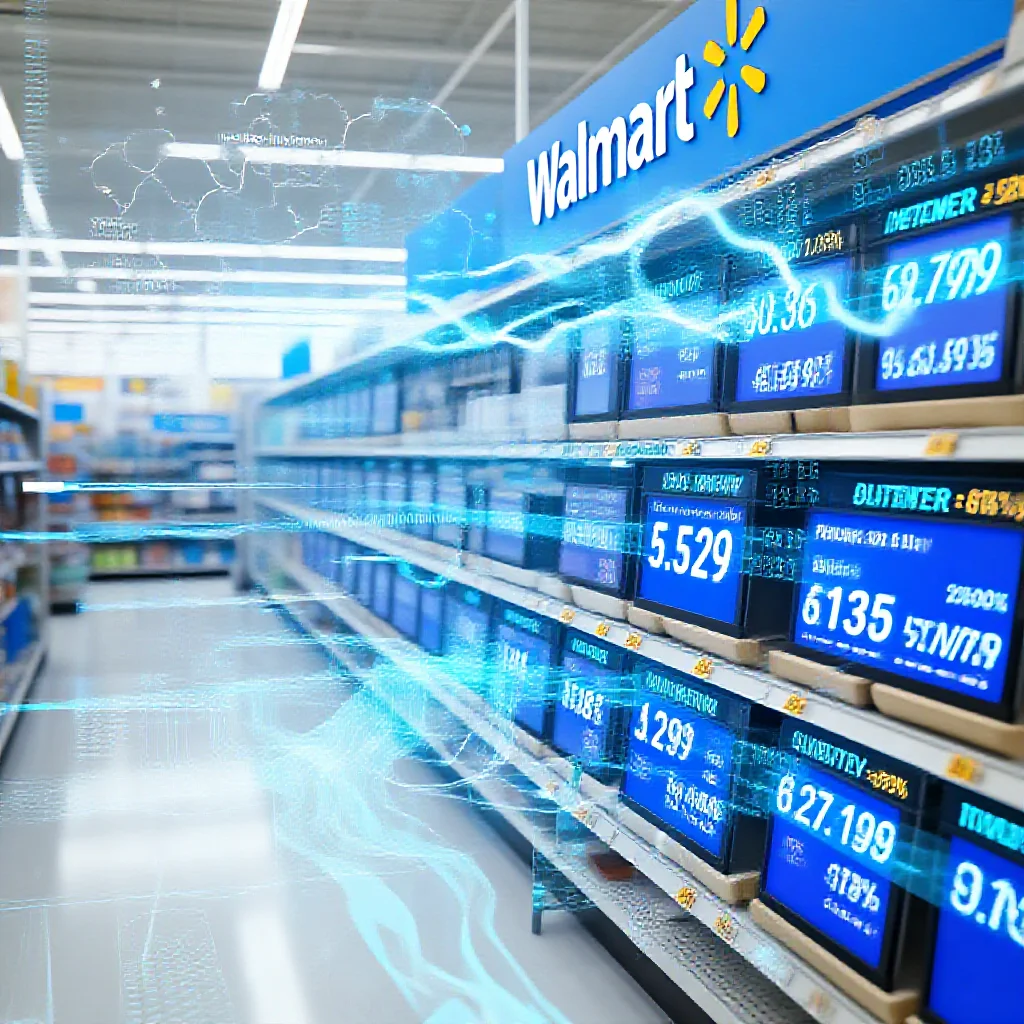
"Walmart''s recent AI-powered dynamic pricing patents are not merely about"
Beyond the Price Tag: How Walmart's AI Patents Signal a Real-Time Retail Revolution
Introduction: The Patent as a Blueprint for a New Retail Era
Walmart Inc. has filed patents for artificial intelligence-powered dynamic pricing systems. (Source 1: [USPTO Patent Data]) These filings are not isolated technological experiments. They are signals of a strategic pivot from a paradigm of periodic retail planning to one of continuous, real-time retail execution. The core thesis is that these systems aim to transform the retail operation from a batch-processed model into a live, self-optimizing ecosystem.
!A collage showing a patent document next to a glowing, data-rich store schematic.
Deconstructing the Patents: The Core Mechanisms of Real-Time Optimization
The patents detail specific mechanisms for autonomous store management. One system focuses on price adjustment based on real-time inventory levels, a direct response to the dual challenges of overstock and stockouts. (Source 1: [USPTO Patent Data]) A separate patent outlines a system for predicting demand and adjusting prices for perishable goods, targeting the reduction of shrink and waste. (Source 1: [USPTO Patent Data])
The unifying architectural thread is the integration of disparate data streams. In-store sensor data, such as shelf weight sensors and computer vision systems tracking item removal, is combined with external macro-data, including local weather forecasts and community event calendars. This synthesis creates a contextual, multi-variable pricing model that operates without human intervention.
The Hidden Economic Logic: From Cost Center to Profit Engine
The economic driver behind this technological shift is fundamental. It transforms inventory from a static asset with a fixed cost and gradual depreciation into a dynamically valued commodity. The real-time pricing of perishable goods, for example, turns waste from a passive loss into an actively managed variable. By algorithmically discounting goods as they approach spoilage, the system directly protects gross margin and improves revenue per square foot.
The long-term implications extend upstream. A store operating on a live data feed will create pressure on the supply chain for greater flexibility and data transparency. Suppliers may be compelled to engage in deeper data-sharing partnerships to ensure their products are optimally positioned within the AI’s decision-making framework, moving toward a just-in-time production and delivery model synchronized with real-time demand signals.
Beyond Pricing: The Broader Vision of Autonomous Store Execution
Dynamic pricing is merely the most visible application. The required infrastructure—a network of in-store IoT sensors, high-bandwidth data processing, and integrated AI decision-engines—creates a platform for autonomous store execution. This infrastructure enables concurrent automation in staffing logistics, predictive restocking, and even environmental controls.
The potential end-state is a fully synchronized retail environment where lighting, heating, ventilation, and air conditioning (HVAC) levels, staffing schedules, robotic restocking routes, and pricing adapt in unison to real-time conditions, such as customer traffic density. The competitive advantage, or moat, is not solely the AI software but the capital-intensive integration of physical IoT infrastructure with enterprise-scale AI and a proprietary data flywheel generated by thousands of stores.
Evidence and Context: Verifying the Shift
The shift is evidenced by the patents themselves, which can be verified through the United States Patent and Trademark Office (USPTO) database. These documents provide technical specification for the described systems. (Source 1: [USPTO Patent Data]) This move aligns with broader industry investments in computer vision, smart shelf technology, and predictive analytics by other major retailers, confirming a sector-wide trajectory toward automation.
The primary risk factors for this model include technological complexity, significant capital expenditure, potential consumer perception challenges regarding price volatility, and increased cybersecurity vulnerability due to the expanded attack surface of a fully connected store.
Conclusion: The Inevitability of the Real-Time Model
Walmart’s AI pricing patents are a definitive marker in the evolution of physical retail. They signal an operational philosophy where every element of the store is instrumented, interconnected, and intelligent. The logical deduction is that retail economics will increasingly favor those who can minimize latency between data capture and operational execution. The future trend points toward a retail landscape where the binary state of an item—in-stock or out-of-stock, fresh or spoiled—is continuously managed by algorithms, fundamentally altering the inventory management and revenue optimization paradigms that have defined the industry for decades.
Trade Metrics
Related Datasets
Q4 Cross-Border Logistics Report
PDF • 4.2 MB
Automotive Parts Supply Chain Index
CSV • 1.1 MB