Beyond the Ceasefire: The Strait of Hormuz Reopening and the Fragile New Calculus

Sarah Martinez
Logistics Correspondent
April 17, 2026
DATELINE: NA TRADE WIRE
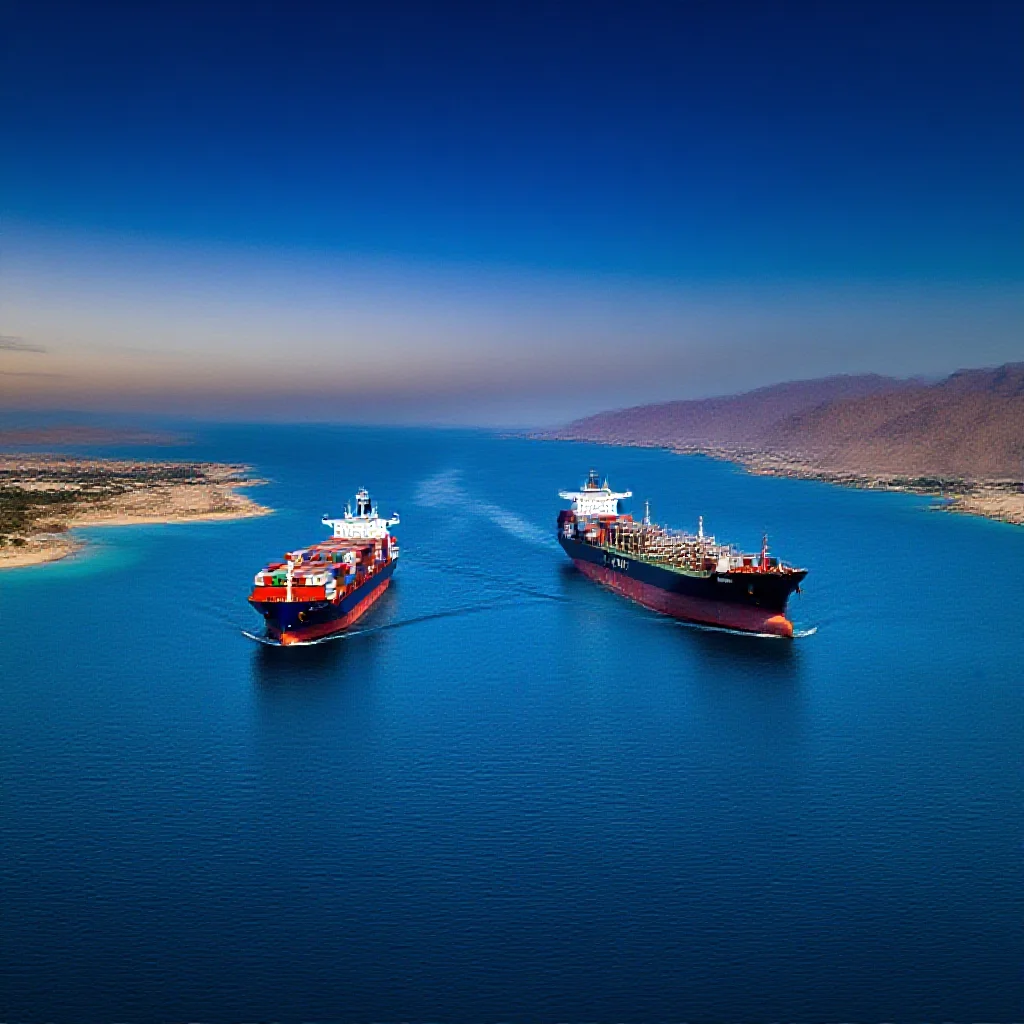
"On April 17, 2026, Iran announced a partial reopening of the Strait of Hormuz"
Beyond the Ceasefire: The Strait of Hormuz Reopening and the Fragile New Calculus of Global Energy Security
Date: April 18, 2026
On Friday, 17 April 2026, the Iranian government announced a partial reopening of the Strait of Hormuz to commercial shipping, a measure explicitly tied to the duration of a concurrent 10-day ceasefire in Lebanon (Source 1: [Primary Data]). The immediate market reaction was a sharp decline in global oil prices (Source 2: [Primary Data]). This development, however, does not signify a return to pre-crisis norms. It establishes a dual-track reality in the world’s most critical oil chokepoint: a conditional opening for global trade coexists with a persistent U.S. naval blockade on Iranian maritime assets. The move represents a recalibration of geopolitical pressure, not its cessation.
The Announcement: A Calculated Move in a Geopolitical Chess Game
The April 17 announcement is a tactical instrument of statecraft, not a strategic pivot. By linking access to the Strait to an unrelated, time-bound ceasefire, Iran frames the reopening as a contingent concession, retaining the power to revoke it. The official language underscores this control, specifying that vessels must follow "coordinated routes" and characterizing the event as a "partial reopening" (Source 3: [Primary Data]). This creates a mechanism for managed access rather than unconditional freedom of navigation.
The market’s reaction—a sharp drop in oil prices—reflects the pent-up demand for supply chain stability and the powerful effect of psychological relief. It is a response to the immediate removal of a acute risk premium, not an assessment that underlying geopolitical tensions have been resolved. The price movement demonstrates the market’s sensitivity to operational news flow from the region, even when the strategic military posture remains unchanged.
The Dual-Track Reality: Open for Business, Closed for Foes
The core contradiction of the current situation was articulated by U.S. political leadership. A statement clarified that while commercial passage is open, "the U.S. naval blockade on Iranian ships and ports will remain in force until a broader agreement is reached" (Source 4: [Quoted Statement]). This delineates a clear policy objective: to isolate the Iranian economy while attempting to insulate global energy flows from the fallout of the confrontation. The Strait is thus bifurcated into parallel operational zones—one for sanctioned entities and one for the broader commercial fleet.
This duality imposes a complex legal and physical environment. The U.S. blockade remains a fixed feature, meaning naval assets continue to patrol and enforce sanctions. For global trade, the Strait is conditionally open; for Iran, it remains a zone of constrained military and economic activity. The success of this model depends entirely on the precision of its enforcement and the clarity of its rules of engagement, which have not been publicly detailed.
The Carrier's Dilemma: Operational Clarity in a Fog of War
For shipping carriers, the announcement created immediate operational ambiguity. The demand for "operational clarity on routing and safety" (Source 5: [Primary Data]) is a multi-faceted requirement. Insurers require definitive risk assessments. Legal teams must interpret the intersection of Iranian transit directives and U.S. sanctions compliance. Ship captains and fleet operations centers need guaranteed communication protocols with both the Islamic Revolutionary Guard Corps (IRGC), which controls the Iranian side of the Strait, and the U.S.-led naval coalition.
This ambiguity triggers a cascade of practical responses. Enhanced due diligence will become standard, with carriers likely developing "shadow routing" plans and intensifying data-sharing within industry security networks. The immediate cost is quantifiable: war risk insurance premiums will remain elevated, voyage planning will require additional time and legal consultation, and transit speeds may be altered to minimize exposure. These factors will exert upward pressure on shipping rates for crude oil and LNG, even during periods of declared "open" access, embedding a new risk cost into the supply chain.
The Long-Term Supply Chain Shockwave: Beyond the Immediate Price Drop
The event of April 17, 2026, accelerates a pre-existing trend: the strategic decoupling of energy security from specific geopolitical flashpoints. The experience of managed, conditional access to the Hormuz chokepoint will reinforce efforts to diversify both supply routes and energy sources. Investment in overland pipeline infrastructure, such as the expanded capacity of the Abu Dhabi Crude Oil Pipeline (ADCOP) bypassing the Strait, will gain renewed urgency. Similarly, the economic rationale for LNG import terminals in consuming nations, which allow for source diversification, is strengthened.
Furthermore, the incident validates a model of "negotiated access" for global chokepoints under conflict. It demonstrates that geopolitical adversaries can, under certain conditions, create temporary, transactional corridors for commerce without resolving their fundamental disputes. This establishes a precedent that may reduce the likelihood of a complete, long-term closure but increases the probability of recurring, short-duration operational crises and complex compliance regimes.
Neutral Market and Industry Predictions
In the near term, oil price volatility will remain high, sensitive to the expiry of the 10-day ceasefire and any subsequent statements from Tehran or Washington regarding the Strait's status. Shipping rates for VLCCs and LNG carriers operating in the Persian Gulf will incorporate a sustained "Hormuz complexity premium."
Industry behavior will shift structurally. Major energy traders and shipping conglomerates will invest more heavily in in-house geopolitical risk units and real-time intelligence capabilities. The standardization of contingency contracts, which include specific clauses for "managed chokepoint transit," is likely to emerge within the year.
The long-term trajectory points toward a more fragmented and resilient—but also more costly—global energy logistics network. The Strait of Hormuz will retain its physical centrality, but its role as an unimpeded artery is now permanently qualified. The April 2026 reopening is not an end point, but the beginning of a new, more volatile phase defined by conditional access and perpetual operational uncertainty.
Trade Metrics
Related Datasets
Q4 Cross-Border Logistics Report
PDF • 4.2 MB
Automotive Parts Supply Chain Index
CSV • 1.1 MB