Beyond the Factory: How Rolls-Royce SMR''s Supply Chain Strategy is Reshaping

Sarah Martinez
Logistics Correspondent
April 18, 2026
DATELINE: NA TRADE WIRE
"Rolls-Royce SMR is not merely building a new reactor; it is engineering a"
Beyond the Factory: How Rolls-Royce SMR's Supply Chain Strategy is Reshaping Nuclear Economics
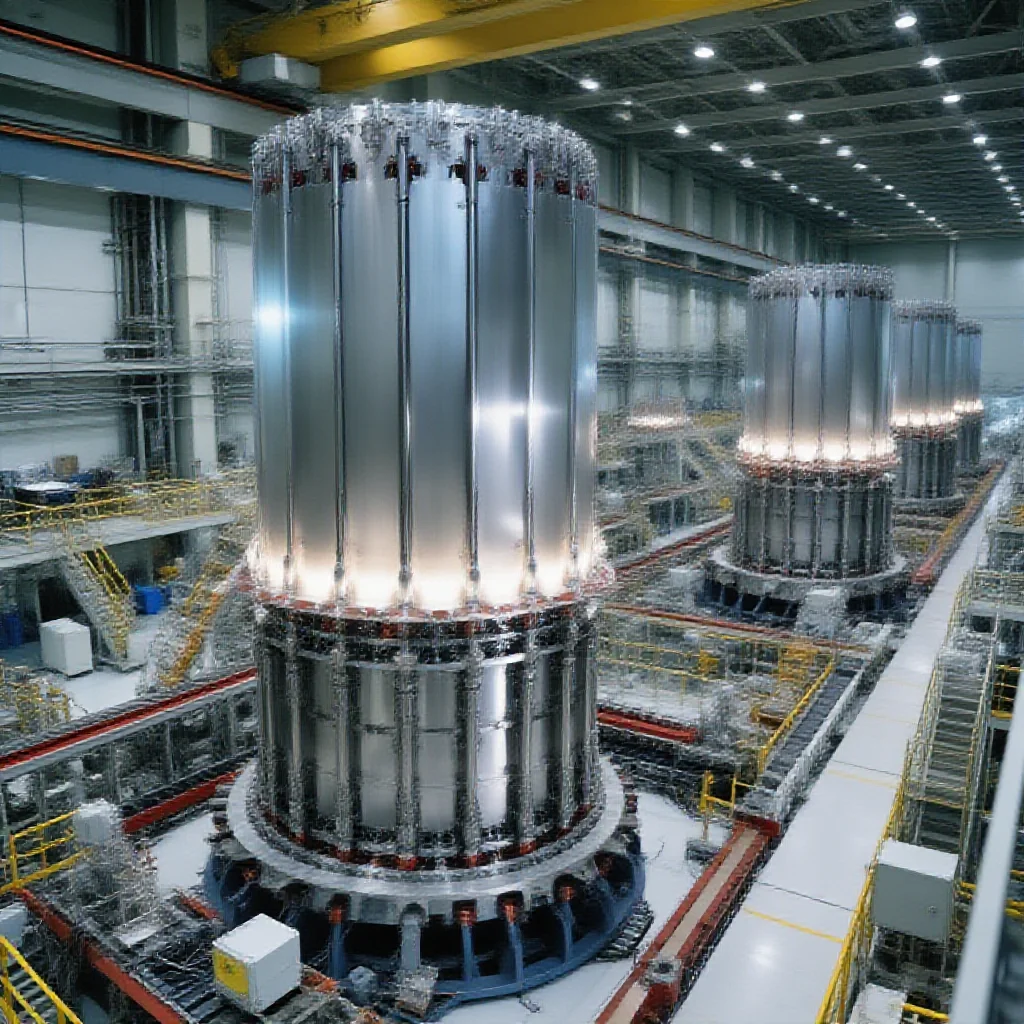
A photorealistic, wide-angle shot inside a vast, clean, high-tech factory. In the foreground, a large, gleaming cylindrical nuclear reactor module is being assembled under precise lighting. In thebackground, other identical modules are visible in various stages of completion on an automated production line. The aesthetic is modern industrial, with a focus on precision engineering, scale, and repetition.
Introduction: The Nuclear Industry's Assembly Line Moment
The history of civil nuclear power is a chronicle of mega-projects: bespoke, site-intensive constructions plagued by schedule overruns and capital cost escalation. Rolls-Royce SMR is engineering a departure from this paradigm. Its core proposition is a 470 MW power plant constructed within 500 days (Source 1: [Primary Data]). This analysis posits that the primary innovation is not confined to the reactor vessel itself but is embedded within a radical re-imagining of the nuclear supply chain. The shift is from unique construction to standardized manufacturing, promising to redefine the fundamental economics of nuclear energy.
A split-image comparison: left side shows a traditional large-scale nuclear construction site; right side shows a conceptual factory assembly line for SMR modules.
Deconstructing the Strategy: From Construction Site to Product Line
The "factory-built, modular approach" represents a fundamental industrial shift. It moves nuclear plant delivery from a construction discipline to a manufacturing one. The economic logic is drawn from other complex engineering sectors: standardization drives down unit cost through volume learning, compresses schedules by moving critical path activities to controlled factory environments, and enforces rigorous, repeatable quality control.
The long-term implication for the supply chain is transformative. Instead of a project-based ecosystem of vendors engineering one-off components, Rolls-Royce SMR is establishing a network of specialized, repeat suppliers. This creates a predictable order book for suppliers, incentivizing investment in optimized production lines for specific modules and components. The supply chain becomes an asset of predictability and cost control, rather than a source of project risk.
An infographic-style diagram showing the flow from standardized component suppliers to a central assembly factory, then to site installation.
Market Validation: Securing the Runway for Industrialization
The strategy requires significant upfront capital and a foundational order to justify the industrialization of the supply chain. Recent developments provide crucial validation. The UK government's selection of the Rolls-Royce SMR design for its first commercial SMR competition creates an anchor customer (Source 2: [Primary Data]). This provides the initial demand signal necessary to catalyze investment in the factory and supply network.
Concurrently, the European Union's approval of the UK's nuclear state aid scheme verifies the essential role of government support in de-risking this capital-intensive phase (Source 3: [Primary Data]). It provides a financial and regulatory runway for the supply chain build-out. The corporate structure of Rolls-Royce SMR, as a separate entity from Rolls-Royce plc with investments from BNF Resources, Exelon Generation, and Qatar Investment Authority, is also significant (Source 4: [Primary Data]). This provides dedicated capital and brings strategic credibility, combining industrial expertise with utility operational experience and long-term investment horizons.
A map of the UK and Western Europe, with icons highlighting the UK government decision and the EU regulatory approval.
The European Gambit: Exporting the Model via Strategic Partnerships
Market development extends beyond the UK. Rolls-Royce SMR has signed memoranda of understanding with Czech industrial giant Škoda Praha and utility ČEZ (Source 5: [Primary Data]). This move is not merely a technology export agreement. It represents a potential blueprint for replicating the industrialized manufacturing model in continental Europe. The partnerships suggest a strategy of leveraging local industrial champions to establish regional supply chain hubs and assembly capabilities.
This pattern indicates an ambition to export the entire system—the reactor design, the factory production philosophy, and the supply chain architecture—adapting it to local industrial bases. It is a strategy to navigate diverse regulatory landscapes and create economies of scale across multiple markets, further amortizing the upfront development costs of the standardized supply network.
Conclusion: The Industrial Product and Its Market Trajectory
The Rolls-Royce SMR venture is a test of a central hypothesis: that nuclear power can transition from a project-based artifact to an industrial product. The critical path to proving this lies in the successful stand-up and execution of its standardized, factory-centric supply chain. The recent market and regulatory developments in the UK and Europe provide the necessary political and financial conditions to attempt this proof of concept.
The logical prediction is that success in the initial UK deployment would trigger a replication of the supply chain model in partner regions, such as Central Europe via the Czech partnerships. This would establish a new competitive dynamic in the global nuclear sector, where economic advantage is derived from supply chain efficiency and repeatability, rather than solely from reactor physics. The long-term industry impact would be a redefinition of nuclear project risk, shifting it from construction management to supply chain orchestration and manufacturing quality assurance.
Trade Metrics
Related Datasets
Q4 Cross-Border Logistics Report
PDF • 4.2 MB
Automotive Parts Supply Chain Index
CSV • 1.1 MB