Rivian''s Robotics Spinout: A Strategic Retreat or a New Blueprint for Warehouse

Sarah Martinez
Logistics Correspondent
March 24, 2026
DATELINE: NA TRADE WIRE
"Rivian's decision to spin out its commercial robotics division into a separate"
Rivian's Robotics Spinout: A Strategic Retreat or a New Blueprint for Warehouse Automation?
Article Date: March 17, 2026
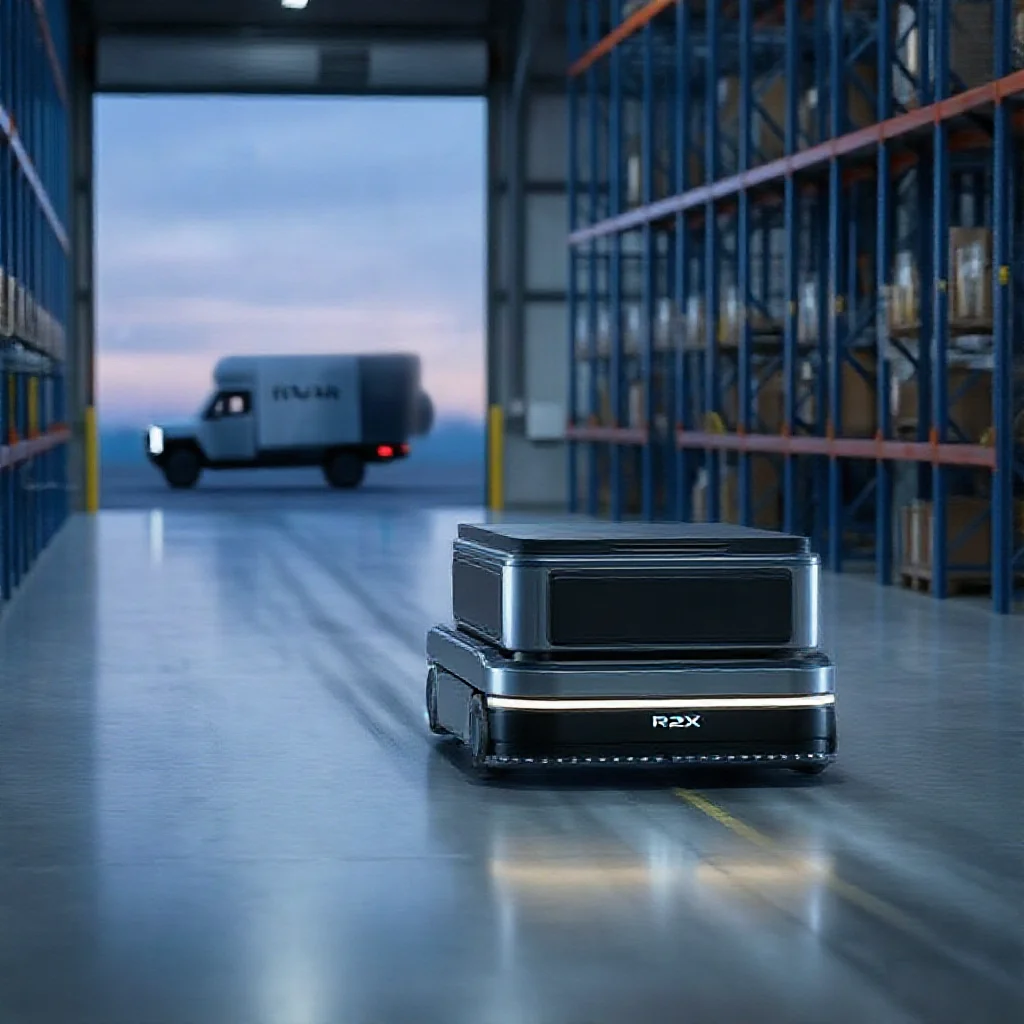
Rivian is spinning out its commercial robotics division into a separate, independent company headquartered in Palo Alto, California, with the transaction expected to be completed by the end of 2026 (Source 1: [Primary Data]). The new entity will focus on the development and commercialization of the R2X line of autonomous mobile robots (AMRs) designed for warehouse material transport. Rivian will retain a significant minority stake and serve as a key customer and partner, with the spinout led by current Rivian robotics executives (Source 1: [Primary Data]). This corporate action extends beyond restructuring, signaling a strategic pivot in the capital-intensive electric vehicle (EV) sector and reflecting a maturation phase in the warehouse automation market.
Beyond the Headline: Decoding Rivian's Strategic Calculus
The spinout functions as a primary signal of strategic prioritization. For Rivian, the move liberates capital and managerial focus for its core business: the intensively competitive EV manufacturing and scaling battle. The decision transitions the company from a model of vertical integration to one of ecosystem partnership. The retention of a "significant minority stake" while becoming a key customer establishes a new blueprint. This model allows Rivian to maintain a strategic interest and a dedicated automation supplier for its logistics operations without bearing the full cost and risk of internal development.
The 2026 timeline indicates a deliberate pace. This schedule suggests the transition is not a fire sale but a structured process where ensuring technology readiness, establishing a customer pipeline beyond Rivian, and achieving operational independence are critical prerequisites.
The R2X in Focus: Technology Meets a Maturing Warehouse Market
The R2X AMR is engineered for material transport and sortation tasks within logistics facilities (Source 1: [Primary Data]). Its operational role is not merely physical movement but as a connected node within a digitized, flexible warehouse management system. The spinout's timing aligns with a broader industry shift. Market demand is increasingly favoring modular, scalable automation solutions that can be integrated incrementally, as opposed to monolithic, single-vendor systems that require extensive capital commitment and overhaul.
This trend, noted by industry analysts, positions standalone AMR providers favorably. The R2X enters a competitive landscape where agility and specialization are becoming key differentiators. The spinout directly responds to this market condition, aiming to position the R2X as a product from a focused automation company rather than an ancillary project of an automotive OEM.
The Hidden Pattern: Spinouts as the New Incubators for Industrial Tech
Rivian's action reflects a broader economic logic in industrial technology development. "Corporate venture building" through structured spinouts is a mechanism to de-risks innovation for parent companies. It creates a dedicated entity capable of attracting specialized talent and venture capital that might be hesitant to invest in a division buried within a larger, financially demanding parent organization.
A standalone Palo Alto-based robotics company possesses inherent advantages in innovation velocity. It can cultivate a distinct corporate culture, offer equity incentives aligned with robotics sector norms, and pursue partnerships and funding rounds independently. The long-term impact on the supply chain is the potential acceleration of interoperable automation standards. As focused spinouts succeed, they reduce the industry's historical reliance on single-vendor lock-in, promoting a more competitive and dynamic ecosystem of best-in-class solutions.
Implications and Future Trajectory: A Fork in the Road for Logistics Tech
The immediate implications are bifurcated. For Rivian, the spinout creates a potential future revenue stream through its equity stake and secures a dedicated, agile partner for optimizing its own manufacturing and service logistics. Financially, it streamines its balance sheet, allowing capital allocation to be concentrated on vehicle production and market expansion.
For the warehouse automation industry, the move introduces a new, well-capitalized player with a proven industrial pedigree. The spinout model, if successful, may establish a template for other large manufacturers seeking to commercialize internal automation projects. It signals that the next phase of growth in logistics technology may be driven by specialized, capital-efficient firms that can out-innovate and out-execute the internal divisions of vertically integrated giants. The competitive dynamics are poised to shift from a battle of integrated suites to a contest of ecosystem agility and technological depth.
Trade Metrics
Related Datasets
Q4 Cross-Border Logistics Report
PDF • 4.2 MB
Automotive Parts Supply Chain Index
CSV • 1.1 MB