Reshaping Global Trade: The Post-Pandemic Pivot to Regional Blocs and Digital

Sarah Martinez
Logistics Correspondent
July 5, 2026
DATELINE: NA TRADE WIRE
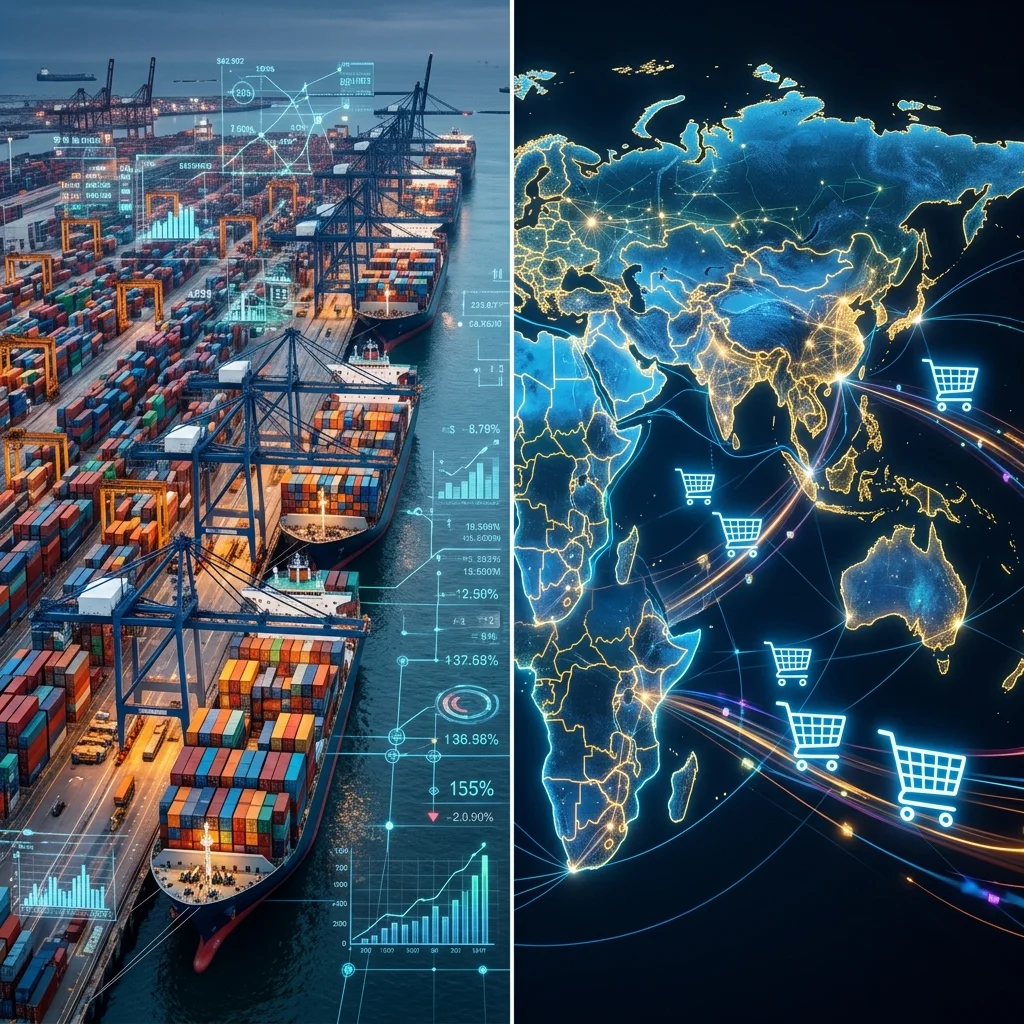
"The COVID-19 pandemic shattered the status quo of global trade, exposing"
Reshaping Global Trade: The Post-Pandemic Pivot to Regional Blocs and Digital Commerce
The COVID-19 pandemic did more than trigger a temporary freeze in global commerce. It exposed deep structural fault lines that had been building for decades—overreliance on distant suppliers, just-in-time inventory models that left no buffer, and a multilateral trading system too slow to adapt. In 2020, the World Trade Organization recorded a 5.3% decline in global trade volumes, the sharpest drop since the financial crisis. At the same time, more than 93 countries adopted trade-restrictive measures, according to the Global Trade Alert database, marking a surge in protectionism unseen in modern history.
Yet beneath this disruption, two powerful and seemingly contradictory forces were simultaneously reshaping the landscape: the rapid consolidation of mega-regional trade blocs and the explosive growth of digital commerce. The Regional Comprehensive Economic Partnership (RCEP), signed in November 2020, now binds 15 Asia-Pacific economies representing roughly 30% of global GDP. The African Continental Free Trade Area (AfCFTA), which began trading in January 2021, is projected by the UN Economic Commission for Africa to boost intra-African trade by 52% by 2025. These are not isolated diplomatic achievements. They represent a structural pivot—away from the hyper-globalized efficiency of long, fragile supply chains and toward regional resilience and digital-first trade routes.
This article draws on data from the WTO, UNCTAD, the Brookings Institution, and key industry reports to examine the paradox of simultaneous trade restriction and integration. What does this bifurcation mean for businesses, policymakers, and the future of globalization itself? The answer lies in understanding that the pandemic did not simply disrupt trade—it accelerated a fundamental reordering of how the world exchanges goods, services, and value.
[IMAGE: A split infographic showing a downward-trending global trade arrow alongside an upward-trending regional integration arrow, with data labels "WTO 5.3% decline" and "RCEP 30% GDP" respectively. No text overlay, high-contrast colors.]
---
The Cracks in the Global Supply Chain: From China Shutdown to Port Paralysis
The first domino fell in China’s manufacturing heartland. In February 2020, industrial production dropped by an estimated 13.5% at its peak, according to BBC News reporting based on National Bureau of Statistics data. Factories that supplied everything from auto parts to medical masks went silent. The world quickly realized that a single disruption in one province could ripple across continents within weeks.
The cascade did not stop at production. As demand patterns shifted and lockdowns eased unevenly, ocean logistics became the new bottleneck. At the Port of Los Angeles—America’s busiest container gateway—waiting times for ships to berth surged 25% in late 2020 and continued to climb through 2021, as reported by the Los Angeles Times. Containers piled up, chassis shortages multiplied, and shipping rates hit historic highs. A container that once cost $2,000 to move from Shanghai to Los Angeles suddenly cost $20,000.
These two data points—a 13.5% production drop and a 25% port delay surge—are not just numbers. They are symptoms of a deeper vulnerability: the hidden costs of just-in-time sourcing across vast distances. For decades, firms optimized for cost per unit, ignoring concentration risk. The pandemic forced a reckoning. When one factory closure could halt a global supply chain for weeks, the price of cheap labor suddenly seemed far higher than the invoice suggested. The logic of resilience, not just efficiency, began to dominate boardroom discussions.
[IMAGE: Photo of a congested container port with multiple ships anchored offshore under a hazy sky, or a time-lapse chart showing the exponential increase in shipping delays from 2019 to 2021 at major ports. No text overlay.]
---
The Regionalization Response: RCEP, AfCFTA, and the New Trade Geography
As the pandemic exposed the fragility of long-distance supply chains, policymakers and businesses turned to a familiar solution: shorter distances and tighter regional ties. Two landmark agreements crystallized this shift.
RCEP: The Asia-Pacific Anchor
The Regional Comprehensive Economic Partnership, signed in November 2020 after eight years of negotiation, brings together 15 countries: the 10 ASEAN members plus China, Japan, South Korea, Australia, and New Zealand. Together, they account for roughly 30% of global GDP and nearly a third of the world’s population. Unlike the more comprehensive CPTPP, RCEP focuses on tariff reduction, harmonized rules of origin, and simplified customs procedures—practical tools that make regional supply chains more efficient.
For multinational firms, this means that a component made in Vietnam can be assembled in Thailand and sold in China with fewer bureaucratic hurdles. The agreement reduces the incentive to source from far-flung, low-cost suppliers when a regional alternative exists with lower tariffs and faster transit times. According to a Brookings Institution analysis, RCEP could boost members’ exports by up to 5% annually by 2030, with the gains concentrated in intermediate goods—the building blocks of regional production networks.
AfCFTA: Africa’s Integration Gamble
On the other side of the world, the African Continental Free Trade Area began trading on January 1, 2021, creating the largest free trade zone by number of participating countries—54 signatories. The UN Economic Commission for Africa projects that full implementation of AfCFTA could increase intra-African trade by 52% by 2025, primarily by reducing tariffs and non-tariff barriers that currently make trading across African borders more expensive than trading with Europe or China.
Critically, AfCFTA is not just about lowering duties. It aims to promote regional value chains in manufacturing, pharmaceuticals, and agro-processing—sectors where Africa currently imports heavily from outside the continent. The pandemic underscored the danger of that dependence: when global supply chains seized up, African nations struggled to access basic medical supplies. Regionalization offers a hedge. If a vaccine can be produced in Senegal and distributed across West Africa, it bypasses the congested ocean routes and volatile freight markets.
The Paradox of Simultaneous Protectionism and Integration
These two agreements illustrate a curious paradox. The same period that saw 93 countries adopt trade-restrictive measures—export bans on medical equipment, import tariffs, local content requirements—also saw the deepest regional integration efforts in decades. The explanation lies in bifurcation. Nations are erecting walls externally while building bridges internally. Trade policy is no longer a single global game; it is a multi-layered arena where regional blocs offer stability and predictability when multilateral rules falter.
As a Brookings report noted, “Regional trade agreements are not an alternative to multilateralism; they are a pragmatic response to its gridlock.” For businesses, this means that navigating the post-pandemic trade environment requires understanding not just global tariffs but the specific rules of each regional bloc. The era of a single global supply chain strategy is over.
[IMAGE: A world map highlighting the RCEP region in blue (Asia-Pacific) and the AfCFTA region in green (Africa), with trade flow arrows connecting member countries within each region. No labels, clean infographic style.]
---
The Digital Commerce Surge: A Parallel Revolution
Alongside the shift toward regional blocs, a second force has been quietly but powerfully reshaping trade: the explosive growth of digital commerce. The pandemic forced millions of consumers and businesses online, and that shift has proven sticky. Global e-commerce sales surged by 27.6% in 2020, according to UNCTAD estimates, and cross-border digital trade grew at an even faster clip. By 2022, digital trade—defined as transactions enabled by digital platforms, including goods, services, and data flows—had become an integral part of global trade dynamics.
The Rise of Digital Trade Routes
What does this have to do with regionalization? Everything. Digital commerce does not require physical proximity in the same way that container shipping does, but it does rely on digital infrastructure, payment systems, and logistics networks that are often regionally clustered. For example, Southeast Asia’s e-commerce market grew by over 60% in 2020-2021, driven by platforms like Shopee and Lazada that serve the ASEAN region. These platforms are building regional logistics hubs—warehouses in Thailand, last-mile delivery networks in Indonesia—that reinforce the same geographic blocs that RCEP is formalizing.
Similarly, in Africa, mobile money platforms like M-Pesa and cross-border fintech solutions are enabling small businesses to trade across borders without traditional banking infrastructure. The AfCFTA’s digital trade protocol, currently under negotiation, aims to harmonize data flows, e-payments, and consumer protection rules across the continent, creating a digital single market that complements the physical free trade area.
The Logistics Innovation Imperative
Digital trade also demands logistics innovation. The old model of bulk container shipping and weeks-long transit times is ill-suited for the small, frequent, high-value shipments that characterize e-commerce. Companies are investing in micro-fulfillment centers, drone delivery, and blockchain-based supply chain tracking to reduce friction. The Port of Los Angeles, for instance, has partnered with digital platforms to provide real-time container visibility, cutting wait times by 15% in some pilot programs.
According to a McKinsey report, logistics innovations driven by e-commerce could reduce cross-border delivery times by 30-50% by 2025, particularly within regional corridors. This synergy between digital commerce and logistics innovation is creating a new kind of trade infrastructure—one that is agile, data-driven, and regionally focused.
[IMAGE: A collage showing a smartphone with a shopping cart icon on a map of Southeast Asia, next to a warehouse robot and a drone in flight. Modern, clean design with digital data streams in the background.]
---
The Bifurcated Future: Navigating Two Worlds
The pandemic has not ended globalization. It has restructured it. The world is moving toward a system where long-distance, commodity-based trade coexists with regional, value-chain-intensive trade, and where digital channels increasingly bypass traditional customs and shipping bottlenecks. This bifurcation creates both opportunities and challenges.
What This Means for Businesses
First, supply chain diversification is no longer optional. Firms that relied on a single source in China or Germany now face pressure to build regional backup options. A 2021 survey by the consulting firm Kearney found that 80% of multinational companies planned to increase regional sourcing in the following two years. The logic is simple: a supplier in Vietnam is easier to reach when Shanghai shuts down, and a warehouse in Mexico can serve U.S. customers faster than one in Shenzhen.
Second, trade policy compliance has become more complex. With RCEP, AfCFTA, and other regional agreements each having their own rules of origin, tariff schedules, and digital trade provisions, companies need to invest in dedicated trade compliance teams or software. A simple “ship to country X” strategy is insufficient; firms must optimize their customs strategy based on which regional bloc they are operating within.
Third, digital readiness is a competitive advantage. Businesses that have invested in e-commerce platforms, digital payments, and real-time supply chain visibility are better positioned to capture the growth in cross-border digital trade. The UNCTAD B2C E-commerce Index shows a widening gap between developed and developing economies in digital readiness, but also rapid catch-up in countries like India, Kenya, and Vietnam—markets that are central to the regional blocs mentioned earlier.
Policy Implications: Convergence or Fragmentation?
Policymakers face a delicate balancing act. Regional agreements like RCEP and AfCFTA can serve as building blocks for broader multilateral liberalization, as the WTO’s own rules permit. But they can also become stumbling blocks if they create competing standards, exclude developing nations, or foster a “spaghetti bowl” of overlapping rules. The WTO’s 13th Ministerial Conference in 2024 made limited progress on digital trade disciplines, underscoring the difficulty of global consensus.
Meanwhile, the rise of digital commerce raises new policy questions: How should governments tax cross-border digital transactions? How do they balance data localization requirements (increasingly common in countries like China, India, and Indonesia) with the free flow of data that enables digital trade? These tensions will define the next phase of trade policy.
[IMAGE: A three-panel infographic showing (left) a factory with arrows pointing to multiple regional hubs, (center) a document with WTO, RCEP, and AfCFTA logos, and (right) a digital dashboard showing real-time trade data. No text, clean icons.]
---
Conclusion: The New Logic of Global Trade
The post-pandemic trade landscape is not a simple return to the pre-2019 status quo, nor a total retreat into protectionism. It is a reordering—a conscious shift from globalized efficiency at any cost toward regional resilience and digital-first connectivity. The data is clear: supply chain disruptions, measured by the number of trade-restrictive measures and port congestion, have forced a structural pivot. RCEP and AfCFTA are the institutional expressions of this pivot, while e-commerce growth and logistics innovation are its operational engines.
For businesses, the imperative is to understand this new logic. Those that cling to old models of long-distance, just-in-time sourcing will find themselves vulnerable to the next disruption. Those that embrace regional diversification, digital commerce, and adaptive trade policy strategies will be better positioned to thrive in this bifurcated but dynamic environment.
The pandemic was a crisis, but it also served as a reset button. The question is no longer whether global trade is changing—it is whether we are ready for the new geography of exchange.
---
Sources: World Trade Organization (WTO) Trade Statistics and Outlook 2021; Global Trade Alert, 2021 Annual Report; Brookings Institution, “RCEP: A New Trade Agreement that Will Shape Global Economics” (2022); UN Economic Commission for Africa, “AfCFTA: A New Era for African Trade” (2022); BBC News, “China’s Industrial Output Falls 13.5% in January-February” (2020); Los Angeles Times, “Port of LA Congestion Reaches New High” (2021); UNCTAD, “Global E-commerce Jumps to $26.7 Trillion” (2022); McKinsey & Company, “The Future of Logistics: How Digital Innovation is Reshaping Supply Chains” (2023).
Trade Metrics
Related Datasets
Q4 Cross-Border Logistics Report
PDF • 4.2 MB
Automotive Parts Supply Chain Index
CSV • 1.1 MB