North American Freight and Logistics Market to Hit $2 Trillion by 2031: Automation,

Sarah Martinez
Logistics Correspondent
May 13, 2026
DATELINE: NA TRADE WIRE
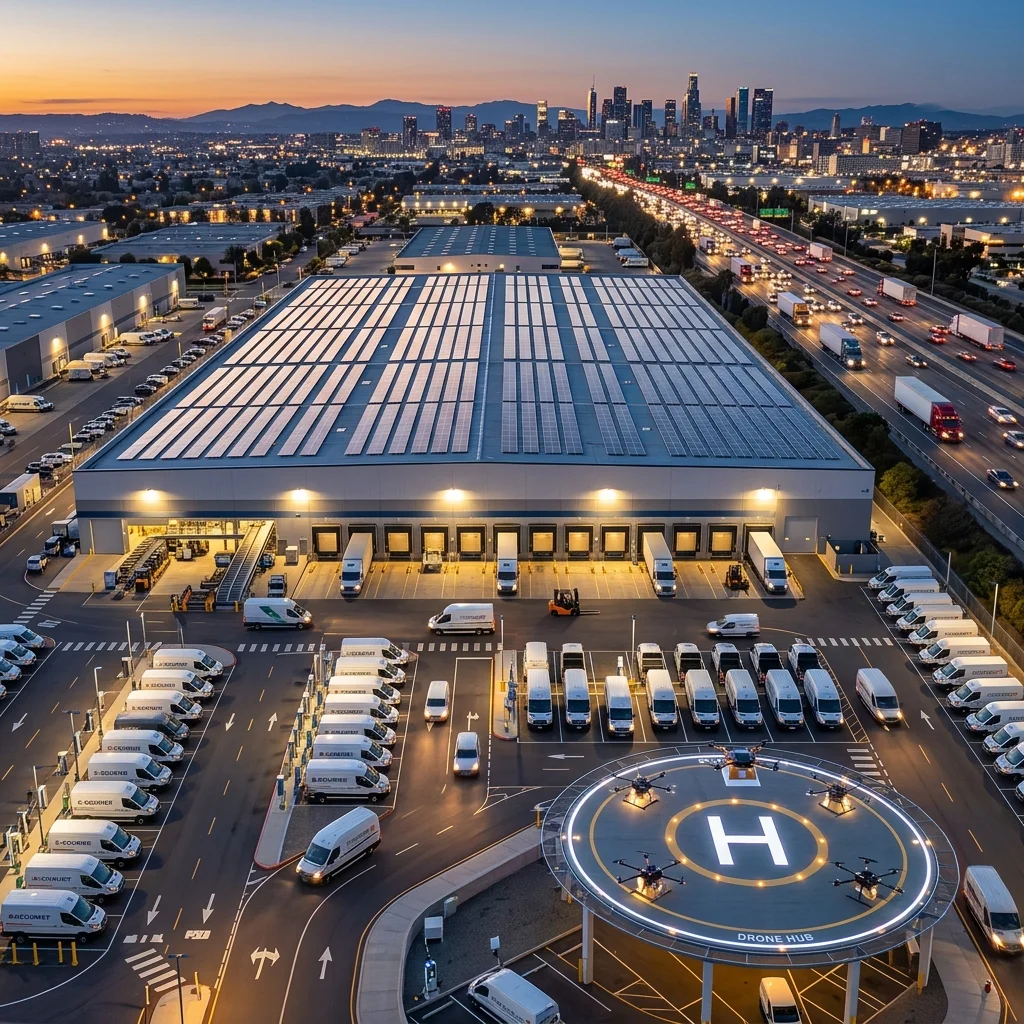
"The North American freight and logistics market is projected to reach $2.0"
North American Freight and Logistics Market Projected to Reach $2 Trillion by 2031
The North American freight and logistics industry is poised for a transformative decade. According to recent market analysis, the sector is expected to grow from approximately $1.4 trillion in 2024 to $2.0 trillion by 2031, representing a compound annual growth rate (CAGR) of 4.0%. This expansion is not merely a continuation of pre-pandemic trends; it reflects a fundamental restructuring driven by e-commerce acceleration, infrastructure reinvestment, and an urgent push for supply chain resilience. However, beneath the headline numbers lie complex forces—automation, sustainability mandates, and evolving trade routes—that are reshaping how goods move across the continent. This article examines the economic logic behind these shifts, focusing on long-term strategic changes rather than short-term volatility.
[IMAGE: Infographic showing growth curve from current value to $2T, with icons for e-commerce, tech, and sustainability.]
---
The Technology Revolution: Automating the Supply Chain
Technology adoption in freight and logistics has moved from experimental pilots to scalable deployments. Autonomous delivery vehicles—both long-haul trucks and last-mile vans—are entering commercial operations in multiple U.S. states and Canadian provinces. Companies like TuSimple, Aurora Innovation, and Waymo Via have accumulated millions of autonomous miles, while regulatory frameworks in Texas, Arizona, and Ontario are gradually opening up. The economic imperative is clear: the industry faces a persistent shortage of qualified drivers, with the American Trucking Associations estimating a deficit of over 80,000 drivers in 2024. Autonomous vehicles, combined with platooning technologies, can reduce labor dependency and improve fuel efficiency by 10-15% through optimized routing and reduced idling.
Beyond autonomous driving, artificial intelligence is revolutionizing warehouse management. AI-powered systems now predict inventory demand, allocate labor dynamically, and optimize picking routes in real time. Major players like Amazon, Walmart, and XPO Logistics have deployed machine learning algorithms that cut order processing times by up to 30% and reduce error rates below 0.1%. These systems also address the chronic driver shortage indirectly: by improving warehouse throughput, they reduce the need for overnight long-haul trips and allow more efficient use of existing drivers.
Yet technological adoption remains uneven. Major hubs—the U.S. Northeast corridor, Southern California, and the Chicago intermodal gateway—have seen rapid deployment of automation, smart sensors, and connected logistics platforms. Rural and remote routes, particularly in the Mountain West and northern Canada, lag due to lower traffic density, limited broadband connectivity, and higher per-unit capital costs. This disparity is creating a two-speed market, where shippers willing to pay premium rates can access cutting-edge services, while others rely on traditional operations. As logistics automation trends accelerate, the gap between top-tier and second-tier logistics providers is likely to widen, potentially driving further consolidation.
[IMAGE: Split image: left side shows an autonomous truck on a highway, right side shows a drone delivering a package to a suburban home.]
---
Sustainability as a Competitive Advantage
Environmental regulations and corporate net-zero commitments are transforming logistics from a cost center into a strategic differentiator. Electric delivery vehicles (EDVs) are now commercially viable for last-mile and short-haul routes: companies such as Amazon, FedEx, and UPS have placed orders for over 200,000 electric vans and trucks combined. Meanwhile, heavy-duty electric semi-trucks—pioneered by Tesla, Volvo, and Daimler—are entering regional fleets, with government incentives covering up to 40% of the purchase price in states like California, New York, and Washington.
Warehouses themselves are being retrofitted with solar panels, battery storage, and smart energy management systems. A typical 500,000-square-foot distribution center can generate up to 3 megawatts of solar capacity, covering 60-70% of its electricity needs. Combined with electrified forklifts and automated guided vehicles (AGVs), these facilities slashed operational costs by 20-30% while satisfying increasingly strict emissions standards. For cross-border trade—particularly between the U.S. and Mexico, and the U.S. and Canada—carbon accounting is becoming a prerequisite for large retailers and consumer goods companies. Shippers that can demonstrate verified carbon offsets or low-emission logistics networks gain preferential access to contracts, especially for high-volume, time-sensitive goods.
The shift to sustainable freight solutions, however, requires significant upfront capital. A single electric heavy-duty truck costs $300,000–$500,000, roughly double its diesel counterpart, while charging infrastructure adds another $50,000–$100,000 per truck. For smaller logistics firms, these costs are prohibitive. This financial pressure is accelerating consolidation: larger carriers with strong balance sheets are acquiring regional players to gain scale and amortize green investments. Industry analysts expect the top 10 North American logistics providers to control over 60% of the market by 2031, up from roughly 45% today.
[IMAGE: A logistics center with rows of electric trucks charging under solar panel canopies, with a wind turbine in the distance.]
---
Challenges and the Resilience Playbook
Despite the optimistic growth outlook, the freight and logistics industry faces persistent structural headwinds that demand active management. The most pressing issue remains the driver shortage. The average age of a long-haul truck driver in the U.S. is 57, with turnover rates exceeding 90% in some segments. Efforts to improve working conditions—such as better pay, home-time guarantees, and improved rest facilities—have had limited impact. Automation, as noted, offers a partial solution, but full driverless operations on all routes remain years away. In the interim, companies are investing in driver assistance technologies (lane-keeping, adaptive cruise control) and flexible scheduling to retain talent.
Fuel cost volatility is another perennial challenge. Diesel prices have swung from $2.50 to $6.00 per gallon over the past five years, creating unpredictability for carriers that operate on thin margins. This volatility drives interest in alternative fuels: compressed natural gas (CNG), biodiesel, and hydrogen fuel cells are all being tested in regional fleets. Route optimization software—using real-time traffic, weather, and fuel price data—can reduce consumption by 5-10%, offering a relatively low-cost hedge.
Geopolitical uncertainties and climate-related disruptions have forced logistics planners to rethink traditional network designs. The COVID-19 pandemic exposed the fragility of just-in-time models; subsequent events—the 2021 Suez Canal blockage, the 2022 Canadian trucker protests, and 2023 hurricane disruptions in Florida and Texas—reinforced the need for redundancy. Companies are now investing in “resilience corridors”: alternative routes that bypass major bottlenecks. For example, the Port of Savannah has emerged as an overflow hub for Los Angeles/Long Beach, while the rail corridor through Mexico (via the Ferromex line) offers an alternative for cross-border shipments between the U.S. and Canada. Inventory buffers, which were slashed during the lean era, are being rebuilt to 30-45 days of supply for critical components.
[IMAGE: Map of North America highlighting key freight bottlenecks (e.g., Chicago, LA/Long Beach, Toronto) and alternative bypass routes.]
---
Redefining Trade Routes: The New Geography of North American Logistics
The combined forces of automation, sustainability, and resilience are reshaping the physical geography of freight movement. Three trends stand out:
Nearshoring and the Mexico Corridor: Rising labor costs in China and trade tensions have accelerated nearshoring of manufacturing to Mexico, particularly in automotive, electronics, and appliances. The U.S.-Mexico border saw over $800 billion in two-way trade in 2023, and logistics infrastructure there is expanding rapidly. New rail bridges, border processing expansions (e.g., Otay Mesa, Laredo), and cross-dock facilities are being built to handle the surge. This shift is pulling freight volumes away from the traditional transcontinental U.S. routes and creating new east-west corridors through Texas, Arizona, and California.
The Electrification Corridor: The U.S. Department of Energy has designated several “zero-emission freight corridors” along Interstate 5 (West Coast), I-10 (Sun Belt), and I-95 (East Coast), with charging stations every 50 miles. These corridors will concentrate electric truck operations in their early years, while routes off the corridor remain diesel-dependent. Over time, this infrastructure investment will tilt the economics in favor of electric trucks on high-density lanes, reinforcing a hub-and-spoke system where short-haul electric trucks feed long-haul rail or autonomous trucks.
The Rise of Multimodal Hubs: Single-mode facilities (e.g., pure truck terminals or air freight stations) are giving way to integrated multimodal hubs that combine truck, rail, air, and even drone operations. Memphis, Louisville, Chicago, and Kansas City are all developing such sites, leveraging proximity to airports, rail yards, and major highways. These hubs reduce transshipment times and allow shippers to switch modes seamlessly—for example, using rail for the long-haul segment and electric trucks for local delivery, all under one roof.
These shifts are not uniform across the continent. Canada’s freight logistics market, dominated by the Toronto-Vancouver corridor and the Alberta oil sands region, faces different constraints: extreme weather, longer distances, and lower population density. The U.S. Southeast, driven by population growth and port expansions in Savannah and Charleston, is emerging as a new logistics powerhouse. Mexico’s northern border states are becoming assembly and distribution points for the entire continent. Freight market growth 2031 will be highly differentiated by region, and successful logistics providers will need to tailor their network strategies accordingly.
[IMAGE: Aerial view of a multimodal logistics hub with trucks, trains, and containers, with a nearby airport in the background.]
---
Conclusion: Beyond Growth — A Structural Transformation
The projection of a $2 trillion North American freight and logistics market by 2031 is more than a numerical milestone. It reflects a fundamental transformation in how goods are moved, stored, and tracked across the continent. Automation is addressing the chronic labor shortage while improving efficiency; sustainability is becoming a competitive differentiator rather than a compliance burden; and trade routes are being redrawn by nearshoring, electrification, and the quest for resilience. For shippers, carriers, and investors, the key takeaway is that these changes are structural, not cyclical. Companies that invest in technology, diversify their energy and route portfolios, and build partnerships across the supply chain resilience ecosystem will be best positioned to capture the opportunities of the next decade.
The road ahead is not without risks: driver shortages, fuel price uncertainty, and geopolitical shocks will continue to test the industry. But the underlying drivers—e-commerce growth, infrastructure spending, and environmental regulation—are durable. As the North American economy continues to expand, its logistics backbone must evolve. The next seven years will determine which players lead that evolution, and which are left behind.
---
This article is based on publicly available market research, industry reports, and expert interviews. Data points are sourced from the American Trucking Associations, the U.S. Department of Energy, and logistics consultancy firms.
Trade Metrics
Related Datasets
Q4 Cross-Border Logistics Report
PDF • 4.2 MB
Automotive Parts Supply Chain Index
CSV • 1.1 MB