Unlocking Global Markets: How ITA''s Trade Data and AI Tools Are Revolutionizing

Sarah Martinez
Logistics Correspondent
June 13, 2026
DATELINE: NA TRADE WIRE
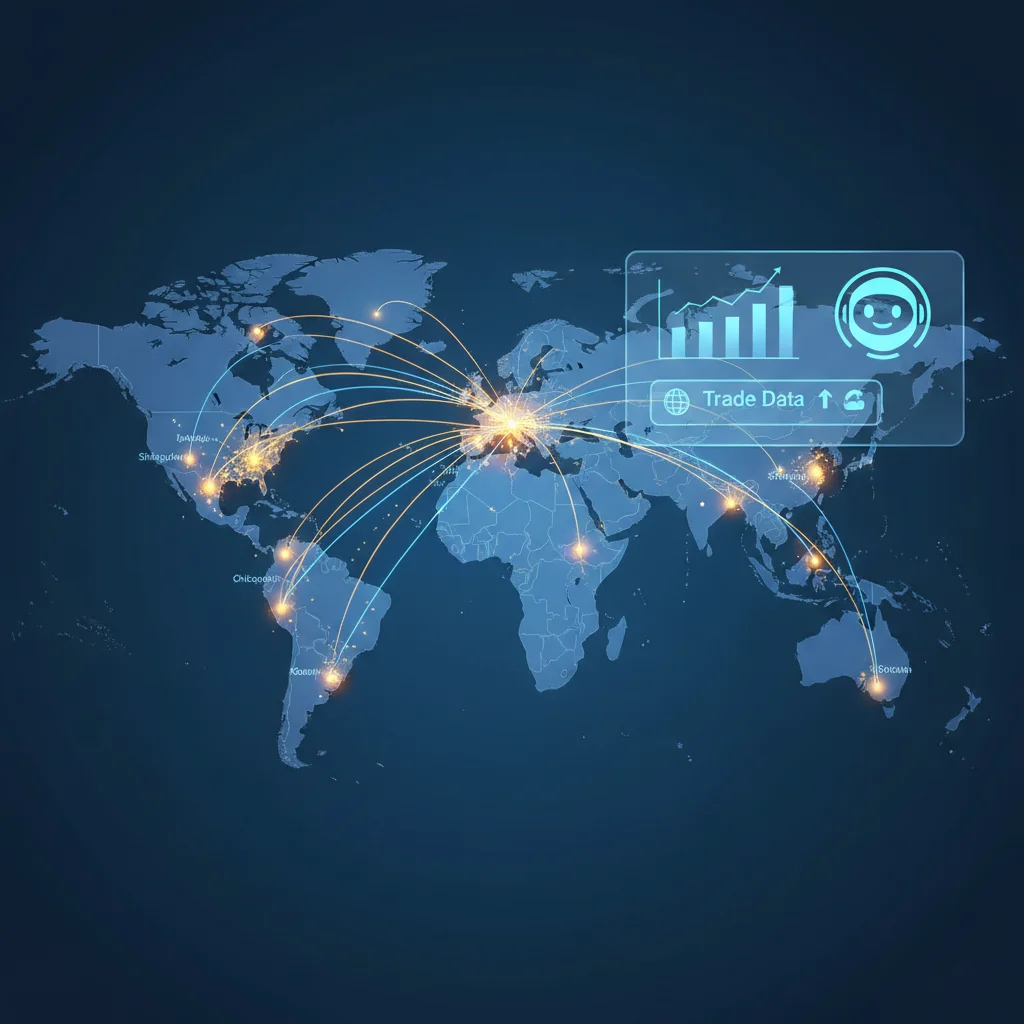
"The International Trade Administration’s Industry & Analysis unit offers"
ITA’s Trade Data and AI Tools Reshape Export Intelligence for U.S. Businesses
In an era of shifting tariffs, supply chain realignments, and emerging market opportunities, access to reliable trade intelligence has never been more critical. The International Trade Administration’s (ITA) Industry & Analysis unit has long served as a backbone for U.S. export data, but recent advances—including an AI-powered chatbot—are quietly transforming how businesses, policymakers, and researchers navigate global markets. This article examines the full ecosystem of ITA trade data products, the role of artificial intelligence in export assistance, and the broader implications for market diversification and strategic decision-making.
The Data Ecosystem: From National Statistics to Metro-Level Insights
The ITA’s Industry & Analysis unit operates with a clear mission: to provide authoritative trade data and analysis that empowers U.S. businesses, policymakers, and stakeholders to compete effectively in global markets. The breadth of this data ecosystem is often underestimated. At the national level, the agency offers U.S. National Goods Trade data available in both Year-to-Date and Annual formats. These datasets include Partner Trade Balance Highlights—critical for understanding bilateral trade flows—and new Monthly Product Trade Insights, which provide granular, up-to-date snapshots of specific commodity movements.
[IMAGE: A screenshot of the TradeStats Express interface showing a U.S. map with state trade data overlays and filter options.]
What sets ITA apart, however, is its commitment to disaggregated data. National averages can mask significant regional variations. For state-level analysis, the TradeStats Express tool allows users to query U.S. State Goods Trade in both YTD and annual formats. Complementing this are State Trade and Economy Factsheets, which offer a condensed view of each state’s export performance and economic contribution. The State Goods Trade by Partner Tool adds another layer, enabling exporters to see exactly which countries are buying what from their home state.
Perhaps the most revealing resource for urban economic planners is the Metropolitan Export Series, with the latest dataset available for 2024. This tool tracks export activity across U.S. metropolitan statistical areas, revealing how cities like Houston, New York, and Seattle anchor different industrial supply chains. For small and medium-sized businesses in secondary metros, this data can uncover unexpected export strengths.
On the micro-level, the Exporter Characteristics dataset (latest: 2023) and Jobs Supported by Exports (latest: 2023) provide essential context. These resources answer fundamental questions: How many small businesses are actually exporting? Which industries generate the most export-supported employment? For policymakers, this is the difference between anecdotal evidence and actionable intelligence.
Navigating Global Markets: Tools for Diversification and Tariff Management
Data alone is not enough; actionable tools are essential. ITA offers a suite of specialized resources designed to help businesses manage two of the most pressing challenges in international trade: partner diversification and tariff complexity.
The Market Diversification Tool is a standout resource. By analyzing existing export patterns and potential gaps, it helps companies identify trading partners that are underserved by U.S. exporters. This is particularly relevant as geopolitical tensions and trade disruptions prompt businesses to reduce reliance on single markets. [IMAGE: An illustration of a businessperson analyzing a world map with icons for tariff symbols and market pathways.]
Tariff management has become a central concern for exporters. The FTA Tariff Tool helps businesses calculate duties under existing free trade agreements, while the Foreign Retaliatory Tariffs tool tracks tariffs imposed by other nations in response to U.S. trade actions. These tools are updated regularly to reflect the rapidly evolving trade policy environment, allowing firms to model cost scenarios before committing to export contracts.
Beyond general trade data, ITA provides industry-specific intelligence. The Manufacturing Industry Tracker offers real-time indicators for key sectors. Travel and Tourism Research supports one of the largest U.S. service export categories. Automotive Trade Data tracks the complex cross-border supply chain for vehicles and parts. The U.S. Energy Trade Dashboard visualizes flows of crude oil, natural gas, and refined products. A dedicated tool for International Education tracks the economic impact of foreign students studying in the United States.
For a comprehensive view, the U.S. Combined Goods and Services by Select Region and U.S. Services Trade by Select Partner datasets broaden the analytical scope, acknowledging that modern trade is increasingly services-driven. Together, these resources—updated annually or more frequently—enable businesses to make data-driven decisions in a world where trade policy can shift overnight.
AI in Export Assistance: The Global Business Navigator Chatbot
Perhaps the most innovative addition to ITA’s toolkit is the Global Business Navigator Chatbot, currently in beta. Powered by Microsoft Azure AI, this chatbot is trained on thousands of pages of ITA export content from the Export Solutions web platform. Its purpose is straightforward: provide general export information to U.S. businesses, 24/7, without requiring a human specialist on the line.
[IMAGE: A realistic 3D render of a chatbot interface floating next to a globe, with a subtle 'Beta' badge.]
The implications of this tool extend far beyond convenience. For small businesses without dedicated trade compliance teams, the chatbot lowers the barrier to entry for export expertise. A company owner in rural Iowa can ask about documentation requirements for shipping agricultural machinery to Southeast Asia and receive an immediate, sourced response. This democratizes access to trade knowledge that was previously available only through expensive consultants or time-consuming government webinars.
However, the beta status comes with important caveats. The chatbot may produce inaccurate or incomplete responses. ITA is transparent about this limitation, warning users to verify critical information with official sources. Privacy is another priority: the chatbot does not collect user information, and conversations may be reviewed solely for system improvement.
The broader trend is clear: AI in export assistance is shifting from experimental to operational. The chatbot represents a proof of concept for how large language models can be applied to specialized government data. As the system learns from user interactions and expands its training data, its accuracy will improve. The long-term vision—a fully autonomous trade advisor available in multiple languages—is not far-fetched.
The Hidden Logic: Democratizing Trade Intelligence
Beneath the surface of spreadsheets and chatbots lies a deeper economic rationale. ITA’s suite of tools is not merely a public service; it is an intentional strategy to democratize trade intelligence. Historically, detailed market data was a privilege of large corporations with dedicated research departments. Smaller players were left to rely on intuition or industry gossip.
The State Goods Trade by Partner Tool, for example, allows a small manufacturer in Ohio to see exactly how many similar products are being exported from Ohio to Germany. The Metropolitan Export Series reveals that a city like Portland has untapped capacity in precision instruments. The Exporter Characteristics dataset shows that nearly 90% of U.S. exporters are small and medium-sized enterprises. These insights change how businesses approach market entry.
Moreover, the tools create a feedback loop. When more businesses use data to diversify their markets, the U.S. export base becomes more resilient. When tariff tools are widely adopted, compliance costs drop. When industry trackers reveal emerging trends, policymakers can respond with targeted support. [IMAGE: A digital illustration of a dashboard showing interconnected data flows between U.S. cities and international markets, with icons for industry sectors.]
The AI chatbot represents the next frontier of this democratization. By translating complex regulatory language into conversational responses, it removes the last major barrier: confusion. A business owner does not need to understand the intricacies of harmonized tariff schedules or rules of origin; they need to ask the right question and get a clear answer.
Conclusion: Strategic Advantage in the Data Age
The era of exporting by gut feeling is ending. ITA’s expanding ecosystem of trade data tools and AI capabilities offers U.S. businesses a strategic advantage—provided they are willing to use it. From national goods trade statistics to metro-level exporter profiles, from tariff navigators to a beta AI chatbot, the resources available today are more comprehensive and accessible than ever before.
For those who invest the time to learn these tools, the payoff is clear: better market selection, lower tariff costs, reduced compliance risk, and faster response to global trends. In a world where trade intelligence can make the difference between profit and loss, the ITA's evolving toolkit is not just helpful—it is essential. The question is no longer whether the data exists, but whether businesses will use it to unlock global markets.
Trade Metrics
Related Datasets
Q4 Cross-Border Logistics Report
PDF • 4.2 MB
Automotive Parts Supply Chain Index
CSV • 1.1 MB