Beyond the Headline: How Home Depot''s SIMPL Acquisition Signals a New Era

Sarah Martinez
Logistics Correspondent
April 19, 2026
DATELINE: NA TRADE WIRE
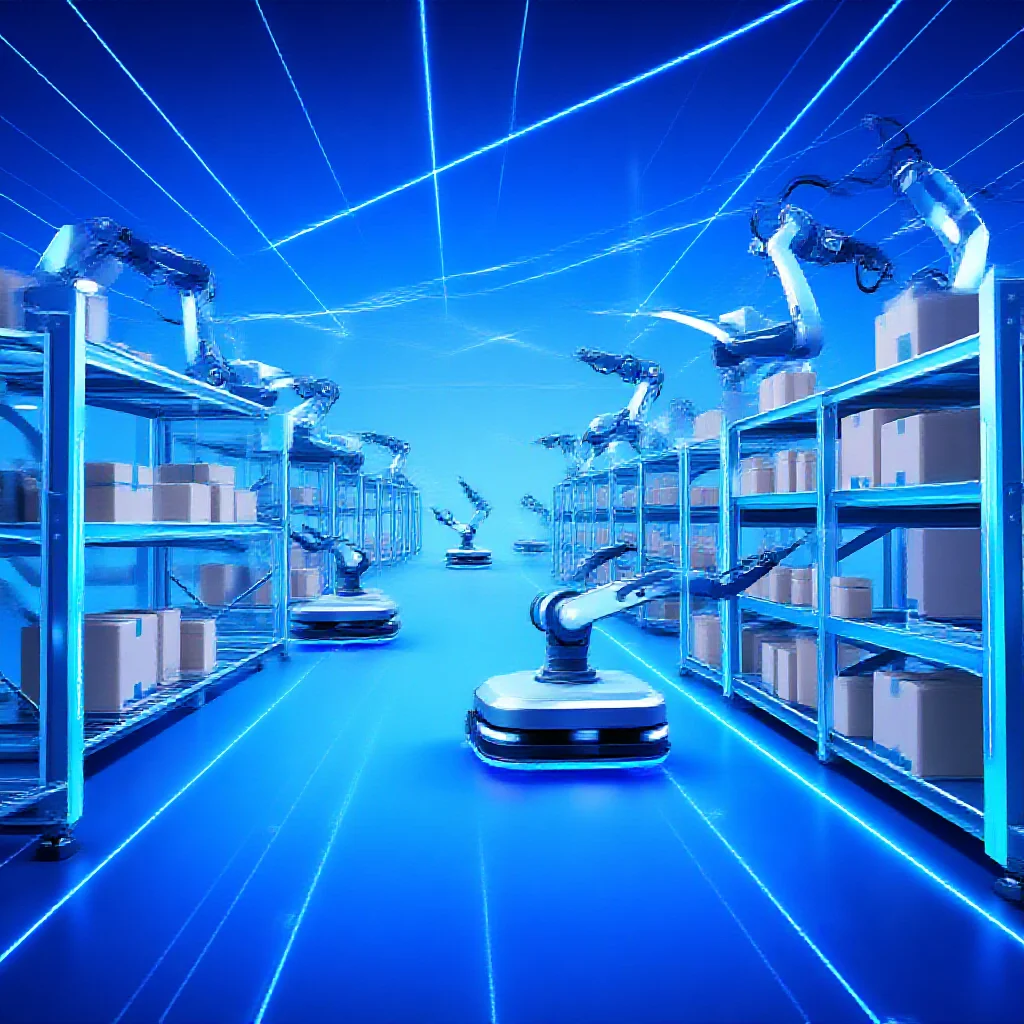
"On April 17, 2026, The Home Depot announced its acquisition of SIMPL Automation,"
Beyond the Headline: How Home Depot's SIMPL Acquisition Signals a New Era in Retail Logistics
Date: April 17, 2026
On April 17, 2026, The Home Depot announced the acquisition of SIMPL Automation. The stated purpose is to accelerate fulfillment and tighten distribution center performance. (Source 1: [Primary Data]) This transaction represents a strategic investment beyond mere technological enhancement. It indicates a fundamental shift in retail strategy, where control over logistics automation transitions from a operational expense to a core competitive asset. The move reflects broader industry pressures, including escalating supply chain costs, persistent labor market constraints, and the demand for resilient, scalable fulfillment networks.
The Strategic Calculus: Why Own, Not License, Automation?
The press release terminology of "speed" and "tighten performance" functions as corporate communication for addressing acute financial and operational pressures. For a retailer of The Home Depot's scale, with a vast network of distribution centers (DCs) and a product mix ranging from lumber to fasteners, incremental efficiency gains translate into significant financial impact. Licensing automation solutions provides capability but not control. Vertical integration through acquisition secures proprietary technology, prevents competitive poaching of a key vendor, and allows for tailored development aligned exclusively with The Home Depot's complex logistics needs, which include bulky goods and seasonal demand surges.
The economic logic is underscored by industry-wide data. Supply chain operating costs have risen consistently, with warehouse labor expenses being a primary driver. Firms like Prologis and MWPVL International report sustained wage inflation and vacancy challenges in logistics labor markets. (Source 2: [Industry Report Data]) Owning the automation technology converts a variable labor cost into a managed capital investment with predictable lifecycle costs, while insulating operations from labor volatility.
SIMPL's Hidden Value: Beyond Robots to Systemic Intelligence
The intrinsic value of SIMPL Automation likely extends beyond hardware. Public-facing material from SIMPL prior to acquisition emphasizes software orchestration and intelligent workflow management. The core intellectual property probably resides in a "fulfillment brain"—an AI-driven software layer that dynamically optimizes inventory placement, robot routing, and order batching across a distribution facility. This transforms a DC from a collection of automated tasks into a cohesive, self-optimizing system.
Analysis of SIMPL's pre-acquisition client case studies and patent filings indicates a focus on maximizing throughput by reducing robot idle time and optimizing pick paths through real-time simulation. (Source 3: [Public Corporate & Patent Data]) For The Home Depot, this systemic intelligence is critical. The ability to dynamically re-prioritize orders—for instance, shifting from bulk lumber to online small-parts orders based on real-time demand—creates a more adaptive and resilient network. The acquisition is, therefore, a purchase of advanced orchestration logic.
The Long-Term Ripple Effect on Retail's Physical Backbone
Integrating advanced automation at scale will fundamentally alter the physical and human architecture of retail logistics. Distribution center design will evolve to prioritize density and robot-friendly layouts over human accessibility. This may involve higher vertical storage, narrower aisles, and dedicated zones for autonomous mobile robots (AMRs), moving toward "lights-out" or human-minimal facilities for certain tasks. Logistics real estate experts note that new facilities are increasingly designed from the ground up for automation, with reinforced flooring for robot travel and optimized data infrastructure. (Source 4: [Logistics Real Estate Analysis])
Concurrently, the talent profile within these facilities will shift. Demand will decrease for manual material handlers and increase for mechatronic technicians, system orchestrators, and data analysts. The workforce becomes one that maintains and optimizes the automated system rather than performing the physical fulfillment tasks directly. This transition presents a significant retraining challenge but also offers a path to higher-skilled, higher-wage roles within the logistics ecosystem.
The Bigger Picture: Logistics as the New Retail Battleground
The Home Depot's acquisition is a single move in a broader strategic contest. Competitors like Lowe's, Amazon, and Tractor Supply are engaged in parallel efforts to dominate fulfillment speed and cost. Amazon's vast robotics portfolio and Walmart's extensive investments in automated fulfillment centers and market fulfillment facilities establish the competitive baseline. Target's development of sortation centers for last-mile efficiency represents another vector of competition.
In this context, acquiring SIMPL functions as a defensive and offensive maneuver to build an economic moat. It creates a proprietary, deeply integrated logistics capability that competitors cannot easily license or replicate. The future of retail competition, particularly for big-box operators, will be determined less by front-end merchandising and more by back-end logistical prowess. The winner will be the entity that can deliver the broadest assortment to the customer—whether professional contractor or DIY homeowner—with the greatest speed, reliability, and cost efficiency.
Conclusion
The acquisition of SIMPL Automation by The Home Depot is a significant event that transcends a typical technology procurement. It is a strategic pivot toward vertical integration of a critical capability in response to structural economic pressures. The move prioritizes long-term control and adaptability over short-term licensing convenience. It will catalyze changes in physical infrastructure, workforce composition, and operational intelligence. Analytically, this transaction confirms that advanced, proprietary logistics automation is no longer a competitive advantage but a table-stakes requirement for major retailers. The primary battlefield for market share has moved decisively from the store aisle to the distribution center floor.
Trade Metrics
Related Datasets
Q4 Cross-Border Logistics Report
PDF • 4.2 MB
Automotive Parts Supply Chain Index
CSV • 1.1 MB