Beyond the Cloud: How Edge Computing is Redefining the Economics of Autonomous

Sarah Martinez
Logistics Correspondent
April 18, 2026
DATELINE: NA TRADE WIRE
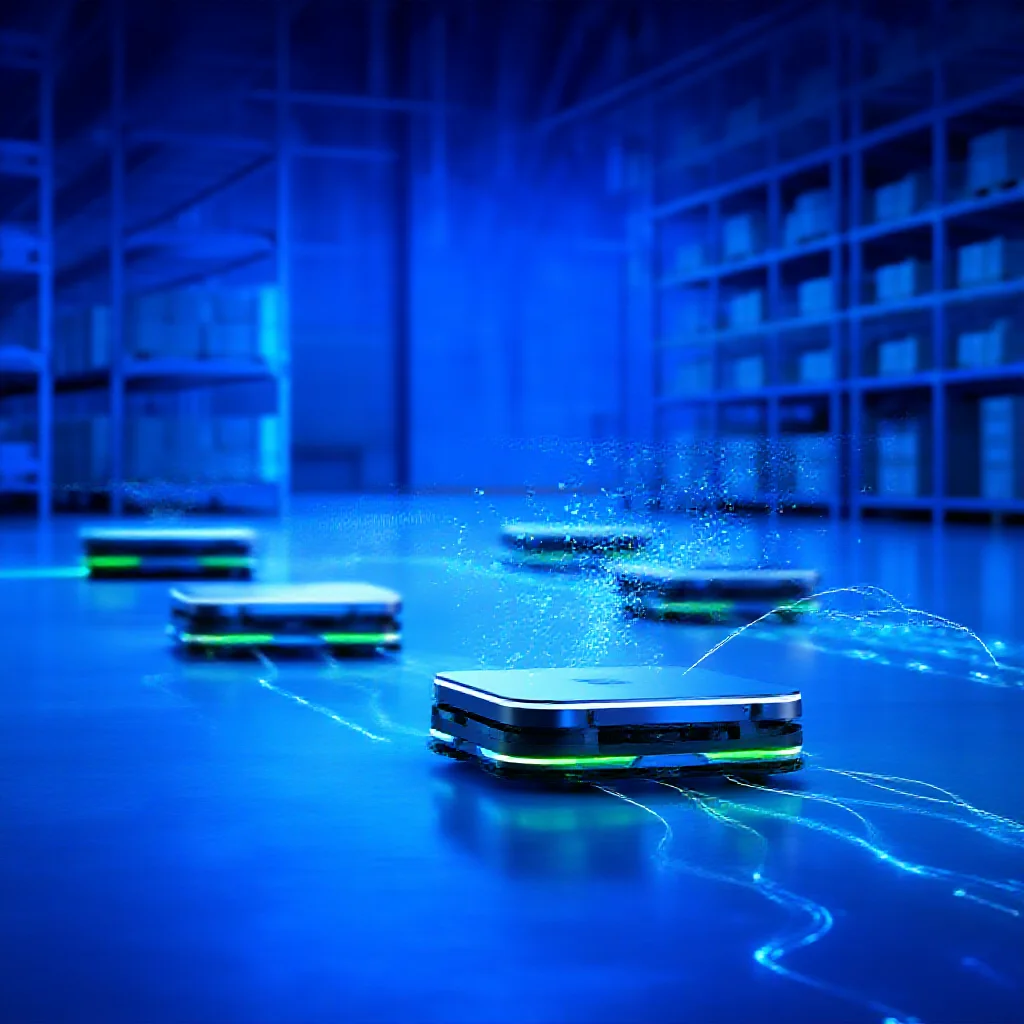
"By 2026, the vision of fully autonomous supply chains is colliding with"
Beyond the Cloud: How Edge Computing is Redefining the Economics of Autonomous Supply Chains
April 16, 2026
Introduction: The Data Deluge and the Cloud's Breaking Point
By 2026, the proliferation of Autonomous Mobile Robots (AMRs), drones, and dense IoT sensor networks has brought the vision of fully autonomous supply chains to the brink of reality. This proliferation has also revealed a central paradox. The very components that enable autonomy—cameras, LiDAR, and myriad smart sensors—generate overwhelming volumes of data. Sending this continuous data stream to a centralized cloud for processing creates crippling latency, unsustainable bandwidth costs, and a single point of failure. The cloud-centric model, once the default for digital transformation, has reached a breaking point for real-time physical operations. The critical architectural shift is the migration of intelligence to the data source. Edge computing is emerging not as a supplementary technology but as the foundational layer enabling true, economically viable autonomy.
!Infographic showing traditional cloud-centric versus edge-centric data flows

The Hidden Economic Logic: From Cost Center to Value Engine
The transition to edge computing is frequently framed in technical terms: reduced latency, bandwidth savings, and reliability. A deeper analysis reveals its role as a fundamental economic enabler, transforming the supply chain from a cost center into a dynamic value engine.
First, latency reduction functions as direct revenue protection. In autonomous systems, milliseconds determine outcomes. For an AMR, a 100-millisecond delay in processing LiDAR data for collision avoidance can result in a full-stop safety shutdown, halting a production line. Edge processing eliminates this delay, maintaining flow. In quality inspection, an AI vision model embedded directly on a production line camera can identify and reject a defective component in real-time, preventing the compounding costs of downstream rework, waste, and potential recalls.
Second, edge computing enables significant bandwidth cost arbitrage. A single AMR can generate multiple terabytes of high-fidelity sensor data per day. Transporting this raw data to the cloud incurs substantial costs for network egress and storage, much of which is unnecessary for immediate operational decisions. Processing this data locally and transmitting only critical insights or aggregated metadata results in a direct and substantial reduction in operational expenditure.
Third, this model enables new, scalable business models. The high bandwidth and latency demands of cloud processing made widespread, modular deployment of autonomous systems economically challenging. Edge computing allows for the "as-a-service" deployment of autonomous fleets in warehouses or on production lines, where systems operate intelligently with minimal continuous cloud dependency. This reduces upfront capital expenditure and allows for granular, pay-for-use scaling.
Architectural Shift: Building the Supply Chain's Local Nervous System
Implementing edge computing is not a matter of installing a single server. It involves constructing a hierarchical "local nervous system" for the supply chain. This architecture typically consists of three tiers: the Device Edge (intelligence embedded within sensors, robots, or cameras), the Local Edge (gateway servers or micro-data centers within a facility), and the Cloud.
At the Device Edge, smart sensors and AMRs become decision nodes rather than simple data pipes. A camera performs initial image analysis; an AMR's onboard computer executes its primary navigation algorithms. The Local Edge aggregates data from multiple devices within a warehouse or factory zone, handling higher-level coordination, such as traffic management for a fleet of robots or correlating data from adjacent production stages.
This redefines the cloud's role. It shifts from a real-time processor to an orchestrator, model trainer, and long-term analytics hub. The cloud is responsible for updating the AI models deployed at the edge, performing cross-facility trend analysis, and providing strategic oversight, but it is relieved of the burden of micromanaging real-time physical operations.
!Diagram of a three-tier edge architecture for supply chains

Deep-Dive Use Cases: Where Edge Computing Creates Unfair Advantages
The economic and operational advantages of edge computing materialize in specific, high-impact applications.
Real-Time Quality Inspection: In automotive manufacturing, embedding lightweight neural networks directly on high-speed line-scan cameras allows for the inspection of thousands of components per hour. Defects are identified and acted upon within milliseconds, with only image snippets of failures sent to the cloud for audit and model refinement. This prevents the downstream accumulation of value-add on defective parts, a direct cost avoidance measured in margin points.
Predictive Maintenance at the Source: Vibration and thermal sensors attached to critical conveyor motors or robotic arms run localized anomaly detection algorithms. By analyzing patterns directly on a local gateway, these systems can identify signature frequencies indicative of bearing wear or misalignment. This enables maintenance to be scheduled during planned downtime, avoiding the catastrophic costs of unplanned production halts. The alternative—streaming continuous high-frequency vibration data to the cloud—is both prohibitively expensive and too slow for timely intervention.
Resilient, Network-Independent Logistics: In large-scale sorting centers or ports, autonomous vehicle fleets must operate 24/7. An edge computing layer within the facility allows these systems to continue core routing, loading, and unloading operations during intermittent cloud connectivity outages. The local nervous system maintains operational integrity, synchronizing data with the central platform once connectivity is restored. This resilience transforms logistics networks from fragile to antifragile, capable of maintaining service levels despite external network volatility.
Conclusion: The Inevitable Convergence and Market Trajectory
The trajectory for autonomous supply chains is clear. The convergence of physical automation and decentralized computing intelligence is inevitable. The technical requirements for real-time, secure, and reliable operation cannot be met by a purely centralized architecture.
The market will reflect this shift. Investment will increasingly flow toward companies developing robust edge hardware capable of operating in industrial environments, software frameworks for managing distributed AI model deployment, and integrated systems that seamlessly blend edge autonomy with cloud-scale analytics. The supply chain of 2026 and beyond will be defined not by its connectivity to a single cloud brain, but by the pervasive, localized intelligence of its constituent parts—a truly autonomous and economically optimized ecosystem.
Trade Metrics
Related Datasets
Q4 Cross-Border Logistics Report
PDF • 4.2 MB
Automotive Parts Supply Chain Index
CSV • 1.1 MB