Beyond the Headline: How DHL''s Gulf Energy Shock Warning Reveals a Fragile

Sarah Martinez
Logistics Correspondent
April 22, 2026
DATELINE: NA TRADE WIRE
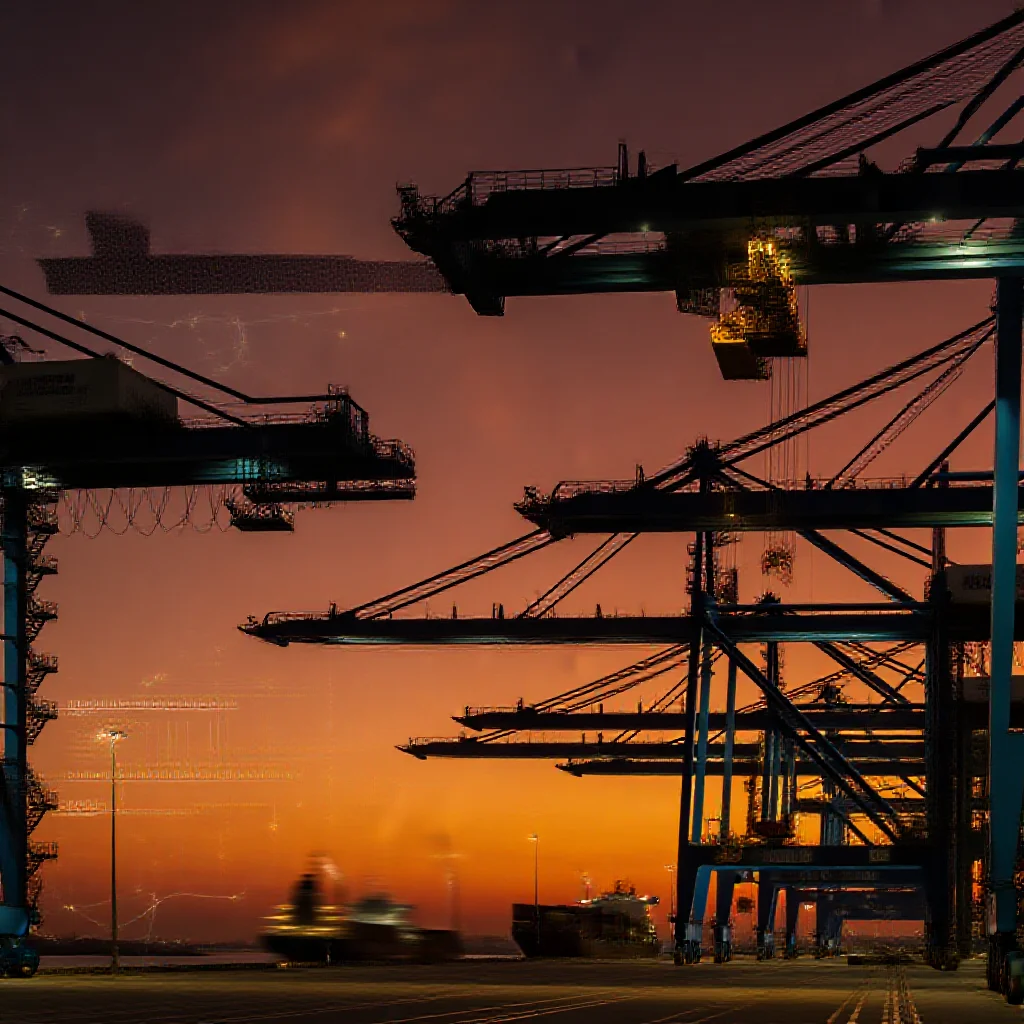
"In April 2026, the CEO of logistics giant DHL issued a stark warning: a"
Beyond the Headline: How DHL's Gulf Energy Shock Warning Reveals a Fragile Global Supply Chain Tipping Point
Date: April 22, 2026
On April 21, 2026, the Chief Executive Officer of logistics conglomerate DHL issued a forward-looking risk assessment. The statement warned of a potential energy shock originating in the Gulf region and posited that such an event could push the global economy toward a tipping point. (Source 1: [Primary Data]) This declaration, from the head of a company responsible for moving approximately 10% of global cross-border air and ocean trade, transcends generic commentary on energy prices. It functions as a diagnostic report on the systemic fragility embedded within modern, hyper-efficient supply chains. Analysis indicates the warning is less about the probability of a specific geopolitical event and more an acknowledgment of structural vulnerabilities that have reached a critical mass.
The Canary in the Coal Mine: Why a Logistics CEO's Warning Demands Scrutiny
DHL’s operational footprint provides a real-time, high-resolution sensor for global trade flows. The company’s visibility extends from raw material extraction to final-mile delivery, encompassing air freight, ocean freight, contract logistics, and warehousing. A warning from this entity is not a market opinion but a data-informed alert from the circulatory system of globalization itself. The specificity of the Gulf region as the potential epicenter is analytically significant. It moves beyond abstract discussions of oil benchmarks to pinpoint a concentrated chokepoint. The Strait of Hormuz alone facilitates the transit of approximately 21 million barrels of oil per day, representing one-fifth of global liquid fuel consumption. Furthermore, the Gulf is a critical artery for containerized trade between Asia, Europe, and the Middle East. A disruption there would simultaneously attack both the energy inputs and the physical pathways of global commerce.
The Hidden Logic: How Efficiency Created Systemic Fragility
The underlying logic of the warning is rooted in a fundamental paradox. Post-pandemic shifts toward "just-in-case" inventory buffers have not resolved the core energy dependency of logistics networks; they have merely altered the point of exposure. Modern supply chains represent a system of double exposure. First, they are directly vulnerable to fuel price volatility for transport mediums—bunker fuel for ships, jet fuel for air cargo, and diesel for road freight. Second, they are indirectly vulnerable to energy costs at manufacturing and processing nodes, which impact production schedules and output. The pursuit of hyper-efficiency, characterized by synchronized production and lean inventories, has eliminated slack. This creates conditions for a non-linear impact: a Gulf energy shock would not manifest as a simple, proportional increase in costs. Instead, it would trigger a cascading failure of tightly calibrated schedules. A delay in fuel delivery to a port disrupts crane operations, which misses a vessel’s departure window, which then delays components at a factory thousands of miles away, leading to assembly line stoppages. The system is engineered for continuous flow, not for shock absorption.
Mapping the Tipping Point: Beyond Economics into System Collapse
In supply chain terminology, a "tipping point" is the threshold at which network redundancy and cost-absorption mechanisms fail. Scenario analysis based on the warning suggests a multi-phase collapse. Initial energy price volatility would immediately destabilize contract logistics, where long-term fixed-rate agreements become financially untenable for carriers. Air freight, the premium channel for time-sensitive goods, would see severe capacity contraction and rate spikes as airlines ground fuel-inefficient freighters. Maritime schedules, already prone to congestion, would unravel due to "slow steaming" tactics to conserve fuel and port-side energy shortages. The compounding of these delays would create feedback loops of congestion and scarcity. Historical precedent validates the potential scale. The 1973 oil crisis induced a global recession and fundamentally altered economic policy. More recently, the 2019 Gulf tanker incidents caused immediate spikes in risk premiums and insurance costs, demonstrating the region’s latent disruptive power. (Source 2: [Historical Data Analysis]) The social and political multipliers are significant. Protracted supply chain breakdowns accelerate inflationary pressures and goods shortages, which in turn increase the likelihood of protectionist trade policies and export controls. Such measures would further fragment the global trading system, degrading its overall resilience—a classic vicious cycle.
Verification and Context: Weighing the Warning Against Data
The DHL CEO’s assessment aligns with persistent concerns documented by energy and trade bodies. The International Energy Agency (IEA) has repeatedly highlighted the world’s continued reliance on the stability of Gulf energy corridors, noting that alternative routes and energy sources cannot compensate for a major, sustained disruption in the short to medium term. (Source 3: [IEA Reports]) Concurrently, analysis from the International Monetary Fund (IMF) on global economic interconnectedness shows that supply-side energy shocks have a more pronounced and longer-lasting negative impact on growth than demand-side shocks. The warning also correlates with observed stress points in global logistics, including the structural shortage of shipping capacity and the high concentration of critical manufacturing in energy-intensive industries.
Neutral Market and Industry Predictions
Based on this analysis, the warning points to several probable near-to-medium-term developments. First, a strategic reprioritization of energy security within corporate supply chain risk matrices is inevitable, with increased investment in dual-fuel assets and near-shoring initiatives for critical components. Second, the freight and logistics sector will face intensified pressure to develop and transparently price resilience into service contracts, moving away from purely cost-based models. Third, geopolitical risk assessment focused on the Gulf region will become a more dominant factor in long-term corporate investment and trade finance decisions. The central prediction is that the global supply chain will not return to a pre-2020 state of efficiency-optimization. Instead, it will evolve into a more expensive, less fluid system with built-in redundancies, where resilience is valued over pure leanness. The DHL warning serves as a marker for this irreversible transition.
Trade Metrics
Related Datasets
Q4 Cross-Border Logistics Report
PDF • 4.2 MB
Automotive Parts Supply Chain Index
CSV • 1.1 MB