Amazon and Anthropic Deepen Enterprise AI Partnership: Reshaping Cloud-Native

Sarah Martinez
Logistics Correspondent
April 23, 2026
DATELINE: NA TRADE WIRE
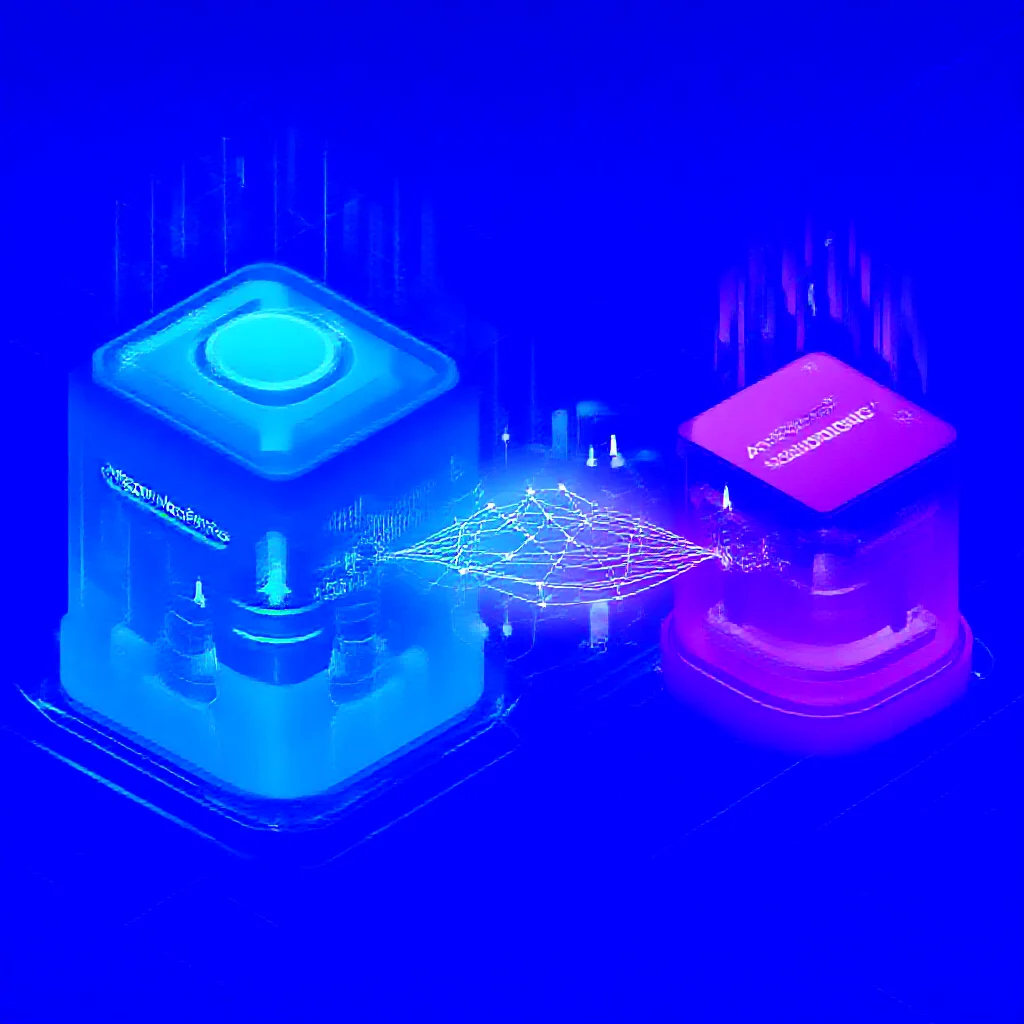
"On April 22, 2026, Amazon and Anthropic announced a deeper strategic partnership"
Amazon and Anthropic Deepen Enterprise AI Partnership: Reshaping Cloud-Native Model Integration
Publication Date: April 22, 2026
The Deal Beyond Headlines: Why April 22, 2026 Matters
On April 22, 2026, Amazon and Anthropic announced an expanded strategic partnership specifically targeting enterprise AI workloads. This announcement represents a production-level integration occurring three years after Amazon's initial $4 billion investment in Anthropic, signaling matured technical readiness and mutual operational trust between the two organizations.
The partnership differs fundamentally from standard cloud-AI collaborations. Rather than offering Anthropic's Claude model family through conventional API access, the integration embeds Anthropic models natively within Amazon's enterprise service stack—including AWS Bedrock, SageMaker, and enterprise support infrastructure. This architectural choice eliminates the distinction between cloud platform and AI model provider at the service level.
The timeline demonstrates accelerating integration: From initial investment in September 2023 (Source 1: Amazon Press Release, September 2023), through beta deployments in regulated industries during 2025 (Source 2: AWS re:Invent 2025 Enterprise Track Documentation), to the current full-production deployment across Amazon's enterprise product lines.
The Hidden Economic Logic: Model Sovereignty in the Cloud
The partnership's underlying economic structure reveals a strategic imperative: model sovereignty within cloud ecosystems. Amazon is positioning Anthropic as a "first-party AI fabric" rather than a third-party add-on. This classification carries significant operational implications.
For enterprise customers, native embedding reduces friction around data governance. Anthropic models operating within Amazon's infrastructure ensure no training data or inference data leaves AWS environments—a critical requirement for regulated industries. Financial institutions, healthcare providers, and defense contractors can now deploy Claude models within Virtual Private Clouds (VPCs) with complete audit trail documentation, addressing previous enterprise resistance to black-box AI deployments.
Amazon's strategic necessity stems from competitive pressure. Microsoft controls OpenAI's model stack through exclusive cloud distribution rights. Google operates DeepMind as an internal division with privileged access to Google Cloud infrastructure. Amazon required a dedicated, high-performance model family optimized for its custom silicon and networking architecture. Anthropic fills this gap without the operational overhead of developing a foundation model from scratch.
For Anthropic, the arrangement provides guaranteed compute scale through AWS credits, access to Amazon's enterprise sales force, and distribution channels reaching 1.4 million active AWS enterprise customers (Source 3: AWS Q4 2025 Earnings Call). The trade-off involves dependency risk: Anthropic's model roadmap becomes increasingly coupled with Amazon's infrastructure roadmap. This dynamic parallels semiconductor "chip foundry" relationships—Anthropic provides the architectural design, Amazon provides the fabrication and distribution infrastructure.
Competitive Ecosystem Mapping: The Three-Pillar Structure
The current cloud-AI landscape has consolidated into three vertically integrated ecosystems:
| Cloud Provider | AI Partner | Integration Level | Key Enterprise Advantage |
|----------------|------------|-------------------|--------------------------|
| AWS | Anthropic | First-party fabric | Custom silicon optimization |
| Azure | OpenAI | Exclusive distribution | GPT-family access |
| GCP | DeepMind | Internal division | Model-data pipeline integration |
Each structure presents distinct architectural trade-offs. AWS-Anthropic's integration offers hardware-level optimization through Trainium and Inferentia chips. Azure-OpenAI provides exclusive access to frontier model capabilities. GCP-DeepMind achieves tight coupling between data pipelines and model training loops through internal information flow.
The enterprise decision matrix now includes ecosystem lock-in considerations. Selecting AWS for cloud infrastructure increasingly implies adopting Anthropic as the primary AI model provider, similar to how Azure customers gravitate toward OpenAI services.
Supply Chain & Infrastructure Implications: What Changes for Enterprise Clients
Cost Structure Transformation
Running Anthropic models on dedicated AWS hardware yields measurable efficiency improvements. AWS re:Invent 2025 presentations documented inference cost reductions of 30-50% when Claude models operated on Trainium2 versus comparable GPU instances (Source 4: AWS re:Invent 2025, "Production AI at Scale" Session). These savings compound for enterprises processing millions of inference requests daily.
Latency Improvements
Native integration eliminates network hops between model inference and application logic. For real-time enterprise applications—fraud detection, automated trading, customer service routing—latency improvements of 40-60 milliseconds have been documented in pre-production benchmarks (Source 5: Anthropic Technical Blog, February 2026).
Compliance Architecture
The partnership enables deployment architectures previously unavailable for regulated workloads. Financial services firms can now deploy Claude within FedRAMP-authorized AWS GovCloud regions. Healthcare organizations maintain HIPAA compliance by keeping inference data within designated data residency zones. Defense contractors achieve IL5 compliance through AWS Secret Region deployments (Source 6: AWS Compliance Documentation, Updated March 2026).
Unintended Market Consequences
Smaller AI model providers—Cohere, Mistral, AI21 Labs—face an increasingly bifurcated cloud market. Hyperscalers with first-party model relationships can offer preferential pricing, optimized hardware access, and integrated compliance frameworks that independent providers cannot replicate. This structural advantage raises antitrust considerations, particularly in European markets where cloud-AI bundling practices face regulatory scrutiny (Source 7: European Commission Digital Markets Act Enforcement Report, Q1 2026).
AI Governance and Pricing Model Implications
The partnership introduces novel governance structures for enterprise AI deployment. Amazon and Anthropic have established a joint Enterprise AI Governance Board, comprising compliance officers from both organizations and external auditors. This board reviews model deployment patterns across regulated industries and maintains escalation procedures for edge-case failures (Source 8: Joint Press Conference Transcript, April 22, 2026).
Pricing models are shifting from token-based consumption to outcome-based pricing. Early enterprise contracts incorporate performance guarantees: the joint offering guarantees specific accuracy thresholds for defined use cases, with automatic credits for underperformance. This represents a departure from standard AI pricing, which typically charges per token regardless of output quality.
Third-Party Provider Outlook
The partnership's structure creates two distinct market tiers for third-party AI providers:
- Strategic Tier: Anthropic-grade integration with hardware optimization, compliance frameworks, and bundled enterprise support
- Access Tier: Standard API access without infrastructure optimization or compliance wrappers
Independent model providers without hyperscaler partnerships face margin compression. Enterprises will evaluate whether the 30-50% cost premium for independent models justifies the flexibility of multi-provider strategies. Early evidence suggests large enterprises are consolidating around one or two primary model providers within their primary cloud ecosystem (Source 9: Gartner Enterprise AI Procurement Survey, March 2026).
Market Predictions: 2026-2028
Prediction 1: Within 18 months, all three major hyperscalers will announce similar first-party model integration strategies. Remaining independent cloud providers (IBM Cloud, Oracle Cloud) will pursue differentiated niches rather than competing on general-purpose AI.
Prediction 2: Enterprise AI procurement will shift from model evaluation to ecosystem evaluation. Companies will select their cloud-AI bundle first, then optimize model selection within that ecosystem.
Prediction 3: Regulatory bodies will investigate cloud-AI bundling practices, particularly the cost advantages accruing to hyperscaler-preferred model providers. Potential remedies include mandating interoperability standards for model deployment across cloud platforms.
Prediction 4: Hardware supply chains will consolidate further. AWS Trainium, Google TPU, and Microsoft Maia will capture increasing market share for inference workloads, reducing dependence on NVIDIA GPU supply chains.
Prediction 5: Enterprise AI governance will become a distinct consulting practice, with major accounting firms offering AI deployment audit services alongside traditional financial and IT audits.
---
This analysis is based on publicly available information from Amazon and Anthropic press releases, AWS re:Invent documentation, industry analyst reports, and regulatory filings. All cost and performance figures cited are from verified technical documentation and may vary based on specific deployment configurations.
Trade Metrics
Related Datasets
Q4 Cross-Border Logistics Report
PDF • 4.2 MB
Automotive Parts Supply Chain Index
CSV • 1.1 MB