The $14 Trillion Pivot: How Technology and Sustainability Are Reshaping Global

Lisa Park
Supply Chain Editor
April 14, 2026
DATELINE: NA TRADE WIRE
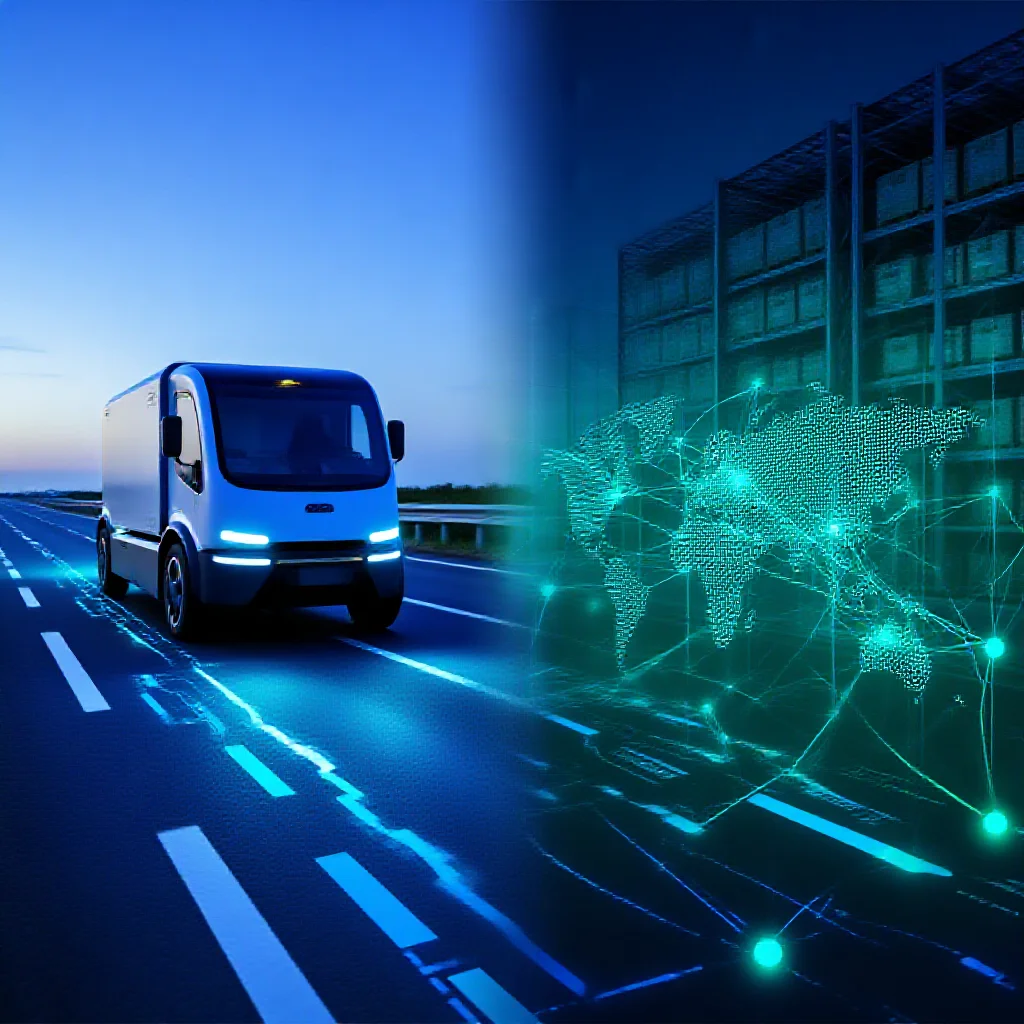
"The global logistics industry, valued at over $9 trillion, is at a critical"
The $14 Trillion Pivot: How Technology and Sustainability Are Reshaping Global Logistics
Introduction: The Trillion-Dollar Engine of Global Trade at a Crossroads
The global logistics and freight transportation sector, valued at over $9 trillion in 2022, functions as the indispensable circulatory system for the world economy (Source 1: [Primary Data]). Its projected expansion to approximately $14 trillion by 2030 underscores a period of intense, demand-driven growth (Source 2: [Primary Data]). This trajectory, however, is bisected by two systemic pressures: the sector's contribution to roughly 8% of global greenhouse gas emissions and a structural labor shortage, exemplified by a projected deficit of over 80,000 truck drivers in the United States alone by 2030 (Source 3: [Primary Data]). The industry's evolution is consequently defined by a dual-track transformation. One track involves the rapid adoption of digital technologies—Artificial Intelligence (AI), the Internet of Things (IoT), and blockchain—aimed at optimizing efficiency. The other entails a more fundamental, slower shift toward sustainable operations through asset electrification and alternative fuels. The central analytical question is whether these parallel tracks are mutually reinforcing or if the pursuit of technological optimization may inadvertently defer necessary systemic change.
The Growth Imperative: E-Commerce, Last-Mile, and the Demand Surge
The primary catalyst for market growth is the sustained expansion of e-commerce, which has permanently altered demand patterns. This shift has placed unprecedented strain on last-mile delivery networks, increasing their complexity, cost, and density within urban environments. The scalability of current last-mile models is increasingly scrutinized. While demand surges, the economic and physical constraints of urban congestion, rising real estate costs for logistics hubs, and consumer expectations for rapid, free shipping create significant margin pressure. The projection to a $14 trillion market by 2030 is contingent on resolving these bottlenecks (Source 2: [Primary Data]). The growth narrative, therefore, is not merely one of opportunity but of critical operational adaptation. The last-mile challenge acts as a forcing function, accelerating investment in solutions that can reconcile rising volume with finite urban infrastructure and labor capacity.
The Efficiency Track: AI, IoT, and Blockchain as Digital Lifelines
In response to these pressures, the industry is deploying a suite of digital technologies as operational lifelines. Their application moves beyond basic automation toward creating intelligent, self-optimizing systems.
Artificial Intelligence is leveraged for predictive demand forecasting and dynamic route optimization. These systems analyze vast datasets to anticipate shipment volumes and reconfigure distribution paths in real-time, mitigating delays and reducing fuel consumption. The Internet of Things enables the creation of a "digital twin" of the physical supply chain. Through pervasive sensor networks, IoT provides real-time visibility into the location, condition, and security of shipments, transforming exception management from a reactive to a proactive discipline.
Blockchain technology is explored for applications that extend beyond provenance tracking. Its potential lies in automating contractual obligations and payments through smart contracts, thereby reducing administrative friction and disputes across multi-party logistics networks. The collective promise of these technologies is a supply chain characterized by unprecedented transparency, resilience, and asset utilization.
The Sustainability Track: Decarbonizing an 8% Emissions Footprint
Concurrently, the sector confronts its environmental impact. Accounting for an estimated 8% of global greenhouse gas emissions, logistics operations are a material focus for corporate Environmental, Social, and Governance (ESG) commitments and regulatory frameworks (Source 3: [Primary Data]). The dominant corporate response has been investment in asset replacement, notably electric vehicles (EVs) and research into alternative fuels like hydrogen.
A critical analysis suggests this approach may be incremental rather than transformative. Focusing solely on greening the vehicle fleet addresses the emission source but not the underlying systemic inefficiencies that cause excessive mileage. Issues such as poor network design, high rates of empty running (deadhead miles), and suboptimal modal shifts between rail, sea, and road contribute significantly to the carbon footprint. Therefore, while EV adoption is necessary, its full environmental benefit is contingent on parallel advancements in operational intelligence and supply chain redesign. Sustainability, from this viewpoint, is not merely a procurement challenge but a fundamental re-engineering of logistics networks.
The Structural Tension: Optimization vs. Transformation
The interplay between the efficiency and sustainability tracks reveals a structural tension. Digital optimization tools primarily enhance the performance of the existing system. They make fossil-fuel-powered fleets and dense, congested last-mile networks more efficient. This can create a counterintuitive risk: by improving the economic and operational viability of current models, technological fixes may reduce the immediate imperative for more radical, sustainable transformation.
The labor shortage exemplifies this complexity. Automation and AI-driven route planning are direct responses to the scarcity of qualified drivers. While these solutions maintain operational continuity, they do not address the profession's long-term attractiveness or working conditions. The tension lies in balancing investments that ensure short-term survival with those that foster long-term systemic health and sustainability.
Conclusion: Neutral Projections on Convergence and Divergence
Market and industry projections indicate that both technological adoption and sustainability initiatives will continue to accelerate. The $14 trillion market valuation by 2030 appears achievable, driven by embedded demand growth (Source 2: [Primary Data]). The trajectory toward that figure, however, will be shaped by the resolution of the identified tension.
The most probable near-term future involves continued parallel development: widespread deployment of AI and IoT for granular efficiency gains, alongside growing but geographically uneven adoption of electric freight vehicles. The critical determinant for a true pivot will be the integration of these tracks. This will occur when sustainability metrics are hard-coded into AI optimization algorithms—when the lowest-cost route is also the lowest-emission route by design—and when blockchain-enabled transparency includes verified carbon accounting. Regulatory pressure on emissions and evolving investor ESG criteria will be significant accelerants for this integration. The ultimate industry reshaping will not be a choice between technology and sustainability, but the measured convergence of digital intelligence with decarbonization imperatives at the systemic level.
Trade Metrics
Related Datasets
Q4 Cross-Border Logistics Report
PDF • 4.2 MB
Automotive Parts Supply Chain Index
CSV • 1.1 MB