The Great Reshuffle: How Tariffs and Reshoring Are Redefining Manufacturing

Lisa Park
Supply Chain Editor
March 29, 2026
DATELINE: NA TRADE WIRE
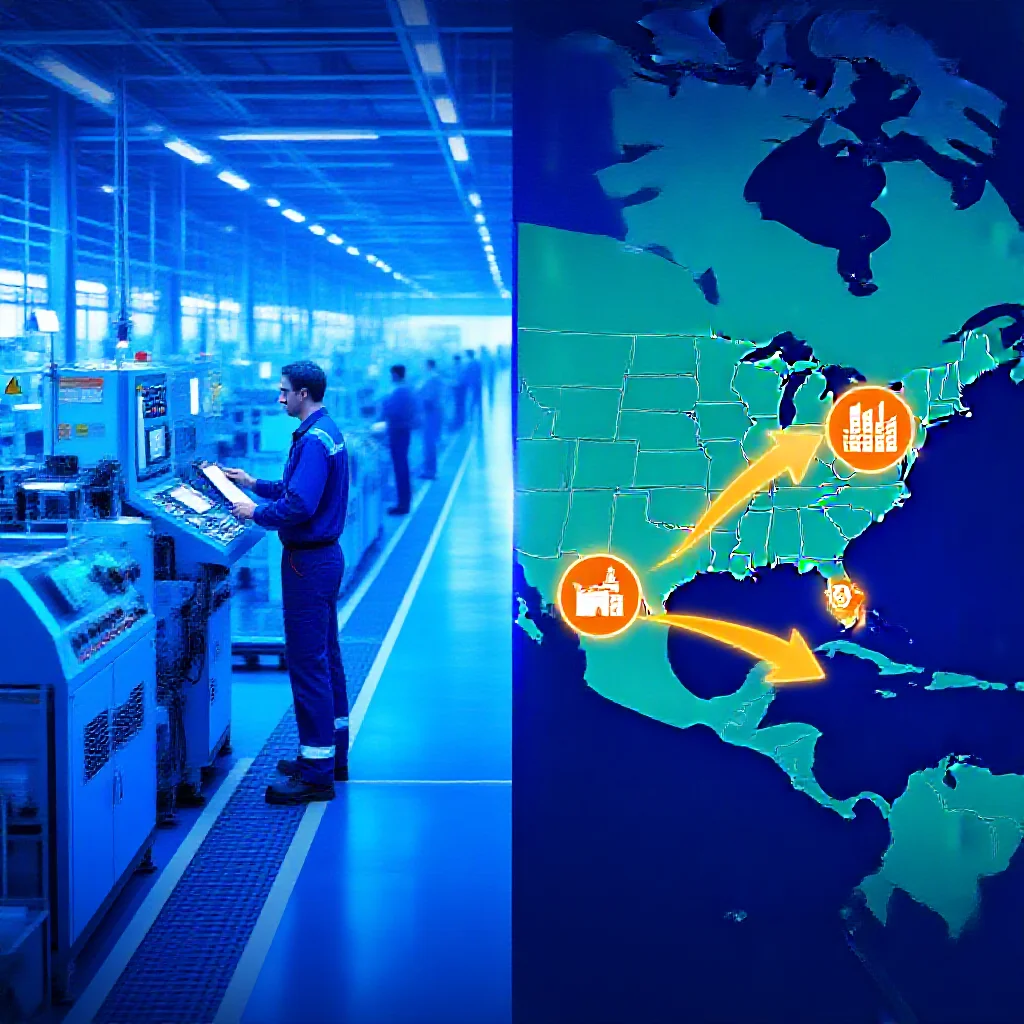
"The US-China trade war, marked by tariffs on over $300B in goods, has accelerated"
The Great Reshuffle: How Tariffs and Reshoring Are Redefining Manufacturing Recruitment by 2026
Introduction: The Policy Shock That Triggered a Talent Earthquake
A pivotal shift in global trade occurred in 2023: for the first time in two decades, the United States imported more goods from Mexico than from China. This milestone is a surface indicator of a deeper, more consequential transformation. The U.S.-China trade war, initiated in 2018, served as the primary catalyst, with tariffs imposed on over $300 billion worth of Chinese goods, elevating the average tariff rate from 3% to over 19% (Source 1: [Primary Data]). The immediate narrative focused on trade flows and supply chain logistics. However, the enduring story is one of human capital reallocation. Between February 2020 and May 2024, U.S. manufacturing employment grew by 803,000 jobs (Source 2: [Primary Data]). Concurrently, survey data indicates 96% of CEOs have evaluated reshoring some operations, with 79% of manufacturing executives planning to do so within five years (Source 3: [Survey Data]). The central thesis is clear: tariffs are the initial shock, but the resultant corporate strategy is triggering a talent earthquake, with its full force projected to reshape the recruiting landscape fundamentally by 2026.
The Reshoring Imperative: More Than Just Moving Factories
The decision to reshore extends beyond a simple reaction to tariff costs. Analysis reveals a multi-driver model for relocation. Geopolitical risk and the demonstrated fragility of extended supply chains during the pandemic are powerful co-drivers, compelling firms to prioritize resilience over marginal cost savings. Furthermore, significant government policy has actively incentivized the shift. Legislation such as the CHIPS Act and the Inflation Reduction Act provides substantial financial impetus for domestic production in critical sectors like semiconductors and clean energy (Source 4: [Policy Data]).
The high percentage of executives planning reshoring (79%) indicates a strategic, long-term trend rather than a transient reaction. This shift represents a move from "cost-driven offshoring" to "strategic reshoring." The operational models being repatriated or newly established are frequently distinct from their offshored predecessors. They are more automated, digitally integrated, and designed for agility. Consequently, the labor profile they require is fundamentally different, demanding higher technical skill levels and creating a mismatch with legacy manufacturing labor pools.
The 2026 Talent Cliff: Projecting the Recruiting Landscape of Tomorrow
The year 2026 emerges as a projected inflection point for recruiting due to converging timelines. The lead time for constructing new facilities, reconfiguring multi-tier supply networks, and developing viable skills pipelines typically spans several years. By 2026, the cumulative effect of decisions made today will materialize in the labor market.
The core recruiting challenge will be a severe skills mismatch. Modern reshored facilities require a workforce proficient in operating and maintaining advanced robotics, analyzing IoT-generated production data, and managing digital supply chain twins. This contrasts sharply with the manual assembly and repetitive task focus of the traditional offshored model. The recruiting market will see rising demand for roles such as automation technicians, robotics integration specialists, supply chain cybersecurity analysts, and digital twin engineers—positions that were largely non-existent in the previous offshoring paradigm.
The Nearshoring Nexus: Mexico's Rise and the Continental Talent War
The 2023 import data highlighting Mexico's ascendancy is not merely a trade statistic; it is a leading indicator of a forthcoming regional talent competition. Nearshoring to Mexico is a logical strategy for maintaining cost competitiveness while improving supply chain responsiveness. However, it does not alleviate the North American skills gap; it redistributes and intensifies it.
This trend will ignite a continental battle for specialized talent. Engineering expertise, logistics management, and bilingual operational leadership will become highly contested resources across the U.S.-Mexico corridor. Mexican manufacturing hubs will compete directly with U.S. facilities for the same finite pool of engineers and technical managers capable of overseeing complex, integrated cross-border operations. The recruiting dynamic thus evolves from a global sourcing model to a regional talent war, with compensation, training infrastructure, and quality of life becoming key battlegrounds.
Conclusion: The New Fundamentals of Manufacturing Recruitment
The manufacturing recruitment function is undergoing a structural change. The pre-2018 paradigm, focused on sourcing low-cost, commoditized labor for offshore locations, is obsolete. The new fundamentals are defined by three immutable trends.
First, recruitment is now a strategic, forward-looking operation tied to capital expenditure timelines, requiring engagement with talent pipelines years before a factory opens. Second, the value proposition to candidates has shifted from wage stability to skills development and career progression in high-tech environments. Third, the competitive set for talent has expanded geographically and across industries, pitting manufacturers against technology firms and logistics giants for analytical and technical minds.
By 2026, successful manufacturing recruitment will be characterized by deep partnerships with technical colleges, proactive workforce reskilling programs, and compensation models that reflect the premium on hybrid skillsets combining mechanical aptitude with digital literacy. The great reshuffle of production is, ultimately, a great reshuffle of people. The organizations that recognize the human capital reallocation as the central challenge will define the next era of industrial competitiveness.
Trade Metrics
Related Datasets
Q4 Cross-Border Logistics Report
PDF • 4.2 MB
Automotive Parts Supply Chain Index
CSV • 1.1 MB