Beyond the Headlines: How Tariffs Are Rewiring the Global Supply Chain''s

Lisa Park
Supply Chain Editor
April 8, 2026
DATELINE: NA TRADE WIRE
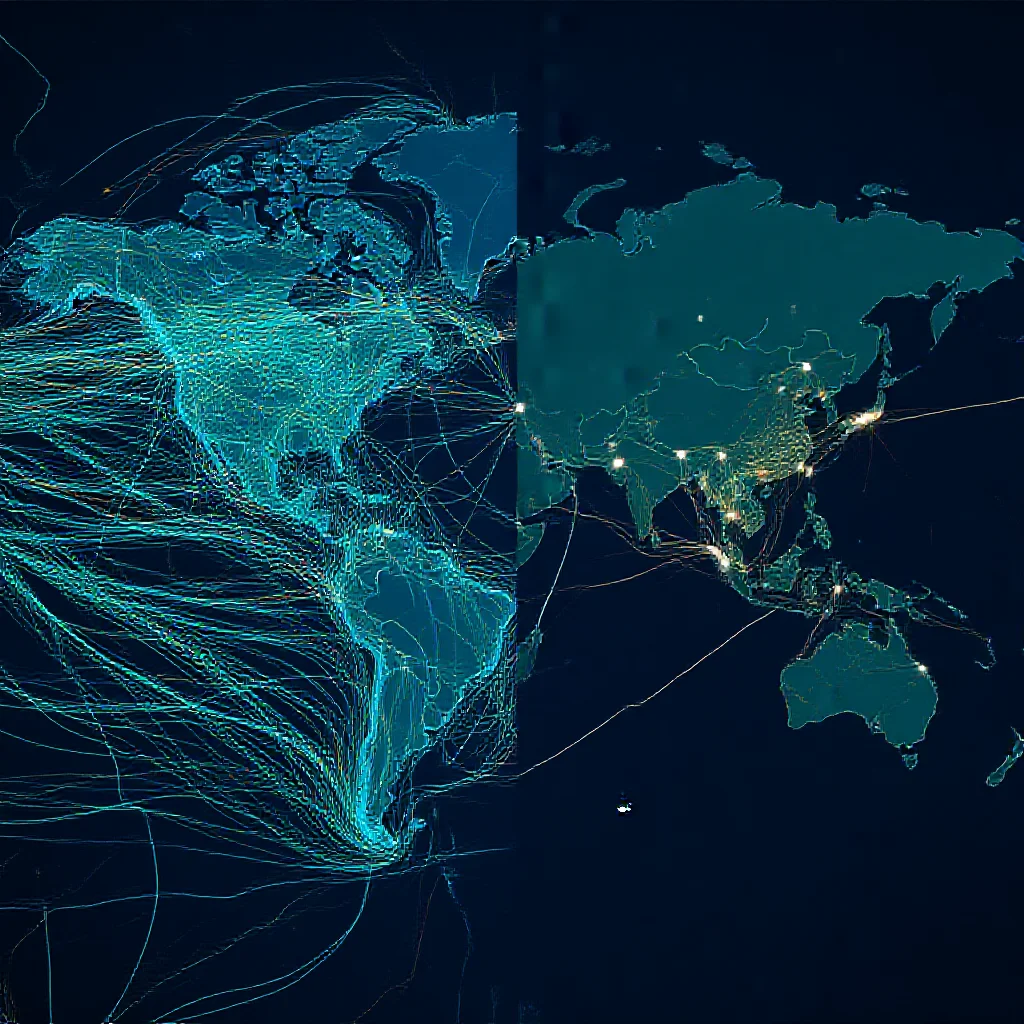
"Recent data reveals that tariffs are no longer temporary disruptions but"
Beyond the Headlines: How Tariffs Are Rewiring the Global Supply Chain's DNA
Introduction: The Tipping Point – From Episodic Shock to Structural Reality
The World Trade Organization’s March 2026 Global Trade Outlook and Statistics report delivered a definitive metric for a transformation long suspected: foreign direct investment in tariff-exposed, value chain-intensive sectors fell by 25 percent in 2025 (Source 1: [WTO Global Trade Outlook, March 2026]). This figure is not a cyclical downturn but a capital flight. It signals the conclusive shift of tariffs from episodic disruptions to permanent, structural features of the global economic landscape. The executive dilemma is now framed by a stark reality: "Delay is no longer a neutral choice. It is increasing risk and widening the gap between companies that act and those that wait." This analysis moves beyond reporting on trade volumes to examine how tariffs are catalyzing a fundamental re-architecting of global production networks, with profound implications for investment patterns, corporate strategy, and long-term competitive advantage.
The Hidden Economic Logic: Tariffs as a Catalyst for Capital Reallocation
The 25 percent decline in FDI is a leading indicator of a deeper economic recalibration. Capital is not merely pausing; it is being systematically reallocated away from business models predicated on frictionless, centralized global production. Sectors such as textiles, electronics, and machinery, identified as hardest-hit, are experiencing a structural repricing of risk. This trend is compounded by the International Monetary Fund’s warning that corporate capacity to absorb tariff costs is eroding, making price increases unavoidable (Source 2: [IMF World Economic Outlook]). The calculus of profitability has been permanently altered.
The long-term implication extends beyond the physical relocation of existing factories. It dictates where future investment in research and development, advanced manufacturing capacity, and next-generation technology will be deployed. Investment follows the path of lowest systemic risk, not just lowest labor cost. Consequently, the global supply chain’s "DNA"—its underlying blueprint for how and where value is created—is being rewritten. Capital flows are creating new industrial ecosystems while deprioritizing others, locking in advantages for early movers and regions that successfully position themselves as resilient hubs.
The Great Divergence: The Strategic Chasm Between Acting and Waiting
A clear strategic divergence is emerging among corporate leadership. One cohort, the reconfigurers, interprets the FDI data and IMF warnings as a mandate for fundamental network redesign. The other, the wait-and-see managers, continues to treat tariffs as a transient cost to be mitigated through financial hedging and lobbying.
This divergence is accelerated by concurrent logistics disruptions. Shipping volatility across the Red Sea and Strait of Hormuz, alongside rising air freight costs, is tightening global logistics networks and compressing lead times. These operational shocks interact multiplicatively with tariff structures, punishing inflexibility and complex, elongated supply chains. For companies that have delayed strategic action, the compounding effect is a rapid erosion of margins and reliability. The competitive gap is no longer solely about cost efficiency but increasingly about resilience, speed to market, and assured access. Delay actively cedes ground in all these dimensions, allowing proactive competitors to secure preferential supplier relationships, regional capacity, and logistical bandwidth.
From Boardroom to Blueprint: Integrating Geopolitics into Core Strategy
Leading organizations are moving geopolitical and tariff risk from the periphery of risk management to the core of strategic planning. Evidence indicates boards are formally integrating this category of risk into their standing agenda and long-term capital allocation frameworks. This represents a shift from reactive tactics, such as one-for-one supplier replacement, to proactive strategy centered on deep network redesign.
The practical manifestation of this shift is a move beyond superficial diversification. True redesign involves creating regional or multi-regional supply architectures with redundant nodes, localized sourcing where feasible, and strategic inventory positioning. Common destinations like Southeast Asia, India, and Mexico are not just alternative low-cost labor pools but potential centers for integrated regional production serving proximate demand. The strategic blueprint now must answer questions of redundant logistics corridors, regional content qualification, and the trade-offs between scale efficiency and network resilience. In this fragmented trade environment, a company’s supply chain design is becoming a primary source of competitive insulation and advantage.
Conclusion: The New Calculus for a Fragmented World
The data presents an unambiguous trajectory. The 25 percent FDI drop in tariff-exposed sectors is a capital markets verdict on an outdated model of globalization. As the capacity to absorb costs diminishes, the imperative for structural adaptation intensifies. The convergence of persistent tariffs and recurring logistics disruptions creates a new operational normal defined by volatility and fragmentation.
Market and industry predictions based on this analysis point toward a prolonged period of capital reallocation favoring regional production hubs and supply networks with built-in redundancy. Competitive advantage will increasingly accrue to firms that treat their supply chain as a strategic asset to be actively configured for geopolitical resilience, not just a cost center to be optimized. The re-architecting is underway; the defining corporate question of the coming decade is whether to lead that change or be reconfigured by it.
Trade Metrics
Related Datasets
Q4 Cross-Border Logistics Report
PDF • 4.2 MB
Automotive Parts Supply Chain Index
CSV • 1.1 MB