2026 Supply Chain Transformation: Compliance, Automation, and AI Reshaping

Lisa Park
Supply Chain Editor
April 29, 2026
DATELINE: NA TRADE WIRE
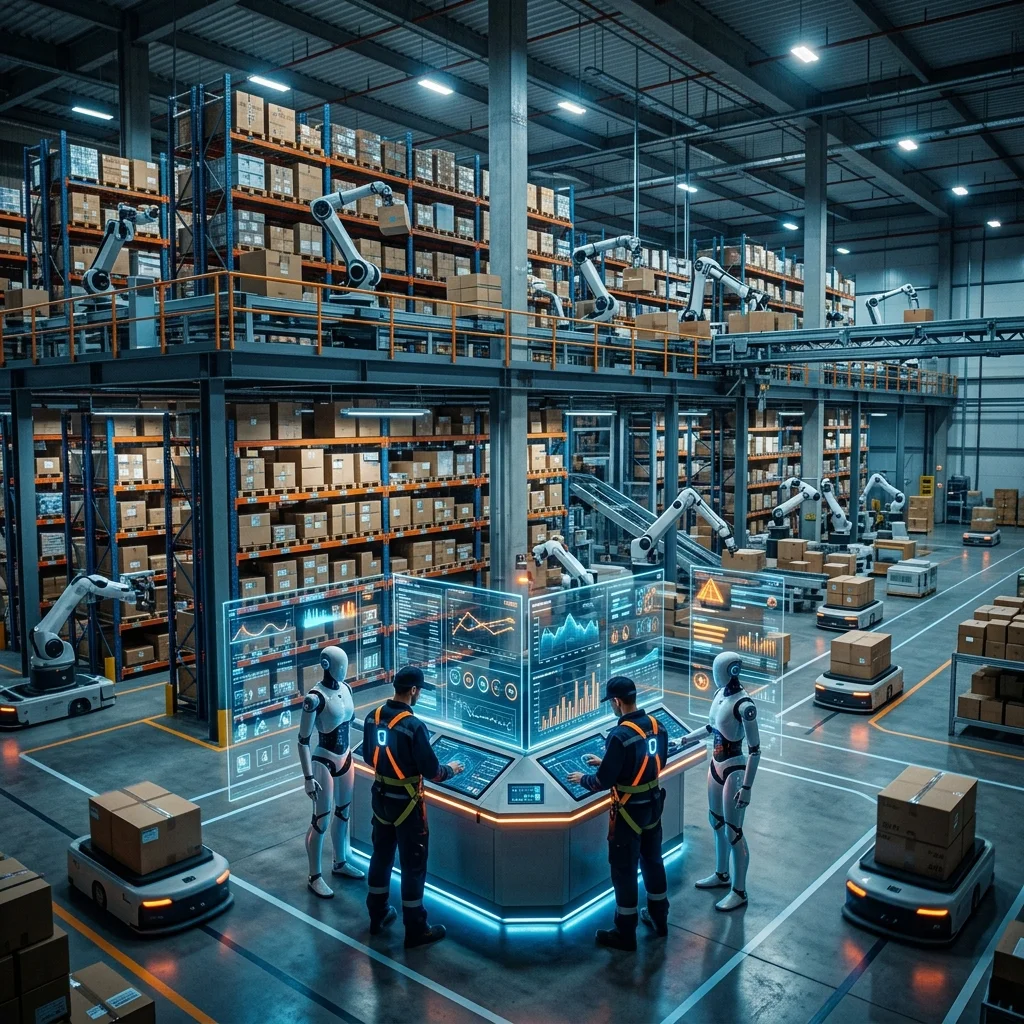
"As supply chain leaders brace for geopolitical volatility, talent shortages,"
2026 Supply Chain Transformation: Compliance, Automation, and AI Reshaping Resilience
Publication Date: February 26, 2026
By: Heidi Benko, VP of Product Marketing and Strategy, Infor Nexus
---
The New Strategic Imperative: Why 2026 Demands a Different Playbook
Supply chain leaders entering 2026 confront a convergence of structural pressures that render traditional operating models inadequate. Geopolitical tensions, tariff volatility, acute talent shortages, regulatory complexity, and escalating disruptive events have created what industry analysts describe as a permanent state of operational stress. The response, however, is not defensive consolidation but aggressive technological restructuring.
Five transformative trends define the strategic agenda for 2026: multi-tier compliance transparency, Amazon-level delivery expectations, warehouse automation, AI-driven planning, and intensifying sustainability pressures. According to the 2025 MHI/Deloitte Annual Industry Report, 55% of supply chain leaders are increasing technology investments—a signal that digital infrastructure is transitioning from competitive differentiator to operational necessity (Source 1: MHI/Deloitte Annual Industry Report, 2025).
The economic logic underpinning this shift is clear: labor shortages are structural, not cyclical; regulatory penalties are escalating in severity; and customer expectations for speed and reliability have become non-negotiable. McKinsey data confirms that logistics and fulfillment companies now dedicate over a third of capital expenditures to automation, reflecting a fundamental reassessment of cost structures and risk profiles (Source 2: McKinsey & Company, Logistics Automation Analysis, 2025).
---
Multi-Tier Compliance Transparency: From Regulatory Burden to Business Survival
The era of surface-level compliance monitoring has ended. Regulatory frameworks across North America, Europe, and Asia now demand visibility into supplier operations multiple tiers deep—encompassing labor practices, material sourcing, environmental controls, and financial stability. The operational consequences of non-compliance have escalated proportionally.
As documented in the Infor Nexus analysis, "Non-compliance can result in significant fines, penalties, shipment holds, and even loss of market access—making this not just a regulatory issue but a business survival imperative" (Source 3: Infor Nexus Supply Chain Trends Report, February 2026). This represents a fundamental shift in risk calculus: compliance failures now directly threaten revenue continuity, not merely reputational standing.
The solution architecture requires embedding traceability capabilities within a broader supply chain business network to avoid data silos. Standalone compliance systems generate fragmented visibility that cannot meet the demands of multi-jurisdictional regulatory environments. As the Infor Nexus analysis states, organizations should "prioritize traceability capabilities embedded within a broader supply chain business network to avoid data silos and deliver a more effective, cost-efficient path to compliance and supply assurance" (Source 3: Infor Nexus).
The 55% of leaders increasing technology investments cited by the MHI/Deloitte report are disproportionately allocating capital toward multi-tier visibility platforms. The correlation is causal: regulatory complexity is the primary driver of technology acceleration in supply chain operations.
---
Amazon-Level Delivery Expectations: The Hidden Cost of Speed
Consumer and business-to-business expectations for near-instant fulfillment have migrated from premium service differentiators to baseline requirements. The logistics infrastructure designed for weekly replenishment cycles is structurally inadequate for same-day or next-day delivery windows that now define competitive markets.
The economic inefficiency is measurable. Industry data indicates that "warehouse picking travel time consumes up to 50% of working hours"—a statistic that reveals the fundamental mismatch between traditional warehouse design and modern speed requirements (Source 4: Warehouse Operational Efficiency Benchmarking, Industry Analysis, 2025). Every minute of non-productive movement represents a direct cost against margins that are already compressed by labor inflation and capacity constraints.
The imperative is not simply to add labor to accelerate throughput. Rather, faster delivery demands higher inventory turns, denser storage configurations, and smarter route optimization. Companies redesigning distribution networks for 2026 are consolidating regional hubs into micro-fulfillment centers positioned closer to end customers, while simultaneously deploying automated systems to compress order-to-shipment timeframes.
---
Warehouse Automation: Robots as Augmenters, Not Replacements
The automation adoption curve has shifted from early adoption to mainstream deployment. According to the MHI/Deloitte report, 45% of supply chain leaders plan to purchase automation equipment—including Automated Guided Vehicles (AGVs), Automated Storage and Retrieval Systems (AS/RS), and robotics—within the next three years (Source 1: MHI/Deloitte). McKinsey data corroborates this trajectory, showing logistics and fulfillment companies allocating over a third of capital expenditures to automation technologies (Source 2: McKinsey).
The operational rationale is straightforward: labor availability is not expected to recover to pre-2020 levels. Warehouses face persistent difficulty recruiting and retaining workers for physically demanding, repetitive tasks. Automation addresses this structural deficit directly.
Crucially, the deployment pattern is not labor replacement but labor augmentation. As the industry analysis states, "The shift isn't about replacing workers. It's about augmenting them to eliminate repetition so humans can focus on higher-level work" (Source 3: Infor Nexus). AGVs handle material transport across warehouse floors, AS/RS systems manage vertical storage density, and robotic picking arms execute repetitive case handling—all while human workers supervise exception handling, quality control, and system optimization.
The productivity mathematics are compelling. If warehouse picking travel consumes 50% of working hours, automation that eliminates or dramatically reduces this travel time effectively doubles workforce productivity in the picking function. The capital expenditure, while significant, yields payback periods measured in months rather than years for high-volume operations.
---
AI-Driven Planning: From Predictive to Prescriptive Intelligence
Artificial intelligence in supply chain management is transitioning from experimental applications to core operational infrastructure. GenAI agents and AI-driven planning systems now execute demand forecasting, inventory optimization, route configuration, and supplier risk assessment with accuracy levels surpassing traditional statistical methods.
The distinction between predictive and prescriptive analytics is critical. Predictive models forecast what will happen; prescriptive systems recommend—and in some cases execute—what should be done. The 2025 MHI/Deloitte report indicates that leaders increasing technology investments are prioritizing AI applications that deliver actionable recommendations rather than diagnostic dashboards (Source 1: MHI/Deloitte).
GenAI introduces natural language interfaces that allow planners to query supply chain systems conversationally—asking "What is the risk of a semiconductor shortage affecting Q3 production?" and receiving not only probability estimates but alternative sourcing recommendations and cost impact projections. This reduces the cognitive load on human planners while expanding the analytical scope of individual decision-makers.
The adoption acceleration is driven by computing cost declines and data integration improvements. Cloud-based supply chain platforms now ingest real-time data from suppliers, logistics providers, and point-of-sale systems, creating the data foundation upon which AI models can operate effectively. Without this data infrastructure, AI applications remain theoretical.
---
Sustainability Pressures: The Convergence of Regulation and Market Demand
Environmental, social, and governance (ESG) compliance is no longer a discretionary initiative. Regulatory frameworks in the European Union (Corporate Sustainability Reporting Directive), California (Climate Corporate Data Accountability Act), and other jurisdictions now mandate detailed supply chain emissions reporting and reduction targets.
The operational implications extend beyond compliance documentation. Warehouse automation reduces energy consumption per unit handled through optimized routing and denser storage. AI-driven route optimization minimizes fuel consumption in transportation networks. Multi-tier compliance systems provide the emissions data necessary for regulatory reporting while simultaneously enabling supplier performance management.
The market dimension is equally significant. B2B customers increasingly require sustainability commitments from suppliers as a condition of contract renewal. Public companies face institutional investor pressure to demonstrate measurable progress toward net-zero targets. The economic consequence is that sustainability underperformance now carries revenue risk comparable to delivery reliability failures.
---
Market Predictions: The Infrastructure Race Defines 2026-2028
Several structural predictions emerge from the convergence of these trends:
First, the technology investment acceleration documented by MHI/Deloitte will intensify. The 55% of leaders increasing spending will grow to over 70% by 2028 as laggards confront the cumulative disadvantage of underinvested infrastructure.
Second, warehouse automation costs will decline as deployment scales. The capital-intensive nature of AGVs, AS/RS, and robotics has been a barrier for mid-market operators. Vendors are developing modular, leasable automation solutions that lower entry costs, expanding the addressable market significantly.
Third, compliance failure will become a primary source of supply chain disruption. The cost of non-compliance—including shipment holds, market access restrictions, and fines—will exceed direct operational disruption costs for global supply chain networks by 2027.
Fourth, labor market dynamics will accelerate rather than slow automation adoption. The demographic trend of workforce aging in logistics-intensive economies means labor availability will deteriorate further, making automation an operational requirement rather than an investment option.
Fifth, AI-enabled planning will migrate from demand forecasting to autonomous execution in constrained domains. Route optimization, inventory replenishment, and supplier selection decisions will increasingly be executed algorithmically with human oversight limited to exception handling.
For North American executives navigating this landscape, the strategic calculus is clear: technology investments that might have seemed discretionary in 2023 are now survival imperatives in 2026. The infrastructure race is underway, and the window for positional advantage is closing.
Trade Metrics
Related Datasets
Q4 Cross-Border Logistics Report
PDF • 4.2 MB
Automotive Parts Supply Chain Index
CSV • 1.1 MB