The Strait of Hormuz ''Open'' vs. ''Operable'': Decoding the Shipping Industry''s

Lisa Park
Supply Chain Editor
April 20, 2026
DATELINE: NA TRADE WIRE
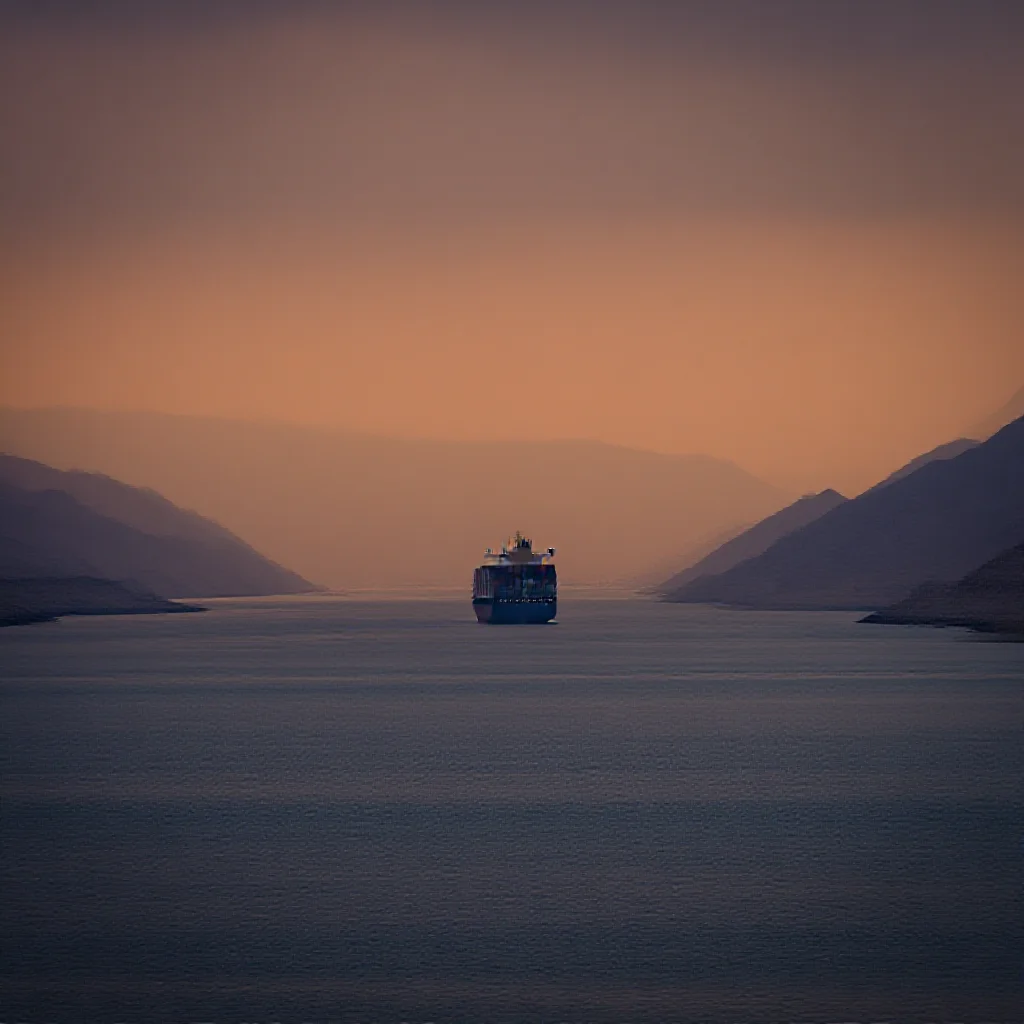
"While official channels may declare the Strait of Hormuz open, the global"
The Strait of Hormuz 'Open' vs. 'Operable': Decoding the Shipping Industry's Risk Calculus
Introduction: The Gulf Between 'Open' and 'Operable'
A fundamental disconnect defines the current state of the Strait of Hormuz. While political and military entities may declare the maritime passage open, the global shipping industry operates on a separate, more stringent calculus. Industry assessments frequently conclude that the Strait is not fully open for safe transit, directly contradicting official proclamations. This divergence is not a matter of perception but of operational and financial reality. The Strait, a conduit for approximately 21 million barrels of oil per day—roughly one-fifth of global seaborne oil trade—functions based on commercial risk assessment, not geopolitical statement. The industry's operational hesitation, driven by insurance markets and threat evaluations, acts as the true barometer of this critical chokepoint's functionality, imposing a silent restructuring on global energy and supply chains.
Image Suggestion: A map infographic highlighting the Strait of Hormuz, showing the percentage of global seaborne oil trade that transits through it.
Deconstructing the Dispute: A Glossary of Maritime Risk
The conflict between "open" and "operable" stems from differing definitions. "Open" is a legal and political status, indicating no formal naval blockade or internationally recognized closure. "Safe for transit," however, is a commercial and operational determination made by vessel owners, operators, and their insurers.
This determination is governed by specific mechanisms. The Joint War Committee (JWC), a key body of Lloyd’s Market Association, designates "War, Strikes, Terrorism and Related Perils" areas. Inclusion of the Strait of Hormuz or surrounding waters on this list triggers "Additional Premiums" (APs), a surcharge on hull war risk insurance that can increase daily costs for a vessel by tens of thousands of dollars. Shipping companies conduct internal threat assessments that often exceed public advisory levels, factoring in intelligence on maritime harassment, drone activity, and mine threats. These internal protocols, which mandate enhanced watches, transit speeds, and security measures, create a de facto tiered system of access, where only those willing to absorb significant cost and liability consider transit truly "operable."
Image Suggestion: A conceptual illustration showing a ship's bridge with overlays of decision-making factors: insurance cost charts, threat radar screens, and crew safety protocols.
The Hidden Economic Logic: Risk as a Silent Trade Tariff
The risk assessment translates directly into economic friction, functioning as an ad-hoc tariff on global trade. The immediate cost is quantifiable in elevated insurance premiums. For a Very Large Crude Carrier (VLCC), daily war risk APs can exceed $100,000 for a transit through a high-risk zone. These costs are passed through supply chains, incrementally increasing the landed price of crude oil, liquefied natural gas (LNG), and containerized goods.
Beyond direct insurance lies the "hesitation premium." This includes the cost of rerouting vessels around the Cape of Good Hope, adding approximately 15-20 days to an Asia-Europe voyage and burning significantly more fuel. It also encompasses delays for enhanced security vetting and the cost of hiring private security teams. Commodity flows exhibit varying sensitivity: LNG carriers, with highly specialized routes and contracts, face severe disruption from rerouting, while container shipping may adjust schedules within broader alliance networks, albeit at the cost of reliability. The cumulative effect is a risk tax that distorts trade economics and complicates just-in-time logistics.
Image Suggestion: An analytical chart comparing the cost of shipping a container or barrel of oil via the Strait of Hormuz under normal conditions versus current elevated-risk conditions, breaking down insurance, fuel, and security costs.
Beyond the Headlines: The Supply Chain's Long-Term Memory
Episodic crises in strategic chokepoints like the Strait of Hormuz are leading to a permanent rewiring of supply chain psychology. The industry's risk calculus is developing a long-term memory, shifting from reactive to structural planning.
Evidence of this shift is emerging in corporate strategy. There is increased investment in dual-fuel vessels capable of longer, alternative routes without bunkering. Chartering strategies now incorporate longer-term contracts that factor in persistent political risk premiums. Logistics planners are recalculating optimal inventory buffers, moving away from lean models predicated on unimpeded transit. Consequently, "political risk analysis" is evolving from a niche advisory service into a core competency within maritime logistics and corporate treasury departments. This institutionalization of risk planning indicates that the disconnect between political "openness" and commercial "operability" will remain a permanent feature of global trade architecture, forcing a fundamental reassessment of resilience for one of the world's most critical maritime passages.
Image Suggestion: A split-image graphic. One side shows a traditional, linear supply chain map focused on efficiency. The other shows a networked, resilient map with alternative routes and nodes, symbolizing the new risk-adjusted planning paradigm.
Trade Metrics
Related Datasets
Q4 Cross-Border Logistics Report
PDF • 4.2 MB
Automotive Parts Supply Chain Index
CSV • 1.1 MB