Beyond the Cape: How a Strait of Hormuz Closure Unravels Global Supply Chain

Lisa Park
Supply Chain Editor
March 22, 2026
DATELINE: NA TRADE WIRE
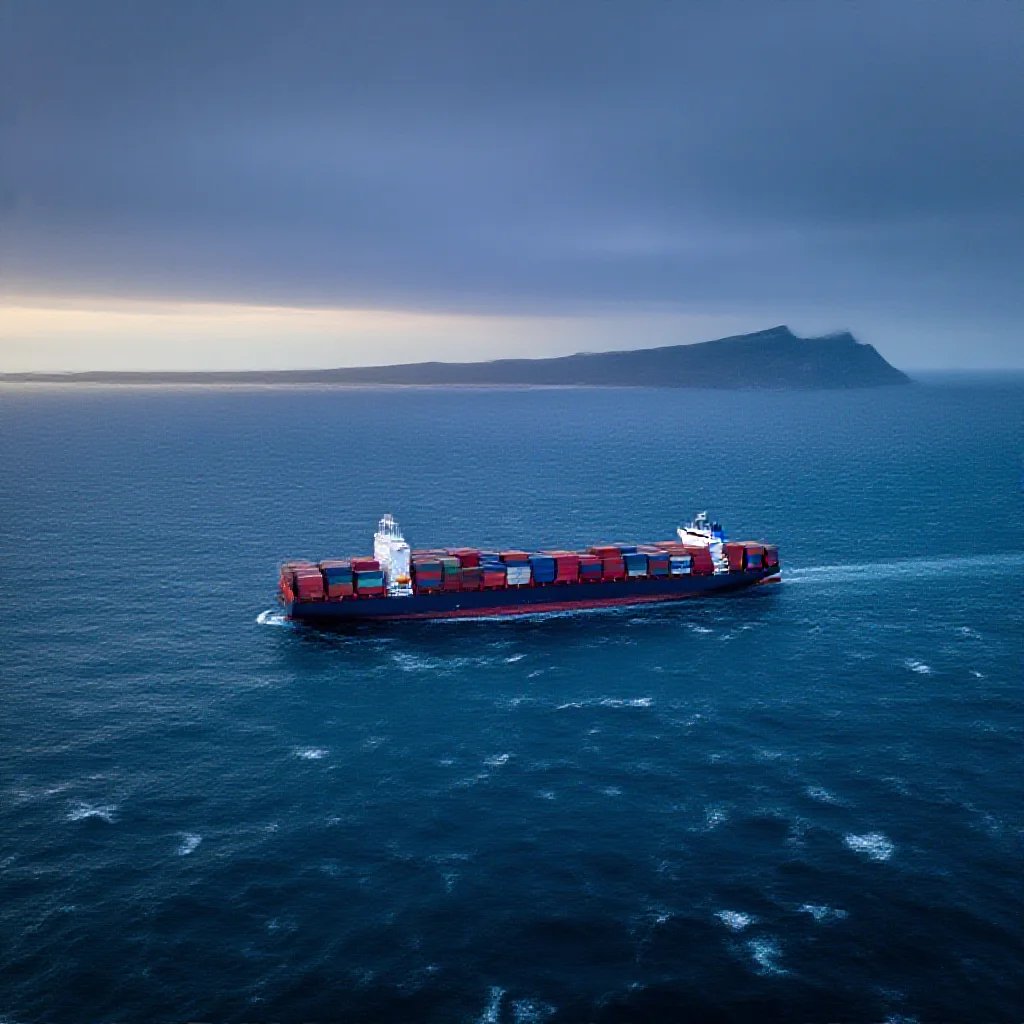
"The hypothetical closure of the Strait of Hormuz forces a stark reality check"
Beyond the Cape: How a Strait of Hormuz Closure Unravels Global Supply Chain Resilience
The closure of the Strait of Hormuz represents a systemic shock to global logistics. This maritime chokepoint, through which approximately 30% of the world's seaborne crude oil and a significant volume of containerized goods pass, is no longer navigable. (Source 1: [Primary Data]) The immediate operational response from global container shipping lines—including Maersk, MSC, CMA CGM, Hapag-Lloyd, ONE, Evergreen, HMM, and Yang Ming—has been a unified rerouting of vessels around the Cape of Good Hope. This contingency adds 10-14 days to transit times between Asia and Europe and has triggered an increase in freight rates. The event functions as a live stress test, exposing foundational vulnerabilities in modern supply chain architecture and prompting strategic recalculations far beyond a temporary detour.
The Immediate Shock: Rerouting, Rates, and Ripples
The operational impact is quantifiable and severe. The 10-14 day delay constitutes a 20-25% increase in voyage time for the critical Asia-Europe trade lane. This is not merely a calendar extension; it creates an instant global tonnage shortage. Vessels are tied up on elongated journeys, reducing the effective capacity available in the system and disrupting weekly service schedules.
The simultaneous activation of contingency plans by all major carriers signals a systemic, non-speculative threat. Their coordinated announcements confirm the closure as an operational fact requiring immediate, costly adaptation. The freight rate increase is a direct mechanical consequence of this reduced effective capacity, compounded by panic-booking from shippers. The rate surge incorporates new risk premiums and emergency bunker surcharges to offset the significantly higher fuel consumption required for the 3,500-nautical-mile longer Africa route.
The Hidden Economic Logic: Stress-Testing 'Just-in-Time'
The disruption exposes the inherent fragility of hyper-optimized, just-in-time (JIT) manufacturing and inventory models. A two-week buffer for components in transit evaporates. For manufacturers reliant on time-sensitive, containerized inputs from Asia, this delay triggers immediate production line stoppages, idle labor, and cascading delivery failures to downstream customers.
This event conducts a brutal, real-world cost-benefit analysis for holding safety stock. The calculus between the carrying cost of inventory and the cost of a production shutdown is forcibly rebalanced. The long-term structural impact may be a measurable shift towards "just-in-case" inventory models, increasing demand for warehousing and working capital but intentionally reducing systemic vulnerability to logistical shocks.
Contractually, the disruption strains long-term service agreements. Carriers are likely to invoke Force Majeure clauses, suspending contractual obligations due to an unforeseen event beyond their control. This action pushes a greater volume of cargo onto the volatile spot market, transferring full cost and scheduling risk directly to shippers and upending annual budget forecasts.
Beyond the Detour: Long-Term Strategic Recalculations
The strategic response will extend beyond temporary rerouting. For carrier network planners, the closure forces a permanent reassessment of chokepoint risk in core global service designs. Future network maps may inherently de-emphasize the Suez corridor, designing more services that bypass the Middle East altogether or building schedule reliability around the longer Cape transit.
The Cape of Good Hope route transitions from an emergency measure to a plausible component of standard network planning. This shift would alter global bunkering patterns, port call sequences, and vessel deployment strategies. The economic logic may accelerate orders for vessels optimized for fuel efficiency at lower speeds on longer routes, rather than for speed and schedule adherence on shorter, risk-prone passages.
Concurrently, the event accelerates the strategic valuation of alternative trade corridors. Land-based routes like the China-Europe rail network gain immediate relevance as a risk-diversification tool, despite their lower volume capacity. Regional trade pacts and near-shoring initiatives receive a tangible, non-ideological boost as the premium for geographical proximity and supply chain control is recalibrated.
Conclusion: The Redundancy Premium
The closure of the Strait of Hormuz demonstrates that global supply chain resilience has a quantifiable cost—the redundancy premium. The immediate spikes in freight rates and transit times are the market pricing this premium in real-time. The subsequent industry recalibration will involve a fundamental trade-off: accepting higher baseline operational costs for built-in redundancy, or maintaining efficiency optimization at the expense of heightened vulnerability to nodal failure.
The analysis indicates a move towards moderated efficiency in favor of greater robustness. Inventory levels will rise, shipping contracts will embed new risk-sharing mechanisms, and carrier networks will be redesigned with chokepoint bypasses as a core feature, not an afterthought. The disruption’s ultimate legacy will be the institutionalization of contingency, moving resilience from a theoretical discussion in corporate reports to a priced-in component of global logistics.
Trade Metrics
Related Datasets
Q4 Cross-Border Logistics Report
PDF • 4.2 MB
Automotive Parts Supply Chain Index
CSV • 1.1 MB