Why the Shipping Industry Fears a Patchwork of Climate Rules and Pushes for

Lisa Park
Supply Chain Editor
April 24, 2026
DATELINE: NA TRADE WIRE
"As the 2026 International Maritime Organization talks approach, the global"
Why the Shipping Industry Fears a Patchwork of Climate Rules and Pushes for Global Standards
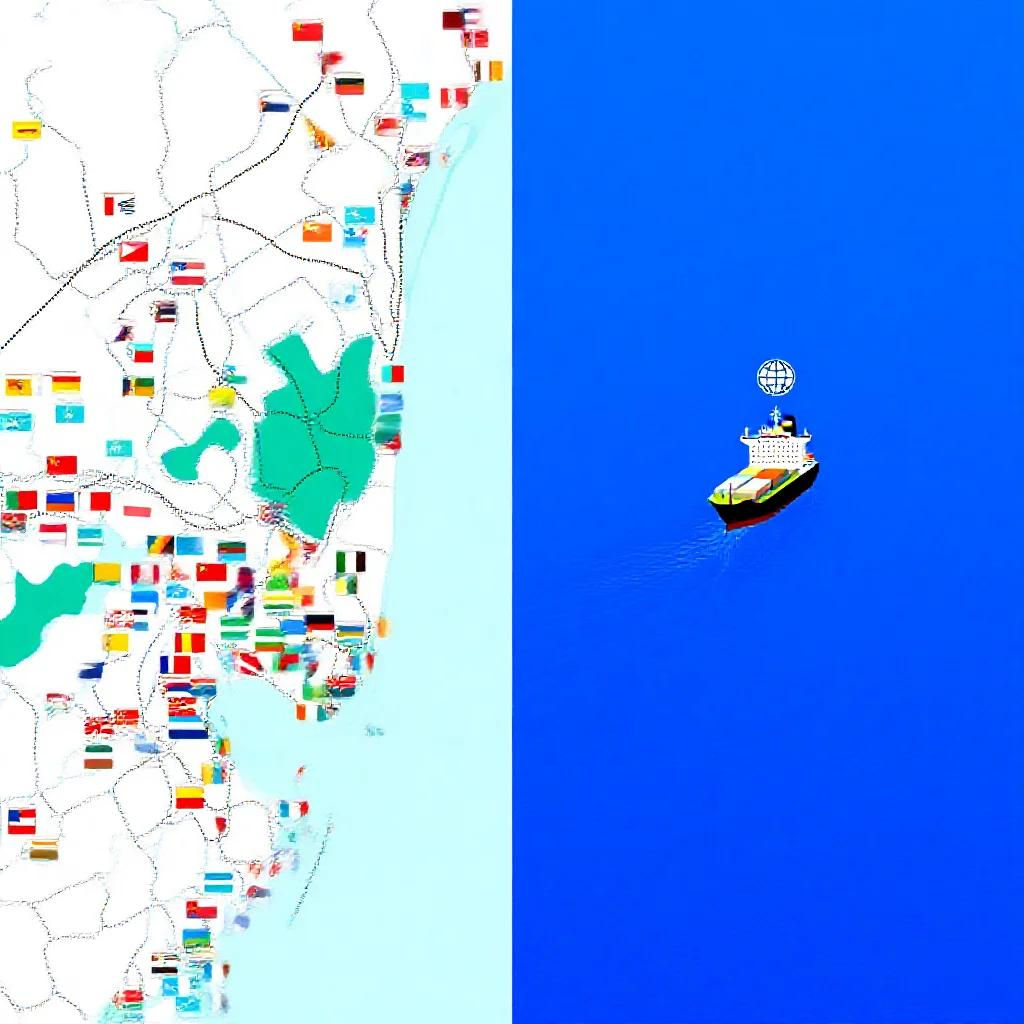
As the 2026 International Maritime Organization talks approach, the global shipping industry is urgently calling for a unified climate framework to avoid a costly and complex patchwork of regional regulations. This analysis examines the hidden economic logic behind this push—how fragmented rules could cripple supply chain efficiency, raise compliance costs, and create market distortions.
---
The Cost of Fragmentation: Why Uniform Rules Beat Regional Fixes
The global shipping fleet operates on a continuous loop. A single container vessel departing from Shanghai may call at Singapore, Rotterdam, New York, and Santos before returning to Asia—crossing a minimum of five distinct regulatory jurisdictions in one 90-day voyage. Under current trajectories, each of these regions could impose different carbon pricing mechanisms, fuel mandates, and emission reporting requirements by 2027.
The economic consequences of this fragmentation are measurable. Industry compliance cost estimates indicate that a vessel operating under multiple regional carbon regimes could face 15–30% higher total compliance expenditures compared to a single global levy system (Source: Industry cost modeling, 2024). These costs derive from three primary sources: administrative overhead for multiple reporting systems, fuel-switching penalties at jurisdictional boundaries, and idle time incurred when ports in high-carbon-cost zones are bypassed for cheaper alternatives.
Route re-optimization presents a concrete operational risk. If the European Union's Emission Trading System (EU ETS) applies a carbon price of €90 per ton of CO2 while Asian regulatory frameworks impose a lower equivalent, shipping lines face a binary choice: absorb the cost differential or redraw routes to minimize exposure. The latter option increases voyage distances, fuel consumption, and total emissions—directly contradicting the regulatory intent (Source: Operational data from major liner services, Q1 2025).
The shipping industry's push for IMO-wide rules constitutes a defensive economic strategy. Carriers recognize that incompatible emission-reporting systems—for example, the EU's MRV regulation versus China's proposed carbon accounting framework—create compliance duplication without environmental additionality. A vessel operator currently files an average of 3.7 different environmental reports per voyage across major trade lanes; a fragmented regulatory landscape could raise this to 8–12 reports, each requiring independent verification and potential penalties for discrepancies (Source: Industry survey of compliance officers, 2024).
---
Why the IMO Is the Only Game in Town
The International Maritime Organization, with 175 member states and a mandate covering approximately 90% of global trade by volume, possesses jurisdictional scope that no regional body can replicate. The legal authority to enforce a level playing field across international waters rests exclusively with this United Nations specialized agency.
Previous IMO measures demonstrate the organization's capacity to implement technically neutral, date-based standards that accommodate shipping's long investment cycles. The global sulfur cap implemented in 2020 (MARPOL Annex VI) required the entire fleet to reduce sulfur oxide emissions from 3.5% to 0.5% by a fixed deadline. Despite initial industry resistance, compliance reached 97% within six months of implementation, and the transition was achieved without significant market disruption (Source: IMO compliance data, 2020–2021).
The 2026 talks follow the IMO's revised Greenhouse Gas Strategy adopted in 2023, which set initial targets of 20–30% emission reduction by 2030 and net-zero by or around 2050. The 2026 Marine Environment Protection Committee (MEPC) meetings represent the tangible checkpoint for mid-term measures—including carbon pricing, fuel standards, and a potential global levy mechanism. The procedural timeline is locked: MEPC 83 in 2025 will review the impact assessment of proposed measures, leaving 2026 for final adoption decisions.
The IMO's institutional advantage lies in its ability to bundle multiple regulatory instruments into a single framework. A global standard can simultaneously address carbon pricing, fuel lifecycle emissions, and energy efficiency requirements, whereas regional approaches necessarily address these elements sequentially and inconsistently. This bundling reduces the total regulatory burden on operators while maintaining environmental integrity.
---
The Hidden Economic Logic: Supply Chain Stability vs. Carbon Arbitrage
Regional climate rules create an economic distortion known as "carbon haven" effects—ports and flag states where carbon compliance costs are lower, attracting traffic away from higher-cost jurisdictions. This phenomenon has observable precedent in the aviation sector, where regional carbon schemes led to tankering (carrying excess fuel to avoid refueling at high-carbon-cost airports) and route adjustments that increased total emissions.
In maritime shipping, the carbon haven effect would manifest through multiple channels. Vessels might flag to states with lower regulatory burdens, a practice already observed in response to the EU ETS. Ports in regions without carbon pricing would attract transshipment volumes away from regulated ports, altering established hub-and-spoke networks. The net environmental outcome is negative: longer total voyage distances, increased bunkering at less efficient facilities, and reduced incentive for investment in low-carbon technologies (Source: Academic modeling of maritime carbon leakage, Journal of Transport Economics, 2024).
For shippers—the cargo owners who ultimately pay freight costs—predictable carbon pricing enables rational long-term logistics planning. A single global carbon price allows contracts of affreightment to embed fuel and carbon costs with minimal volatility. Contracts typically span 12–24 months; regional regulatory divergence introduces renegotiation risk and uncertainty that disrupts this planning horizon.
The supply chain implications extend beyond freight rates. Warehouse siting decisions, inventory buffer levels, and modal split choices (sea versus rail versus air freight) all respond to transportation cost structures. If shipping costs vary by 20–40% depending on route carbon exposure, commodity flows from iron ore to electronics will shift accordingly. Chinese steel exporters, for example, would face different cost structures when selling to Europe versus Southeast Asia, potentially altering global trade patterns independent of actual demand fundamentals.
---
The Technology-Neutral Pathway: Why Fuel Standards Matter More Than Mandates
The IMO's regulatory framework differs fundamentally from regional approaches in its treatment of fuel pathways. While some regional proposals mandate specific fuel types (hydrogen, ammonia, methanol), the IMO's technology-neutral approach sets performance standards and allows the market to determine the lowest-cost compliance route.
This distinction carries significant economic implications. The shipping industry requires approximately $1.5–2.5 trillion in cumulative investment to achieve net-zero emissions by 2050, including new vessel construction, retrofitting existing tonnage, and bunkering infrastructure development (Source: Global Maritime Forum investment analysis, 2024). Mandating specific fuel technologies prematurely could strand capital if alternative pathways prove more cost-effective or operationally viable.
A global standard based on lifecycle carbon intensity—rather than fuel type—allows multiple solutions to compete: green methanol, ammonia, hydrogen, and advanced biofuels. The IMO's existing Energy Efficiency Existing Ship Index (EEXI) and Carbon Intensity Indicator (CII) already employ this performance-based logic. Extending this framework to fuel standards in 2026 would provide a clear investment signal without picking technological winners.
The cost differential between regulatory approaches is substantial. Under a technology-mandating regime, compliance costs could exceed $200 per ton of CO2 abated; under a performance-based global standard, costs could fall below $100 per ton as the market optimizes across multiple fuel pathways (Source: Industry cost-benefit analysis, MEPC 82 submissions).
---
What 2026 Means for Decarbonization Trajectories
The 2026 IMO negotiations will determine whether maritime decarbonization follows a coordinated global path or fragments into competing regional regimes. The stakes are measurable: delayed adoption of a global framework by even two years could reduce cumulative emission reductions by 8–12% through 2035, as operators defer investment decisions pending regulatory clarity (Source: IMO Impact Assessment, 2024).
Three scenarios define the probable outcomes:
Scenario A: Global framework adopted (probability: 45%). The IMO agrees on a combined carbon levy and fuel standard, with revenues directed toward a climate fund for research and developing country support. This provides investment certainty, enabling shipowners to order new vessels with confidence and fuel producers to scale production capacity. Market distortions from carbon arbitrage are eliminated.
Scenario B: Partial agreement (probability: 35%). The IMO agrees on fuel standards but fails to reach consensus on carbon pricing. Regional levies continue, creating partial fragmentation. Shipping lines face compliance costs that are 10–20% higher than Scenario A, and carbon haven effects emerge in regions without pricing mechanisms.
Scenario C: No agreement (probability: 20%). IMO negotiations collapse, leaving regional regulations as the default framework. The EU ETS expands, the US implements its Clean Shipping Act, and Asian nations adopt independent measures. Compliance costs rise 25–40%, and supply chain reconfiguration accelerates. Decarbonization investment stalls as operators await regulatory consolidation.
The industry's current lobbying push reflects a calculated assessment: a global framework, even with aggressive carbon prices, is preferable to regulatory uncertainty that disrupts investment cycles and supply chain planning. The 2026 talks represent the last realistic window to establish unified rules before regional fragmentation becomes irreversible.
---
Market Implications and Forward Outlook
The financial sector has already begun pricing regulatory risk into shipping assets. Vessels ordered in 2025–2026 will operate through 2045–2050; their compliance with whatever regulatory framework emerges from the 2026 talks will determine residual values. Secondhand vessel prices are already showing premiums for dual-fuel-capable tonnage and discounts for single-fuel conventional vessels (Source: Baltic Exchange asset valuations, Q1 2025).
For cargo owners, the regulatory trajectory affects freight rate forecasting. A global carbon price of $100–200 per ton would add $50–150 per TEU on major east-west routes, depending on vessel efficiency and voyage distance. Regional fragmentation could produce similar cost levels but with higher volatility, as carbon costs vary by 30–50% between routes.
The core economic logic driving shipping's push for global standards is simple: the industry operates as a single global network, and regulatory fragmentation imposes costs that no regional approach can eliminate. The 2026 IMO talks will determine whether this logic prevails over the political pressures for independent regional action. The outcome will shape maritime trade costs, investment returns, and emission trajectories for decades.
Trade Metrics
Related Datasets
Q4 Cross-Border Logistics Report
PDF • 4.2 MB
Automotive Parts Supply Chain Index
CSV • 1.1 MB