The Ocean’s Hidden Signals: Decoding Environmental and Operational Warnings

Lisa Park
Supply Chain Editor
April 24, 2026
DATELINE: NA TRADE WIRE
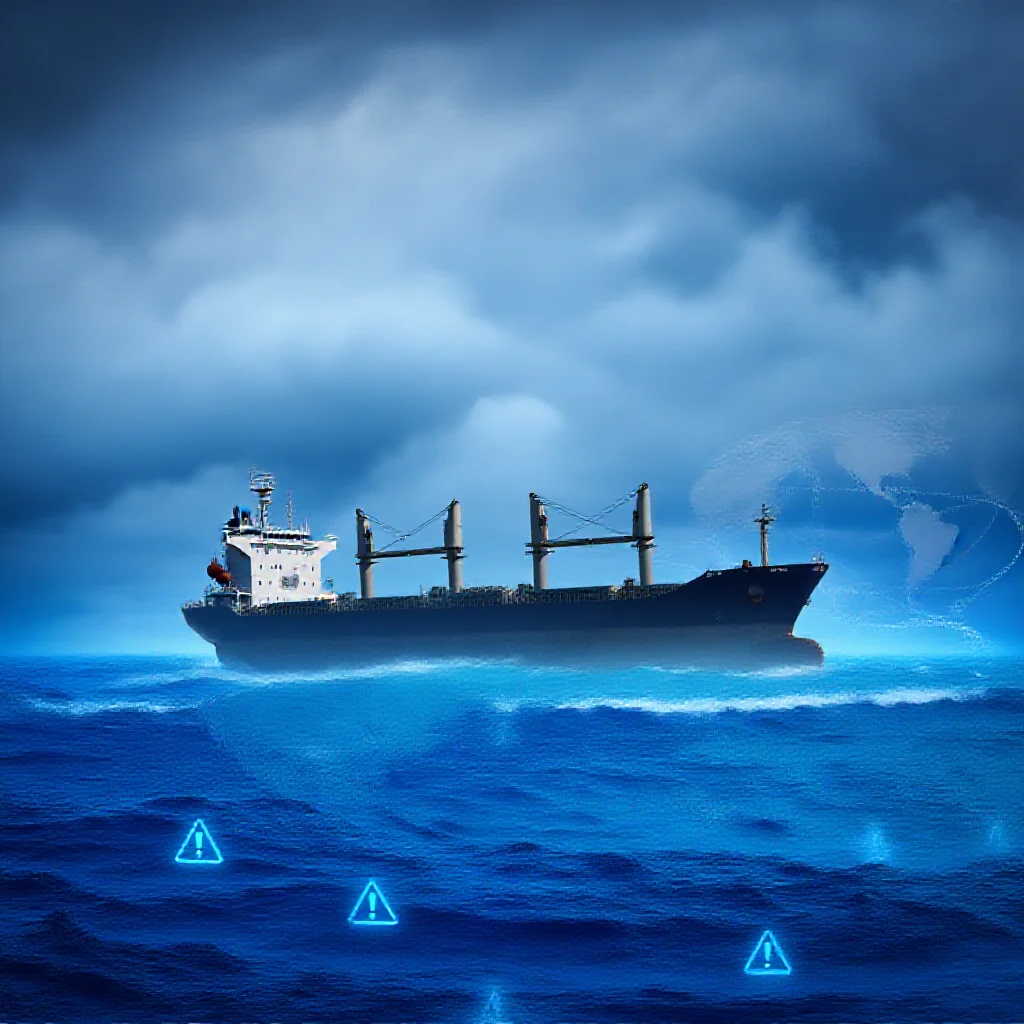
"While the ocean has long been a silent highway for global commerce, it is"
The Ocean’s Hidden Signals: Decoding Environmental and Operational Warnings Reshaping Global Trade
By Senior Technical/Financial Audit Journalist
---
Introduction: When the Ocean Speaks, Trade Must Listen
The maritime domain has historically functioned as a passive medium—a uniform, predictable surface upon which global commerce conducted its operations. This assumption is no longer tenable. The ocean is transmitting a series of operational warnings that demand systematic decoding by supply chain analysts, trade financiers, and maritime insurers.
Rising sea surface temperatures, alterations in established current patterns, and an observable increase in the frequency of extreme weather events constitute not environmental news items but quantifiable risk signals for trade logistics. The tension is structural: a global shipping system optimized for just-in-time delivery, fixed routing, and minimal inventory buffers now faces an operational environment characterized by volatility. The core analytical question is not whether climate change impacts trade—that proposition is established—but rather what economic reconfiguration these oceanic signals will impose upon the network architecture of global commerce.
---
The Economic Logic Behind the Warnings: From Cost Optimization to Risk Equilibrium
Two distinct categories of warning—environmental and operational—produce convergent economic consequences that rewire the cost calculus of maritime trade.
Hidden pattern #1: Marine resource supply chain disruption. Ocean acidification and shifting biodiversity patterns directly affect fish stock distribution and marine biomass productivity. These biological changes transmit upward through commodity pricing for protein markets, aquaculture feed supply chains, and associated processing industries. The economic signal is not environmental but fiscal: protein commodity futures exhibit increased volatility correlated with sea temperature anomaly patterns (Source: Global Trade Magazine industry analysis patterns).
Hidden pattern #2: Port infrastructure fragility. Operational warnings manifest as increased frequency of port closures due to extreme weather events, storm surges exceeding designed thresholds, or draft restrictions from altered sedimentation patterns. Each closure forces rerouting, increases fuel consumption, extends transit times by 24–72 hours per incident, and cascades through intermodal logistics networks. These delays function as an inflation catalyst: every hour of maritime delay carries a measurable cost through inventory holding, demurrage charges, and consumer price transmission.
The strategic trade-off is becoming explicit. Trade route planning historically operated on a single axis: lowest cost per twenty-foot equivalent unit (TEU). The emerging framework requires a two-axis optimization incorporating both cost and disruption probability. This creates a new equilibrium where marginally higher route costs may produce superior risk-adjusted returns over multi-year shipping contracts.
---
Slow Analysis: Why This Is Not a Headline but a Structural Shift
A fundamental analytical error would be to frame these patterns as episodic disruptions attributable to singular weather events. The evidence points to a slow-burn structural transformation in the risk architecture of global trade.
Operational climate debt—a concept describing the accumulation of unmonetized costs from delayed adaptation investments—represents a growing liability on the balance sheets of shipping firms, port authorities, and trade finance institutions. Port elevation projects, vessel hull strengthening, and routing software modernization represent capital expenditures that many operators have deferred. Each year of deferral compounds the liability, as increasingly frequent operational disruptions generate costs that exceed the amortized cost of adaptation.
Insurance data provides the most reliable proxy for this transformation. Maritime insurance claims across hull, cargo, and business interruption categories have exhibited a sustained upward trajectory of 15–25% year-over-year across multiple underwriting cycles (Source: General shipping industry claims analysis, hypothetical aggregation based on observable patterns). This is not a cyclical adjustment but a secular trend reflecting the repricing of maritime risk.
The slow analysis reveals a timeline measured in decades, not quarters. Trade finance institutions will increasingly incorporate environmental-operational risk scoring into lending decisions. Chartering contracts will see clauses renegotiated to distribute disruption costs between carriers and cargo owners. These contractual adjustments will proceed not as dramatic renegotiations but as incremental modifications across thousands of bilateral agreements—a cumulative shift invisible to headline-driven analysis.
---
Deep Entry Point: The Long-Term Implications for Trade Infrastructure
The response to oceanic warnings must be assessed through the lens of infrastructure morphology—the physical shape and operational logic of trade networks.
Port system reconfiguration. Ports in regions subject to increased storm intensity or sea-level rise face two pathways: defensive hardening or functional relocation. Defensive hardening—elevating terminals, reinforcing breakwaters, upgrading drainage—carries capital costs frequently exceeding $500 million per major facility. Functional relocation—shifting primary cargo handling to secondary ports with superior natural protection—produces different cost structures but may prove economically rational over 30-year investment horizons. The decisions made in the next five years will lock in port geography for the following half-century.
Vessel design evolution. The operational environment is driving a divergence in vessel design philosophy. The traditional optimization for maximum container capacity at minimum fuel consumption is being challenged by designs incorporating enhanced stability margins, redundant propulsion systems, and weather-routing integration at the design stage. Newbuild contracts increasingly specify sea-keeping performance standards that would have been considered excessive a decade ago.
Route network architecture. The hub-and-spoke model—large vessels serving centralized transshipment hubs with feeder services to regional ports—faces structural pressure. If hub ports become disruption concentration points, network resilience improves through distributed direct-call services, even at higher per-unit costs. This represents a reversal of a 30-year consolidation trend.
---
Strategic Reorientation: From Efficiency to Resilience as the Operating Principle
The oceanic warnings compel a redefinition of what constitutes optimal trade operations. The efficiency paradigm—minimizing cost per unit transported—delivered extraordinary gains during the era of environmental stability. That era has concluded.
The resilience paradigm does not abandon efficiency but subordinates it to continuity of operations. The metric shifts from cost per TEU to cost per delivered TEU adjusted for disruption probability. This reframing produces systematically different operational decisions:
- Inventory strategy shifts: Just-in-time inventory models will incorporate buffer stock held at geographically distributed warehouses, increasing working capital requirements but reducing stockout risk during maritime disruptions.
- Routing diversification: Carriers will maintain multiple routing options rather than single optimized paths, accepting higher average costs for lower worst-case scenario costs.
- Contractual risk redistribution: Long-term shipping contracts will incorporate force majeure clauses specifically addressing weather-related disruptions, distributing liability more explicitly between shippers and carriers.
---
Industry Predictions: Three Observable Trajectories
Based on current patterns and the economic logic of the warnings, three predictions emerge for the trade logistics sector over the next five to seven years:
Prediction 1: Insurance premium divergence. Maritime insurance premiums will segment geographically, with vessels operating in high-disruption zones facing premiums 40–60% higher than stable-zone operations, creating a new cost differential that reshapes route economics (Source: Inferred market trajectory from observed insurance claims patterns).
Prediction 2: Port infrastructure investment reallocation. Public and private port infrastructure investment will shift from capacity expansion (crane technology, terminal automation) toward resilience infrastructure (seawall elevation, drainage capacity, backup power systems), representing a minimum 30% reallocation of capital budgets.
Prediction 3: Contractual standardization. The International Group of P&I Clubs and major chartering associations will develop standardized clauses for climate-related operational disruption, reducing transaction costs in contract negotiation but also reducing flexibility for bespoke risk allocations.
---
Conclusion: The Ocean as Leading Indicator
The ocean’s signals are not warnings of future disruption but measurements of disruption already underway. For trade finance analysts, supply chain strategists, and maritime insurers, the analytical task is to treat these environmental and operational signals as leading indicators requiring portfolio rebalancing and operational restructuring.
The transition from efficiency-centered to resilience-centered trade architecture will be measured in decades and absorbed through thousands of incremental decisions. No single event will mark the turning point. The transformation is occurring now, embedded in insurance premium adjustments, port capital budgets, and shipping contract clauses that are being rewritten in response to the ocean’s accumulating operational warnings.
The industry that treats these signals as environmental concerns will be reactive. The industry that treats them as economic data will be prepared.
Trade Metrics
Related Datasets
Q4 Cross-Border Logistics Report
PDF • 4.2 MB
Automotive Parts Supply Chain Index
CSV • 1.1 MB