The Silent Revolution: How Electric Vehicles Are Reshaping Urban Logistics

Lisa Park
Supply Chain Editor
April 8, 2026
DATELINE: NA TRADE WIRE
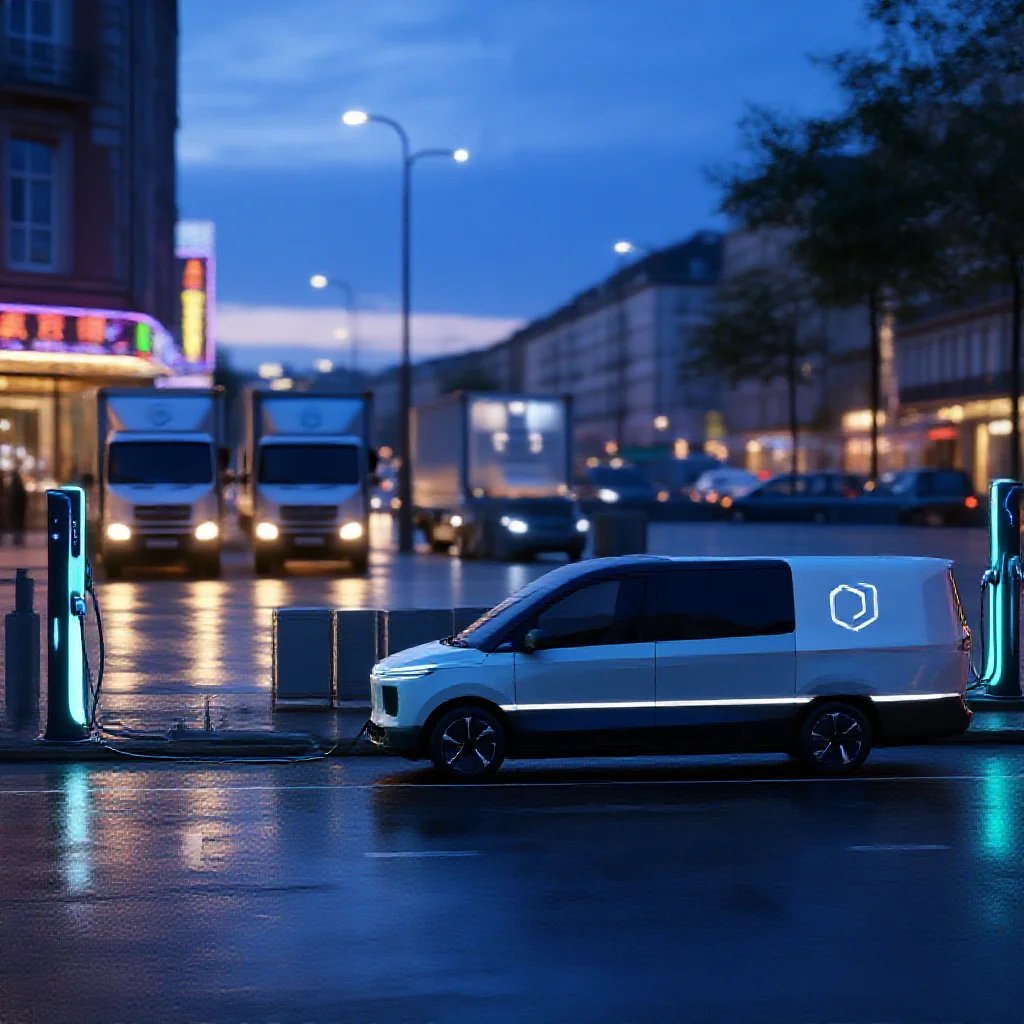
"The adoption of electric vehicles (EVs) in urban logistics is often framed"
The Silent Revolution: How Electric Vehicles Are Reshaping Urban Logistics from the Ground Up
The adoption of electric vehicles (EVs) for urban delivery is frequently characterized as a straightforward technological substitution—diesel engines for electric motors. Surface-level analysis focuses on the immediate benefits of zero tailpipe emissions and reduced energy costs. However, the operational integration of electric vans and trucks is instigating a more profound, structural transformation. This shift is re-architecting the economic calculus, physical infrastructure, and strategic playbook of urban supply chains, moving beyond the vehicle itself to redefine last-mile logistics.
Beyond the Tailpipe: The Core Economic Logic of the EV Logistics Shift
The transition is not merely a swap of powertrains but a catalyst for a comprehensive reevaluation of the Total Cost of Ownership (TCO). While lower operating costs for electricity versus diesel are a documented advantage (Source 1: [Primary Data]), the economic impact is more systemic. Government subsidies and tax incentives function as a strategic de-risking mechanism for corporate capital expenditure, effectively accelerating a market transition that aligns with regulatory pushes for low- and zero-emission zones in urban centers.
This financial restructuring precipitates a fundamental operational model shift. Logistics operators are moving from a cost structure dominated by volatile, globally-set fuel prices to one anchored by more predictable electricity rates and simplified maintenance schedules. This predictability enables new forms of financial planning, long-term service contracts, and pricing models for last-mile delivery services. The economic logic thus evolves from managing variable costs to optimizing fixed investments.
The Infrastructure Inversion: How EVs Are Forcing a Supply Chain Redesign
The physical limitations and capabilities of electric commercial vehicles are directly influencing urban logistics geography. Compared to diesel vehicles, current EVs often have a more constrained range and require time to recharge rather than refuel. This is not solely a technical hurdle but an operational parameter incentivizing a distributed network model. To maintain delivery density and efficiency, companies are compelled to consider micro-fulfillment centers and satellite hubs within city limits, reducing the dominance of large, centralized depots on urban peripheries.
Concurrently, electric fleets function as native generators of granular operational data. Metrics on real-time energy consumption, regenerative braking efficiency, route-specific battery drain, and vehicle health are continuously produced. This data stream enables a hyper-optimized logistics network, where routing algorithms can incorporate energy maps alongside traffic patterns. However, this shift introduces a new vulnerability: critical dependency on the electrical grid and the emerging risk of concentrated demand peaks during fleet charging cycles, creating a novel operational risk category for logistics managers.
The Corporate Arms Race: Amazon, UPS, DHL and the Battle for the 'Last-Mile Ecosystem'
Major logistics corporations are engaged in a strategic repositioning that transcends vehicle procurement. Pilot programs for electric vans by Amazon, UPS, and DHL (Source 2: [Primary Data]) are not simply tests of vehicle viability. They represent strategic land grabs for data, valuable municipal partnerships, and direct customer touchpoints. Deployment of branded, silent, zero-emission vehicles also functions as a direct brand equity and marketing tool, influencing both consumer perception and B2B contract negotiations.
Analysis suggests a move toward vertical integration within this new ecosystem. Companies investing heavily in electric fleets are simultaneously positioning themselves to control adjacent infrastructure and software, including proprietary charging networks, smart energy management systems, and the integration platforms that connect delivery logistics with grid management. The competition is therefore expanding from logistics efficiency to control over the entire last-mile energy and data value chain.
Conclusion: A Redefined Urban Commercial Landscape
The logical deduction from current trends points to a redefined urban commercial landscape. The convergence of stringent emission policies, advancing battery technology, and corporate strategy is enabling a more distributed, data-intensive, and electrically integrated model of goods movement. The endpoint is not an electric replica of the existing diesel-based system, but a new architecture where logistics networks are denser, more software-defined, and inextricably linked to urban energy infrastructure. The silent revolution in vehicle propulsion is, in effect, triggering a loud and comprehensive restructuring of supply chain economics and urban space utilization.
Trade Metrics
Related Datasets
Q4 Cross-Border Logistics Report
PDF • 4.2 MB
Automotive Parts Supply Chain Index
CSV • 1.1 MB