Beyond Visibility: How Data Analytics and Security Are Redefining Supply Chain

Lisa Park
Supply Chain Editor
April 21, 2026
DATELINE: NA TRADE WIRE
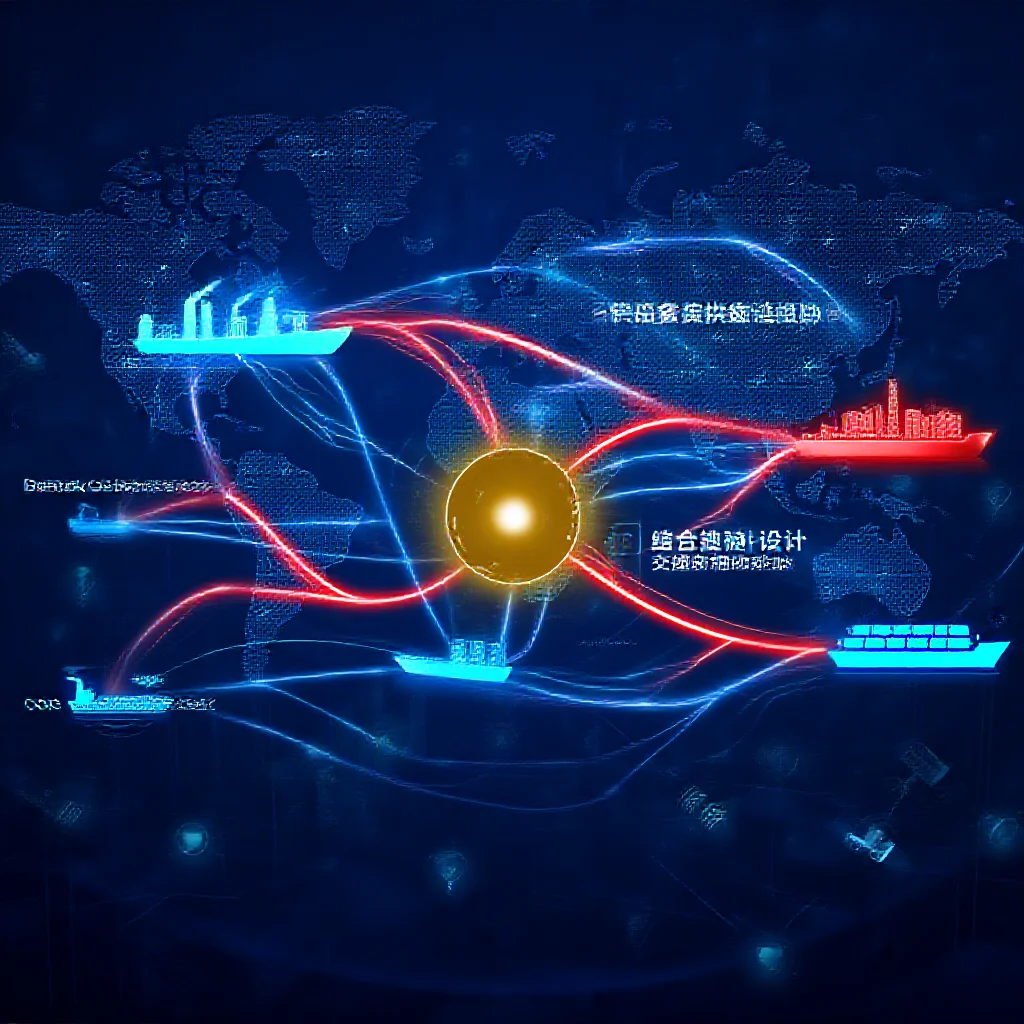
"Data analytics and real-time tracking are no longer just about visibility;"
Beyond Visibility: How Data Analytics and Security Are Redefining Supply Chain Intelligence
Summary: The application of data analytics and real-time tracking is transitioning from providing basic visibility to forming a unified intelligence layer for supply chain management. This evolution is characterized by the convergence of operational and security analytics, shifting focus from reactive monitoring to predictive and prescriptive decision-making. The primary barrier to this advancement is data integrity, not data volume. Future integration of artificial intelligence and advanced sensing technologies will further merge logistics optimization with threat protection, resulting in more resilient and autonomous supply networks.
Introduction: The Evolution from Tracking to Intelligence
The foundational question in logistics, "where is my shipment?", has been answered. Real-time tracking technologies, including GPS and IoT devices, provide that baseline visibility (Source 1: [Primary Data]). The contemporary frontier lies in synthesizing this constant data stream into a holistic intelligence system. This system is powered by two analytical pillars: operational analytics, which drives efficiency in routing, inventory, and delivery times, and security analytics, which detects anomalies and protects assets. Their convergence represents the next competitive frontier in logistics, moving the industry beyond passive observation into active, intelligent management.
The Dual Engine: Operational and Security Analytics in Concert
Operational analytics processes data from suppliers, transportation systems, and warehouses to optimize logistical functions (Source 1: [Primary Data]). This involves using real-time feeds from GPS, sensors, and IoT devices to dynamically adjust routes, manage inventory levels, and calculate accurate estimated times of arrival.Concurrently, security analytics monitors the same data streams for threats. It detects geo-fencing breaches, unauthorized access, or condition deviations like temperature changes that could indicate spoilage (Source 1: [Primary Data]). This function is critical for protecting both physical goods and the data generated by the supply chain itself.
The synergy between these functions is where intelligence emerges. A security event, such as an unexpected vehicle stop flagged by anomaly detection, immediately becomes a critical operational data point. The system can then automatically trigger contingency plans, such as rerouting other shipments, notifying security teams, and updating customer ETAs. This transforms security from a cost center into an integral component of operational resilience.
The Core Challenge: Data Quality as the Foundation, Not an Afterthought
The efficacy of any analytical system is contingent on the quality of its input data. The principle of "garbage in, garbage out" remains the primary barrier to advanced supply chain intelligence. High-quality data—accurate, timely, complete, and consistent—is non-negotiable.The cost of incorrect insights derived from poor data is substantial. It leads to misallocated resources, false alarms that erode trust in automated systems, and missed opportunities for optimization or threat mitigation. Consequently, the required investment extends beyond purchasing analytical software. Effective implementation demands investment in integrated systems to ensure clean data flow and, critically, in skilled personnel capable of managing and interpreting these complex systems (Source 1: [Primary Data]). Data quality is not an IT issue but a strategic foundation.
Future Trends: The Autonomous and Self-Securing Supply Chain
The trajectory of supply chain intelligence points toward increasing autonomy. Artificial intelligence and machine learning are pivotal in this shift, enabling systems to move from descriptive ("what happened") and diagnostic ("why it happened") analytics to predictive ("what will happen") and prescriptive ("what should be done") capabilities.Sensor technology will advance beyond location tracking to become comprehensive condition-monitoring platforms. Vibration, humidity, light exposure, and container integrity data will become standard feeds, providing deeper insights into product quality and handling.
A key trend is the deep integration of security analytics directly into logistics platforms, eliminating functional silos. Future systems will be designed with security as a native feature, not a later addition. This will create supply chains that are not only self-optimizing but also self-securing, capable of autonomously responding to both operational inefficiencies and security threats in real time.
Strategic Implications: Redefining Resilience and Competitive Advantage
The long-term impact of this intelligence convergence is the redefinition of the supply chain from a linear, sequential process to an adaptive, networked system. Resilience will be measured not by redundancy alone but by the network's capacity to sense, analyze, and respond to disruptions dynamically.This shift will create new competitive advantages. Organizations that master the integration of operational and security intelligence will achieve superior efficiency, lower risk profiles, and enhanced customer trust through greater reliability and transparency. The strategic imperative is clear: building a data-centric foundation and fostering a culture that treats security and operations as two sides of the same coin is essential for future readiness. The supply chain of tomorrow will compete on its intelligence quotient.
Trade Metrics
Related Datasets
Q4 Cross-Border Logistics Report
PDF • 4.2 MB
Automotive Parts Supply Chain Index
CSV • 1.1 MB