Brewing the Future: How Smart Tech, Sustainability, and China’s Manufacturing

Lisa Park
Supply Chain Editor
June 15, 2026
DATELINE: NA TRADE WIRE
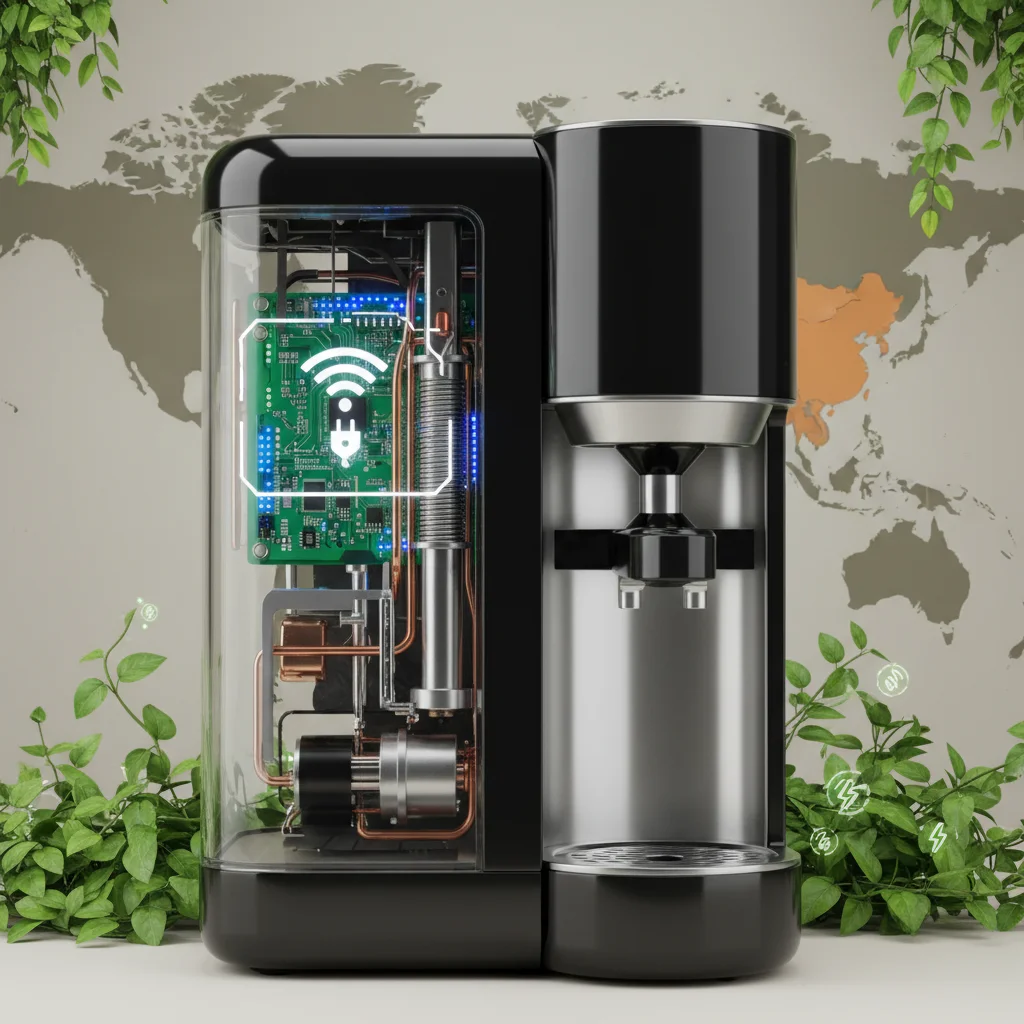
"The global coffee machine market is set to exceed $15 billion in 2024, growing"
Brewing the Future: How Smart Tech, Sustainability, and China’s Manufacturing Dominance Are Reshaping the $15 Billion Coffee Machine Market in 2024
The global coffee machine market is on track to surpass $15 billion in 2024, driven by a convergence of technological innovation, shifting consumer preferences, and a manufacturing ecosystem anchored in China. As coffee culture deepens across North America, Europe, and emerging markets, manufacturers are racing to integrate IoT connectivity, energy-efficient systems, and sustainable materials into their products. This article examines the market dynamics, the rise of smart and sustainable machines, and the supply chain forces—particularly China’s dominance in precision manufacturing—that are redefining industry standards.
1. Market Landscape: A $15 Billion Milestone
The global coffee machine market is projected to exceed $15 billion in 2024, representing a compound annual growth rate (CAGR) of approximately 6.5% from 2021. This expansion reflects not just volume growth but a fundamental shift toward higher-value products. Segment breakdown reveals a diverse landscape: espresso machines hold the largest share at 30%, followed by capsule machines at 25%, drip coffee makers at 20%, portable machines at 15%, and smart machines at 10%. However, the fastest-growing segment is smart machines, which are expected to see an 18% annual sales increase, highlighting the integration of connectivity as a core feature.
Three key growth drivers underpin this momentum. First, premiumization—consumers are spending more per cup and per machine, favoring brands that offer superior build quality, design, and features. Second, smart technology adoption—Wi-Fi-enabled machines with app control, digital interfaces, and personalized brewing profiles are becoming mainstream. Third, regional demand variations shape product strategies: North America’s appetite for capsule machines (led by Nespresso and Keurig) contrasts with Europe’s deep affinity for traditional espresso, while Asia-Pacific shows rapid uptake of compact and smart machines in urban centers.
Jura, a Swiss premium coffee machine manufacturer, reported a 20% sales increase in 2024, underscoring the shift toward high-end, connected machines. The company’s flagship models, such as the Jura Z10, now sell for upwards of $3,000, yet demand remains strong among affluent consumers who view the machine as both an appliance and a lifestyle investment.
[IMAGE: Bar chart showing market size growth from 2021 to 2024, with segment share pie chart overlay.]
Beyond consumer-facing brands, the manufacturing backbone for coffee machines is overwhelmingly concentrated in China. According to industry data, over 70% of global coffee machine components—from stainless steel boilers to electronic control boards—are sourced from Chinese supply chains. Cities like Shenzhen and Dongguan host clusters of precision CNC machining shops and electronics assembly lines that produce everything from aerospace-grade aluminum parts to injection-molded plastic housings. This manufacturing dominance not only keeps costs competitive but also enables rapid prototyping and scaling for new features like IoT modules and energy-efficient heating elements.
2. The Smart Revolution: IoT and Connectivity in Every Cup
Smart coffee machines are no longer a novelty; they are a competitive necessity. Global sales of IoT-enabled coffee machines are projected to grow 18% annually, driven by features such as Wi-Fi connectivity, smartphone app control, and voice assistant integration. These machines allow users to schedule brewing times, adjust grind settings, monitor water hardness, and even reorder capsules automatically—all from a mobile device.
Jura’s S8 Coffee Machine exemplifies this trend with full Wi-Fi connectivity, enabling users to customize brew profiles remotely. The machine’s companion app stores up to 20 personalized preferences, adjusting temperature, coffee strength, and water volume to match individual tastes. Similarly, Breville’s Oracle Touch uses digital pressure profiling to optimize extraction, a premium differentiator that appeals to home baristas seeking café-quality results. The machine’s touchscreen interface guides users through a step-by-step process, while its integrated grinder and tamper eliminate guesswork.
Philips has also made significant strides in smart energy management. The Philips 3200 Series and 3000 Series reduced energy usage by 30% and 20%, respectively, through intelligent power management that automatically switches the machine to standby mode after a period of inactivity. These savings not only lower operational costs for consumers but also align with tightening energy efficiency regulations in Europe, where the EU’s Ecodesign Directive mandates that appliances reduce standby power consumption.
[IMAGE: Close-up of a smart coffee machine’s control panel showing a digital interface with Wi-Fi icon and brew settings.]
The convergence of home automation and coffee culture creates recurring engagement opportunities for brands. For example, Nespresso’s app integrates with smart home ecosystems like Amazon Alexa and Google Home, allowing users to say “Alexa, brew my morning espresso” as part of a morning routine. This connectivity also provides manufacturers with valuable usage data, enabling predictive maintenance alerts and targeted promotions for consumables like coffee pods or descaling solutions.
China’s role in this smart revolution is crucial. The country’s electronics ecosystem—spanning chip design, firmware development, and wireless module manufacturing—enables coffee machine brands to integrate IoT features at scale and cost. Shenzhen-based module suppliers produce Wi-Fi and Bluetooth chipsets that meet global certification standards, while contract manufacturers in Guangdong assemble complete PCBs for machines sold under names like De’Longhi and Breville. As smart features become table stakes, the ability to iterate quickly on software and hardware gives Chinese supply chain partners a competitive edge.
3. Sustainability as a Competitive Edge: From Recycled Plastics to Carbon Neutrality
Environmental mandates are reshaping the coffee machine industry, as consumers and regulators demand lower carbon footprints, recyclable materials, and energy-efficient operation. Sustainability has become a competitive differentiator, with major brands investing heavily in material innovation and supply chain decarbonization.
Nespresso’s Vertuo line uses 50% recycled plastic in its machine housing, setting a benchmark for material circularity. The company has committed to making all machines fully recyclable by 2025, with a target of using 80% recycled aluminum in its coffee capsules. Similarly, Breville incorporates aerospace-grade aluminum in its Barista Pro series, which is not only lightweight and durable but also infinitely recyclable. Stainless steel and aluminum components, commonly found in De’Longhi Magnifica and Rocket Espresso machines, emphasize longevity over planned obsolescence—a key selling point for premium buyers.
Ceramic heating elements, used in premium models like the Jura Z10, improve energy efficiency and heat retention. Unlike traditional aluminum or copper boilers, ceramic elements heat water faster and maintain temperature stability with less energy consumption, reducing the machine’s overall carbon footprint by up to 15% compared with older designs.
[IMAGE: Cross-section diagram of a coffee machine showing ceramic heating element, recycled plastic components, and aluminum frame, with green energy-efficiency labels.]
Energy-efficient systems are not just a marketing claim; they now have regulatory teeth. The EU’s Energy Labeling Regulation and the U.S. Environmental Protection Agency’s ENERGY STAR program require appliances to meet strict efficiency thresholds. Philips’ 3200 Series achieved a 30% reduction in energy use through an algorithm that learns user patterns and pre-heats the machine only minutes before the typical first brew. This not only saves electricity but also extends the lifespan of heating components.
Nespresso has set the most ambitious target: full carbon neutrality by 2025 across its entire value chain, including sourcing, manufacturing, and end-of-life recycling. To achieve this, the company is pushing supply chain partners to adopt greener practices, such as using renewable energy in factories and reducing plastic packaging. This pressure cascades down to Chinese manufacturers, who are investing in solar panel installations, waste heat recovery systems, and water recycling to meet Western buyers’ sustainability audits.
China’s manufacturing dominance also intersects with sustainability in the form of material innovation. Chinese suppliers are increasingly producing recycled plastic pellets that meet the stringent color, texture, and fire-retardant requirements of coffee machine housings. Aluminum extruders in southern China now offer certified low-carbon aluminum produced using hydropower, appealing to brands like Breville and De’Longhi that need to report Scope 3 emissions. As regulatory pressure mounts—especially from Europe’s Carbon Border Adjustment Mechanism (CBAM)—sustainability becomes a supply chain requirement, not just a brand tagline.
4. Supply Chain Dynamics: China’s Manufacturing Advantage
While the coffee machine market’s growth is consumer-driven, its execution depends on a resilient, cost-efficient supply chain. China remains the dominant manufacturing hub for coffee machines, accounting for an estimated 65–70% of global production volume. This concentration is rooted in three factors: precision CNC machining capabilities, electronic component assembly, and economies of scale in injection molding.
Precision CNC machining is critical for components like brew groups, water pumps, and portafilter baskets, which require tolerances of ±0.01 mm. Chinese machine shops in the Pearl River Delta have invested heavily in five-axis CNC centers and robotic automation, enabling them to produce aerospace-grade parts at a fraction of the cost of European or American counterparts. For example, a brew group for a Jura machine—which must withstand high pressure and temperature cycles—is typically machined from a single block of aluminum in Shenzhen, then shipped to Switzerland for final assembly.
Electronic component assembly is another stronghold. Coffee machines now contain PCBs that manage everything from temperature sensors to Wi-Fi modules. Chinese electronics manufacturers in the Yangtze River Delta can source chips from local foundries like SMIC or global suppliers through free trade zones, then assemble and test boards within days. This speed is essential for brands that launch new models annually, such as Nespresso’s Vertuo Next or De’Longhi’s Dinamica series.
However, concentration also creates vulnerability. Tariff disputes between the U.S. and China have prompted some brands to explore “China + 1” strategies, establishing second sourcing in Vietnam or Mexico. Yet the scale and maturity of China’s coffee machine supply chain remain unmatched. In 2024, new factories in Guangdong are being built with Industry 4.0 capabilities, including real-time quality monitoring via IoT sensors and AI-driven predictive maintenance, further entrenching China’s position.
5. Key Players and Strategic Moves
Leading brands are leveraging these trends to differentiate and capture market share. Jura, Nespresso, and Philips—each with distinct value propositions—exemplify how premiumization, connectivity, and sustainability converge.
Jura continues to dominate the ultra-premium segment, with machines priced above $2,000. Its latest models feature Pulse Extraction Process (P.E.P.) for optimized flavor and the “Coffee Eye” bean sensor that adjusts grind size. The brand’s partnership with Swiss precision engineering firms ensures that its Chinese-made components meet exacting standards, while its “Clean Machine” campaign emphasizes long-term durability and repairability.
Nespresso leverages its massive installed base of capsule machines to drive subscription revenue and sustainability. The Vertuo line’s use of 50% recycled plastic and the company’s carbon neutrality target appeal to environmentally conscious consumers. Nespresso also invests heavily in reverse logistics: its take-back program for used capsules and machines has recycled over 300,000 tons of aluminum since 2021, creating a closed-loop system that reduces virgin material demand.
Philips focuses on mass-market accessibility, with smart machines under $1,000 that offer app connectivity and energy savings. The 3200 Series and 3000 Series are positioned as affordable replacements for older drip machines, with the 30% energy reduction highlighted in advertising. Philips leverages its global distribution network and partnerships with coffee brands like Lavazza to bundle machines with capsules, driving repeat purchases.
[IMAGE: Three coffee machines side by side: Jura S8 (premium, metallic), Nespresso Vertuo Next (compact, modern), Philips 3200 Series (mid-range, white), with labels.]
6. Future Outlook: What’s Next?
Looking ahead, the coffee machine market will continue to evolve along three axes. First, personalization will deepen—beyond brew strength, machines will use AI to learn from user feedback and even recommend new coffee recipes based on time of day or biometric data from wearables. Second, sustainability will become a baseline requirement, with regulators likely mandating minimum recycled content and energy efficiency thresholds. Third, supply chain diversification may accelerate, but China’s role as the manufacturing powerhouse will remain central, particularly for complex components like IoT modules and precision parts.
For industry stakeholders—from component suppliers to brand managers—the key takeaway is clear: the $15 billion coffee machine market of 2024 is not just about brewing coffee. It is a testbed for smart manufacturing, circular economy principles, and the integration of consumer electronics with everyday rituals. Those who master the interplay of technology, sustainability, and supply chain agility will define the next decade of coffee culture.
Trade Metrics
Related Datasets
Q4 Cross-Border Logistics Report
PDF • 4.2 MB
Automotive Parts Supply Chain Index
CSV • 1.1 MB