Supply Chain
The AI Divide: How a 15% Performance Gap is Reshaping Global Supply Chains

Lisa Park
Supply Chain Editor
April 8, 2026
DATELINE: NA TRADE WIRE
Wire Insight
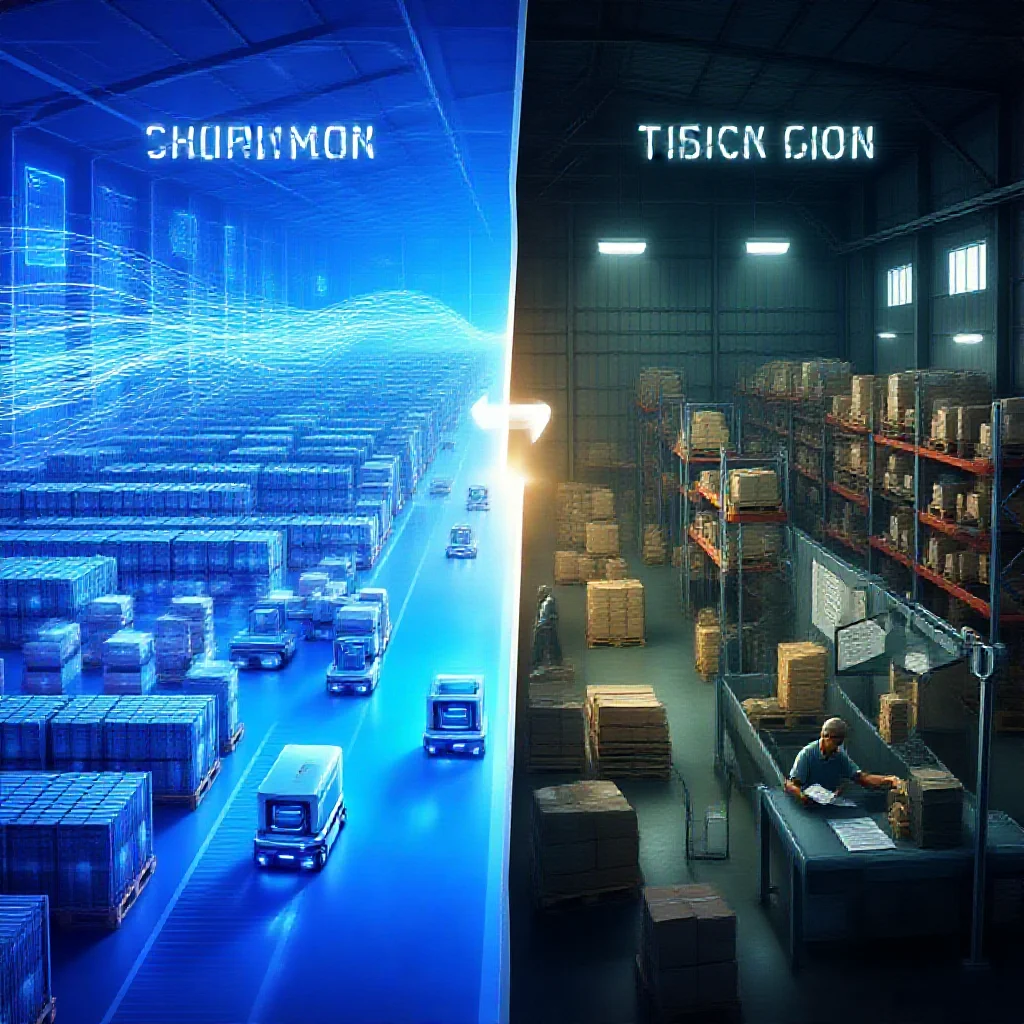
"A stark 15% performance gap has emerged between supply chain leaders who"
The AI Divide: How a 15% Performance Gap is Reshaping Global Supply Chains
Introduction: The 21% Threshold and the Emergence of a Two-Tier Industry
A survey of 1,000 supply chain leaders has quantified a new industrial reality: only 21% of companies have artificial intelligence in widespread use within their operations. (Source 1: [Primary Data]) This minority operates within a fundamentally different competitive paradigm than the remaining 79%. The defining characteristic of this divide is a measured 15% performance gap between adopters and non-adopters. (Source 2: [Primary Data]) This differential is not a marginal efficiency gain but a leading indicator of structural industry shift. The central question is whether this gap represents the early stage of a consolidation phase, where AI-capable firms systematically absorb or outcompete those without this capability.!Infographic showing 21% AI adoption vs. 79% non-adoption in supply chains

Deconstructing the 15% Gap: Beyond Efficiency to Structural Resilience
The reported 15% performance gap aggregates metrics across cost reduction, operational speed, delivery reliability, and overall agility. The underlying cause is a transition in operational philosophy. For the adopting minority, AI functions as a mechanism for predictive demand forecasting, inventory optimization, and pre-emptive disruption identification. This transforms the supply chain from a reactive cost center into a predictive and adaptive strategic asset. The competitive disadvantage for non-adopters is foundational: their systems respond to events, while AI-enabled systems anticipate and neutralize them. This creates a latency in decision-making that the performance gap quantifies.!Comparative flowchart of AI-optimized vs. traditional supply chain processes
The Hidden Economic Logic: AI as a 'Digital Moat' in a Volatile World
The strategic value of AI in supply chains extends beyond operational metrics to function as a "digital moat." In an environment characterized by volatility, the ability to predict demand and mitigate disruptions provides economic advantages that compound. Firms with demonstrably resilient, AI-driven supply chains can secure more favorable long-term contracts, access cheaper capital due to lower perceived risk, and attract preferential partnerships from tier-one suppliers. This initiates a virtuous cycle: early adoption generates superior data, which trains more accurate models, leading to better performance and more business, which in turn generates even more proprietary data. This cycle erects a barrier to entry that becomes increasingly difficult for competitors to breach.!Conceptual illustration of a digital moat protecting an AI-adopting firm
The Long-Term Impact: From Performance Gap to Ecosystem Reformation
The proliferation of AI will redefine power dynamics within global supply chain ecosystems. The endpoint is not merely a set of efficient companies but a re-architected network. AI-leading entities will likely evolve into central "brains" or orchestration hubs. Their predictive power and holistic visibility will allow them to dictate terms, optimize multi-tier networks for their own resilience, and selectively onboard partners who can interface with their data-driven platforms. Non-adopting firms risk being relegated to commoditized, replaceable nodes with minimal pricing power and strategic influence. The industry structure may bifurcate into a small cohort of orchestrators and a large pool of execution-only service providers.Strategic Imperatives in an Irreversible Transformation
For companies in the 79%, the strategic pathway is narrow and urgent. The initial focus must shift from viewing AI as a discrete IT project to recognizing it as a core operational competency. This requires targeted investment in data infrastructure and talent acquisition, often starting with focused pilots in high-impact areas like demand sensing or logistics optimization. Strategic partnerships with technology vendors or third-party logistics providers offering AI-as-a-service may provide a viable acceleration path. The objective is to begin generating and leveraging proprietary data flows to narrow the digital moat before it becomes uncrossable. The transformation is irreversible; the choice is between managed transition and managed decline.Conclusion: The New Determinant of Market Survival
The evidence indicates a conclusive shift. The 15% performance gap is the initial measurable effect of a deeper technological and economic realignment. AI in supply chain management has transcended its role as an efficiency tool. It is now a critical determinant of market survival, directly influencing resilience, profitability, and strategic optionality. The actions taken by organizations in the next 18 to 36 months to bridge this capability gap will likely determine their position in the industrial hierarchy for the next decade. The divide is established; its consequences are now unfolding.#AI-adoption-supply-chain#supply-chain-performance-gap#competitive-disadvantage-AI#predictive-demand-AI#inventory-optimization-AI#supply-chain-disruption
Trade Metrics
Sector ImpactCritical
Growth Potential+12.4%
Risk LevelModerate
Related Datasets
Q4 Cross-Border Logistics Report
PDF • 4.2 MB
Automotive Parts Supply Chain Index
CSV • 1.1 MB