Beyond the Headlines: How 2026 Fleet Orders Reveal a Strategic Pivot in Global

Lisa Park
Supply Chain Editor
April 15, 2026
DATELINE: NA TRADE WIRE
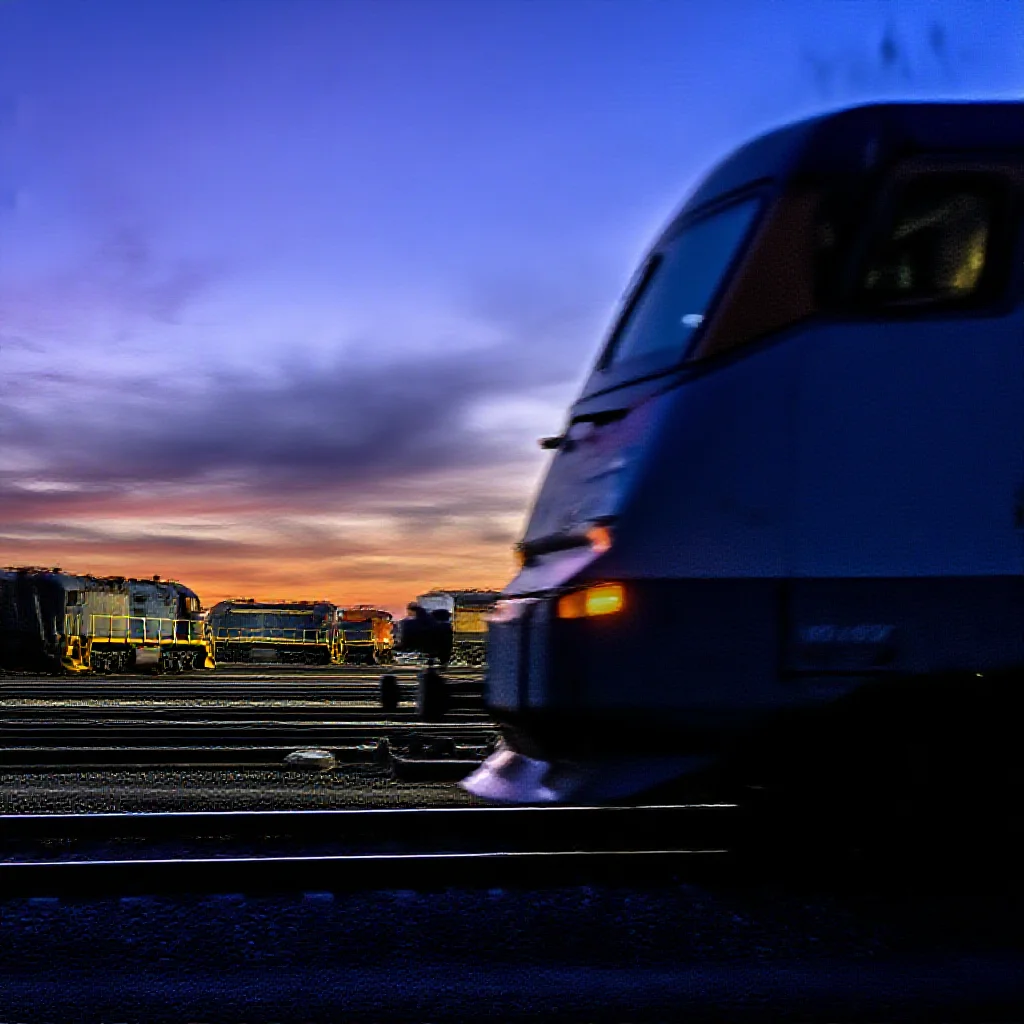
"Recent locomotive orders and contracts from Progress Energy, CPKC, Canadian"
Beyond the Headlines: How 2026 Fleet Orders Reveal a Strategic Pivot in Global Rail Freight
Introduction: The 2026 Convergence – More Than a Coincidence
Recent announcements from major rail freight players reveal a distinct chronological alignment. Progress Energy Resources Ltd. has scheduled delivery of four Wabtec FLXdrive battery-electric locomotives for 2026 (Source 1: [Primary Data]). Simultaneously, an Australian mining company expects delivery of three Wabtec ES44ACi diesel locomotives the same year (Source 1: [Primary Data]). These events coincide with the initial phase of CPKC’s plan to acquire more than 400 new high-horsepower units between 2025 and 2028 (Source 1: [Primary Data]) and Canadian National’s renewal of a long-term locomotive maintenance agreement extending through 2035 (Source 1: [Primary Data]). The synchronicity of these delivery timelines and long-term contractual commitments targeting the mid-2020s suggests a coordinated, rather than coincidental, industry logic. This pattern indicates a calculated strategic pivot, with 2026 emerging as a key inflection point for fleet readiness.
The Dual-Track Strategy: Modernization Meets Disruption
The industry’s approach is not monolithic but follows a deliberate dual-track strategy, hedging against future uncertainty while securing present operational needs.
The first track is Capacity & Efficiency Modernization. CPKC’s order for over 400 new high-horsepower diesel locomotives represents a large-scale bet on the incremental improvement of established technology (Source 1: [Primary Data]). This move prioritizes immediate gains in fuel efficiency, reliability, and haulage capacity across vast continental networks. It is a defensive investment to bolster the core asset base against growing demand and near-term economic cycles.
The second, parallel track is Disruption & Niche Application. Progress Energy’s order for FLXdrive battery-electric units represents a targeted pilot for next-generation technology (Source 1: [Primary Data]). This track focuses on decarbonization and operational innovation in controlled, high-return scenarios, such as last-mile logistics in industrial or energy sectors. The Australian miner’s order for the latest ES44ACi models, also for 2026 delivery, fits this track as a modernization play within a specific, high-intensity application (Source 1: [Primary Data]). The industry is not choosing one path over the other but is funding R&D for the future while fortifying its current operational backbone.
Wabtec's Central Role: From Vendor to Strategic Partner
This strategic pivot is being facilitated by original equipment manufacturers evolving into integrated performance partners. Wabtec’s unique position is evident, as it supplies both the disruptive FLXdrive platform and the advanced ES44ACi diesel platform (Source 1: [Primary Data]). This allows railroads to execute both tracks of their strategy through a single supplier, simplifying integration and technology roadmaps.
The significance of Canadian National’s renewed maintenance agreement for 75 AC4400 locomotives through 2035 further decodes this shift (Source 1: [Primary Data]). Such a long-term pact moves the relationship from transactional purchasing to integrated lifecycle management. It signals deep operational trust and locks in predictable total cost of ownership for legacy assets, freeing capital and management focus for new strategic investments. The concurrent renewal of maintenance for existing fleets alongside new-build orders demonstrates a holistic fleet management approach by railroads, increasingly reliant on OEMs for comprehensive performance assurance.
The Hidden Economic Logic: Preparing for the Inevitable
The convergence on 2026 as a delivery and planning horizon is driven by underlying economic and regulatory calculations. First, it establishes a pre-regulatory preparation window. Orders placed now ensure the deployment of the most efficient current-technology fleets ahead of potential future emissions or efficiency mandates, providing a compliance buffer.
Second, large, multi-year orders provide critical stability for the manufacturing and component supply chain. CPKC’s commitment (Source 1: [Primary Data]) enables suppliers like Wabtec to plan capital expenditure, workforce, and inventory with greater certainty, fostering a more resilient industrial ecosystem. This stability is essential for supporting the parallel development of nascent technologies like battery-electric propulsion.
Finally, the global nature of these orders—from a Canadian energy firm, a North American Class I railroad, and an Australian miner—connects to broader commodity and trade cycles. Investments in rail capacity and efficiency are anticipatory bets on sustained or growing demand for bulk commodities and intercontinental freight movement post-2025.
Conclusion: A Calculated Transition in Motion
The collective actions of Progress Energy, CPKC, Canadian National, and the Australian mining firm are discrete components of a unified industry maneuver. The strategy is characterized by parallelism: modernizing the diesel fleet for scale and efficiency while selectively deploying and testing next-generation technologies for specific use cases. The 2026 timeline is a deliberate marker for this phased transition, aligning fleet renewal cycles with anticipatory regulatory and economic planning. The shift toward long-term OEM partnerships for total fleet management underscores the complexity of this transition. The evidence indicates the global rail freight industry is executing a calculated, risk-hedged pivot, preparing its core operations for the present while actively constructing the operational and technological blueprint for the coming decade.
Trade Metrics
Related Datasets
Q4 Cross-Border Logistics Report
PDF • 4.2 MB
Automotive Parts Supply Chain Index
CSV • 1.1 MB