The 2026 Maritime Crisis: How Outdated Tech Fuels a Workforce Shortage & The

Lisa Park
Supply Chain Editor
April 8, 2026
DATELINE: NA TRADE WIRE
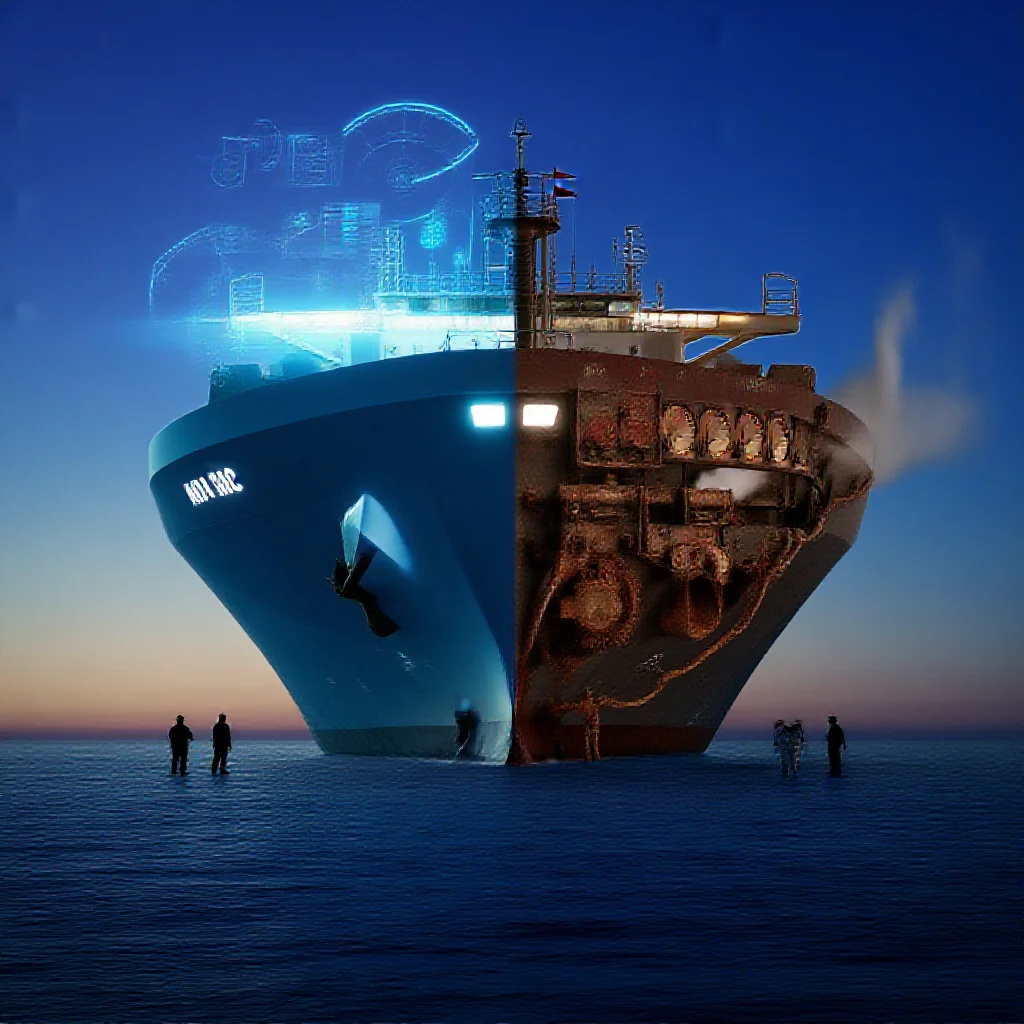
"A Wärtsilä Voyage survey of 1,000 maritime professionals reveals a dual"
The 2026 Maritime Crisis: How Outdated Tech Fuels a Workforce Shortage & The Digital Lifeline
Introduction: The 2026 Perfect Storm – A Survey Sounds the Alarm
A convergence of systemic risks is charting a course toward a 2026 inflection point for the global maritime industry. Data from a survey of 1,000 maritime professionals conducted by Wärtsilä Voyage reveals a dual crisis: 95% of respondents predict a severe workforce shortage will manifest by 2026, while 90% identify outdated technology systems as a primary threat to operations (Source 1: [Primary Data]). This diagnostic presents a critical paradox. The same factor cited as a fundamental threat—legacy technology—is simultaneously viewed as the core solution. Over 92% of survey respondents believe technological adoption can mitigate the impending human capital shortfall. This analysis examines the causal relationship between technological debt and workforce attrition, and posits that strategic digitalization constitutes an existential workforce strategy, not merely an operational upgrade.
!An infographic highlighting the key survey percentages (95%, 90%, 92%) in bold, clean design.
The Core Axis: Technological Debt as a Human Capital Accelerant
The correlation between outdated systems and workforce crisis is not coincidental but causal. The economic logic is straightforward: technological debt directly accelerates human capital flight. Legacy systems, characterized by manual data entry, disparate non-integrated platforms, and obsolete interfaces, increase cognitive load and operational friction for maritime professionals. This environment elevates fatigue, amplifies error potential, and reduces job satisfaction.
The operational inefficiencies created by such systems necessitate more human hours for tasks that are increasingly automated in shoreside industries. Consequently, the maritime career proposition deteriorates when measured against technology-enabled professions on land, which offer superior tools, connectivity, and work-life integration. The survey data linking the 90% threat perception of outdated tech to the 71% belief that technology aids retention (Source 1: [Primary Data]) validates this axis. Technological stagnation thus functions as a direct accelerant of the workforce shortage, making maritime roles less competitive in the global labor market.
The Digital Lifeline: Beyond Automation to a Human-Centric Ecosystem
The survey indicates strong belief in technology’s traditional return-on-investment pillars: safety (90%), operational efficiency (89%), and environmental impact reduction (88%) (Source 1: [Primary Data]). However, the more significant data points for human capital strategy are found in crew welfare (82%), talent attraction (75%), and retention (71%). This shift in perceived value suggests the next generation of maritime technology must be evaluated through a new metric: the Crew Experience Quotient (CEQ).
A high CEQ signifies technology designed with human-centric principles. It encompasses systems that enhance situational awareness to reduce stress, integrated platforms that minimize administrative burdens, and connectivity solutions that bridge the gap between ship and shore for improved mental well-being. Digitalization, in this context, transitions from a pure automation play to an ecosystem upgrade aimed at making life at sea safer, more connected, and more professionally fulfilling. The strategic objective becomes using technology not to replace seafarers, but to empower and retain them.
The Implementation Chasm: From Belief to Action
A significant gap exists between the industry’s consensus on technology’s necessity and its pace of holistic implementation. Barriers are multifaceted. Capital expenditure cycles in shipping are long and often prioritize tangible assets over digital infrastructure. The vendor landscape remains fragmented, raising concerns about interoperability and long-term support. Cybersecurity fears surrounding connected systems introduce perceived risk. Furthermore, successful integration requires concurrent investment in crew training and change management, adding layers of complexity and cost.
The 2026 timeline indicated by the survey is not a distant forecast but a near-term deadline. It represents a call for urgent, strategic investment aligned with human capital outcomes, as opposed to piecemeal, siloed upgrades. The cost of inaction is quantifiable: continued attrition of skilled personnel, compounded operational risks, and eroded competitive positioning.
Conclusion: Navigating the Dual Crisis – A Strategy for Survival and Growth
The Wärtsilä Voyage survey data frames a clear strategic imperative. The maritime industry’s twin challenges of workforce shortage and technological obsolescence are interlocked. Mitigating one necessitates addressing the other. The analysis concludes that targeted digitalization is the most effective lever to pull for human resource stability.
Future viability will be determined by the industry’s capacity to execute a dual-track strategy: first, the systematic retirement of legacy systems that degrade the seafaring profession; and second, the deployment of integrated, human-centric digital tools that enhance professional capability and quality of life at sea. The 2026 crisis point, therefore, is not predestined. It is a function of current investment decisions. Vessels and companies that prioritize their digital backbone as a core component of their employee value proposition will navigate the coming shortage from a position of strength. Those that delay will face the storm directly, under-crewed and under-equipped. The market will resolve this divergence through operational performance and, ultimately, financial results.
Trade Metrics
Related Datasets
Q4 Cross-Border Logistics Report
PDF • 4.2 MB
Automotive Parts Supply Chain Index
CSV • 1.1 MB