Beyond the 10-Minute Flight: How ZeroAvia''s Hydrogen Test Reveals the UK''s

Michael Chen
Senior Trade Analyst
March 21, 2026
DATELINE: NA TRADE WIRE
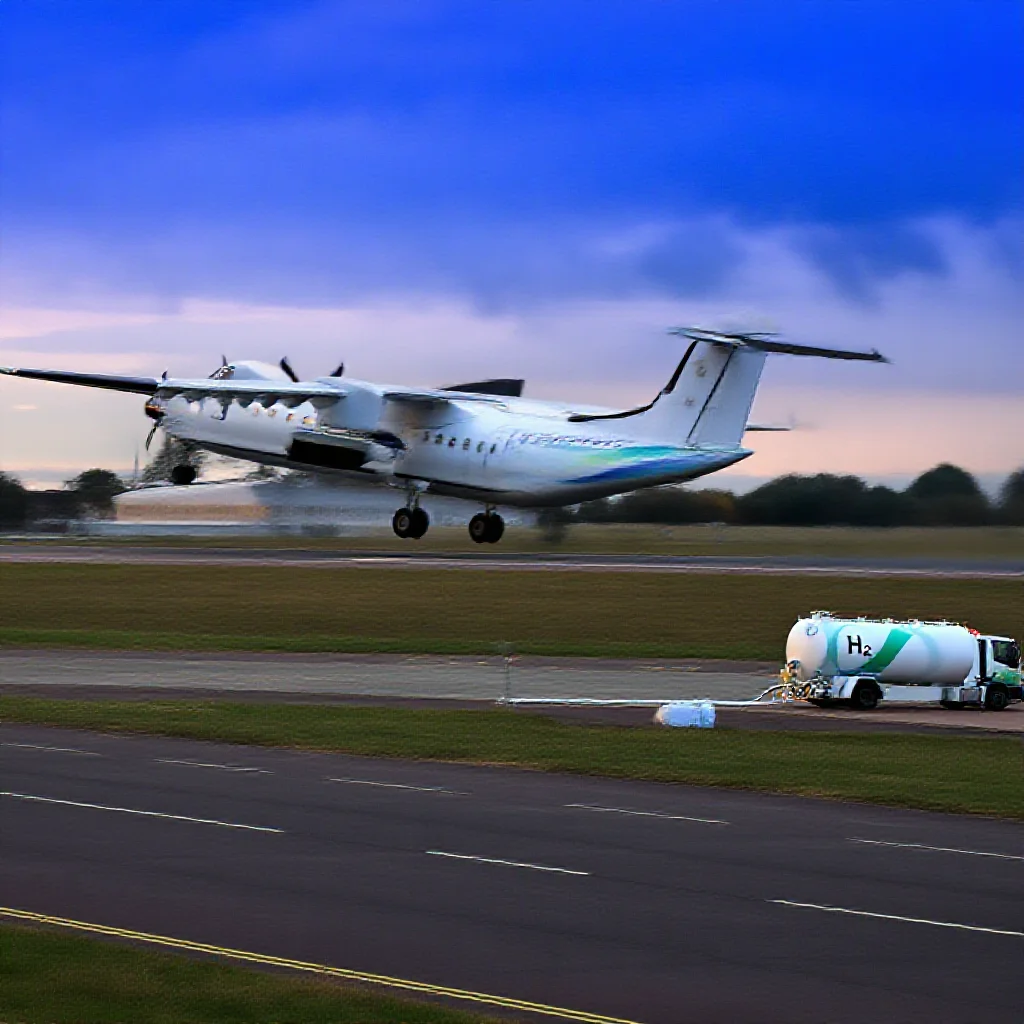
"ZeroAvia's recent 10-minute test flight of a hydrogen-electric Dornier 228,"
Beyond the 10-Minute Flight: How ZeroAvia's Hydrogen Test Reveals the UK's Strategic Bet on Aviation's Future
A 10-minute test flight of a modified Dornier 228 at Cotswold Airport represents a calculated opening move in a strategic competition to define the next generation of regional air travel.
On January 19, 2023, ZeroAvia conducted a 10-minute test flight of a Dornier 228 aircraft retrofitted with a hydrogen-electric powertrain (Source 1: [Primary Data]). The flight, part of the UK government-backed HyFlyer II project, serves as a proof-of-concept for a targeted objective: a certified 19-seat hydrogen-electric aircraft by 2025 (Source 2: [Primary Data]). This event is not merely a technological demonstration but a deliberate signal of industrial strategy, funded through the UK's Aerospace Technology Institute (ATI) program (Source 3: [Primary Data]). The operational milestone reveals a multi-layered campaign to establish technological standards, navigate regulatory pathways, and stimulate a nascent hydrogen aviation supply chain.
The 10-Minute Milestone: A Surface Reading vs. Strategic Depth
The flight’s short duration and use of a legacy airframe are pragmatic engineering choices. A modified Dornier 228 provides a known aerodynamic platform, isolating the powertrain as the primary variable under test. The 10-minute flight validates the fundamental airworthiness of the integrated hydrogen fuel cell and electric propulsion system in a real-world environment.
The strategic weight of the event is carried by its backing. The HyFlyer II project’s support from the ATI indicates a shift from pure research and development funding to a mission-oriented industrial policy. The objective is to secure first-mover advantage in a specific market segment: regional, sub-500-mile aviation. This segment is critical for connectivity but is currently underserved and ripe for technological disruption. The UK’s investment is a bet on owning the foundational intellectual property and certification precedents for this niche.
Why 19 Seats by 2025? The Unspoken Market Calculus
The 2025 target for a 19-seat aircraft is a function of regulatory and market calculus. Certification under existing aviation authorities for a novel propulsion system is an untested process. The 19-seat threshold, typical for aircraft like the Twin Otter or Dornier 228, often falls under less complex certification categories compared to larger commercial airliners. This segment represents the lowest barrier to entry for a new powertrain technology.
The market strategy is incremental. Successfully certifying a 19-seat aircraft establishes a regulatory playbook, de-risking the process for subsequent scaling to 50-seat and eventually 100-seat models. It also aligns with operational realities on regional routes, where lower passenger volumes can be more readily matched with early-stage hydrogen production and refueling capacity. The 19-seat aircraft acts as a operational and regulatory trojan horse.
The Retrofit Conundrum: Bridging the Old and New
ZeroAvia’s retrofit approach is a tactical bridge between established aerospace manufacturing and nascent clean technology. Integrating a hydrogen-electric powertrain—comprising cryogenic liquid hydrogen storage tanks, fuel cell stacks, power electronics, and electric motors—into an existing airframe is a complex engineering challenge. It requires meticulous weight and balance management, thermal management for cryogenic systems, and ensuring structural integrity with new load paths.
This methodology has a defined evolutionary path for the supply chain. Initially, it leverages existing airframe production and maintenance networks. However, it simultaneously creates immediate demand for new component manufacturers specializing in high-performance fuel cells, lightweight composite hydrogen tanks, and aviation-grade power distribution systems. The retrofit phase is designed to bootstrap this new industrial base.
The Infrastructure Gap: The Flight is Easy, the Ground Support is Hard
The fundamental constraint for hydrogen aviation is not airborne technology but terrestrial infrastructure. A successful test flight demonstrates vehicle capability, but scalable commercial operation requires a parallel build-out of hydrogen production, liquefaction, transportation, and airport refueling ecosystems. The hydrogen for the test flight was produced off-site, highlighting this dependency.
The HyFlyer II project and similar initiatives implicitly aim to catalyze this infrastructure development by creating a clear demand signal. Airports, energy companies, and logistics firms are more likely to invest in hydrogen infrastructure if a certified aircraft and committed operators are on a visible timeline. The 2025 target for aircraft certification is, therefore, also a deadline for the first nodes of a hydrogen refueling network to become operational.
Conclusion: A Calculated Position in a Global Race
ZeroAvia’s test flight is a single data point in a global competition involving entities in the EU, United States, and Asia. The UK’s strategic position, through the ATI’s funding, is to secure a leadership role in the regional aviation segment. The sequence is logical: establish a technological proof-of-concept, navigate certification for a manageable aircraft class, stimulate a parallel supply chain and infrastructure build-out, and use this foundation to scale.
The commercial and regulatory challenges remain substantial. Certification will require thousands of hours of rigorous testing. The economic viability of green hydrogen production at scale is still evolving. However, the 10-minute flight at Cotswold Airport is a definitive move from theoretical design to operational prototyping. Its primary function is to de-risk the subsequent steps in a long-term industrial strategy, positioning the UK to be a standard-setter in the emerging market for zero-emission regional air mobility.
Trade Metrics
Related Datasets
Q4 Cross-Border Logistics Report
PDF • 4.2 MB
Automotive Parts Supply Chain Index
CSV • 1.1 MB