Beyond the Hype: The Strategic Race Behind Airlines'' Conditional Orders for

Michael Chen
Senior Trade Analyst
April 8, 2026
DATELINE: NA TRADE WIRE
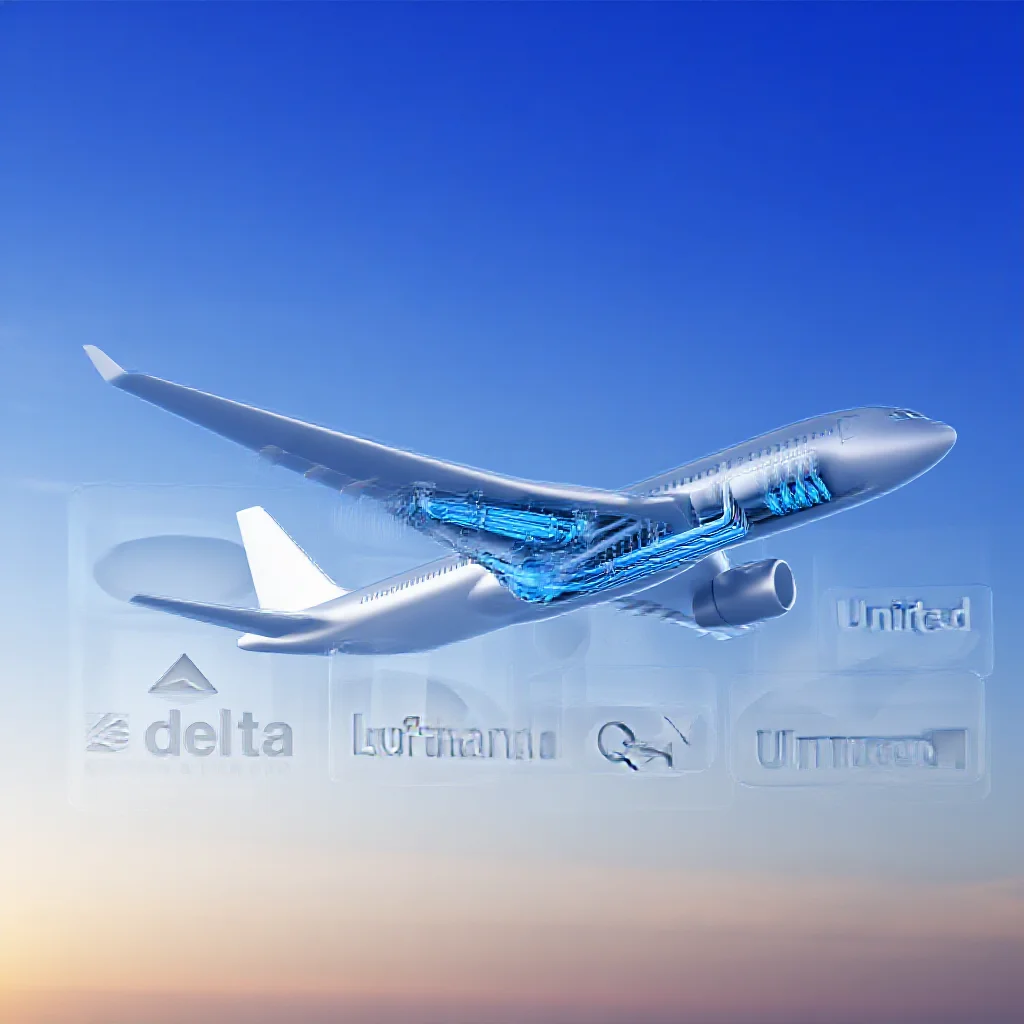
"While Airbus's ZEROe program and its 2035 target for hydrogen-powered flight"
Beyond the Hype: The Strategic Race Behind Airlines' Conditional Orders for Hydrogen Aircraft
Introduction: The Conditional Order Gambit – More Than Green Virtue Signaling
Public announcements from nine major airlines regarding conditional orders for Airbus’s prospective hydrogen-powered aircraft are framed within narratives of environmental commitment. The strategic business calculus underlying these non-binding commitments presents a more complex picture. These orders represent a calculated hedge, securing optionality in a future aviation landscape where fuel cost volatility and stringent carbon regulation are projected to redefine competitive dynamics. The core thesis is that these agreements are less about purchasing a specific aircraft and more about securing strategic positioning for a potential paradigm shift.
Deconstructing Airbus's Dual-Track Hydrogen Strategy
Airbus’s development strategy is not singular but dual-track, a technical reality revealed by its recent test campaigns. The demonstration of a hydrogen-powered auxiliary power unit on an A330 tests hydrogen combustion technology (Source 1: [Primary Data]). Concurrently, flight tests using hydrogen fuel cells on an A380 testbed explore hydrogen-electric propulsion (Source 1: [Primary Data]). This parallel development is necessary due to the distinct challenges of each pathway. Hydrogen combustion, akin to conventional jet engines but burning hydrogen, may offer a solution for larger, longer-range aircraft requiring high power density. Hydrogen fuel cells, which generate electricity to power motors, are potentially more efficient but face power and weight constraints, making them candidates for regional or shorter-range aircraft initially. The dual-track approach underscores the unresolved technical and certification hurdles for different market segments.
The Airline Consortium: A Strategic Hedge Against Future Scarcity
The list of ordering entities—Delta Air Lines, Air Lease Corporation, easyJet, IAG, JetBlue, Lufthansa Group, Qantas, United Airlines, and Virgin Atlantic—reveals a cross-section of aviation business models (Source 1: [Primary Data]). This includes global network carriers, a low-cost operator, and a major lessor. Their collective move indicates a strategic consensus beyond public relations. For these airlines, a conditional order is a low-cost option securing a position in a potential queue for early production slots. It provides leverage to influence final aircraft specifications and ensures insider access to development timelines and operational requirements. For a lessor like Air Lease Corporation, it is a bet on future asset desirability. The activity constitutes a coordinated hedge against future technological and regulatory scarcity.
The Hidden Bottleneck: It's Not the Plane, It's the Ecosystem
A critical path analysis reveals the primary constraint is not aircraft design but the supporting ecosystem. The viability of hydrogen aviation is contingent on a parallel, capital-intensive build-out of a global green hydrogen logistics network. This network must encompass large-scale production of liquid green hydrogen, its transportation to airports, on-site storage at cryogenic temperatures, and safe, rapid refueling infrastructure. This challenge exceeds the capacity of any single manufacturer or airline. The real race is between airframe development and the creation of this new energy infrastructure, which involves energy companies, logistics firms, airport authorities, and governments. Without synchronized progress on this front, aircraft delivery by 2035 (Source 1: [Primary Data]) would be an operational impossibility.
Verification & Reality Check: The 2035 Timeline and Credible Sources
The 2035 service entry target is an ambitious engineering and certification milestone. Aerospace engineering analysis points to immense hurdles, particularly in certifying cryogenic fuel systems for commercial aviation’s safety standards. The conditional nature of all announced orders reflects this inherent uncertainty. The development timeline, including the 2022 A330 APU test (Source 1: [Primary Data]), provides verifiable checkpoints for progress. The credibility of the initiative is anchored in Airbus’s status as a major OEM and the participation of leading airlines, whose commitments, while non-binding, involve dedicated internal resources for evaluation and planning. Their engagement signals a considered assessment of the technology’s potential trajectory.
Conclusion: A Calculated Bet on Future Market Structure
The conditional orders for hydrogen aircraft represent a sophisticated, low-risk strategic maneuver by key industry players. The actions are a bet on a future where carbon pricing and sustainable fuel economics make zero-emission aircraft not merely an environmental asset but a critical component of cost competitiveness and regulatory compliance. The development will be dictated by the slower of two clocks: the technological clock for safe, certified aircraft and the infrastructural clock for a globally scalable hydrogen supply chain. The current phase is one of securing strategic optionality, with the true financial and operational commitments deferred until these parallel paths converge with greater certainty. The outcome will determine whether this vision redefines aviation or remains a footnote in its history.
Trade Metrics
Related Datasets
Q4 Cross-Border Logistics Report
PDF • 4.2 MB
Automotive Parts Supply Chain Index
CSV • 1.1 MB