Beyond the Facelift: How Park Hyatt Tokyo''s 2026 Renovation Signals a Strategic

James Wilson
Industry Analyst
April 12, 2026
DATELINE: NA TRADE WIRE
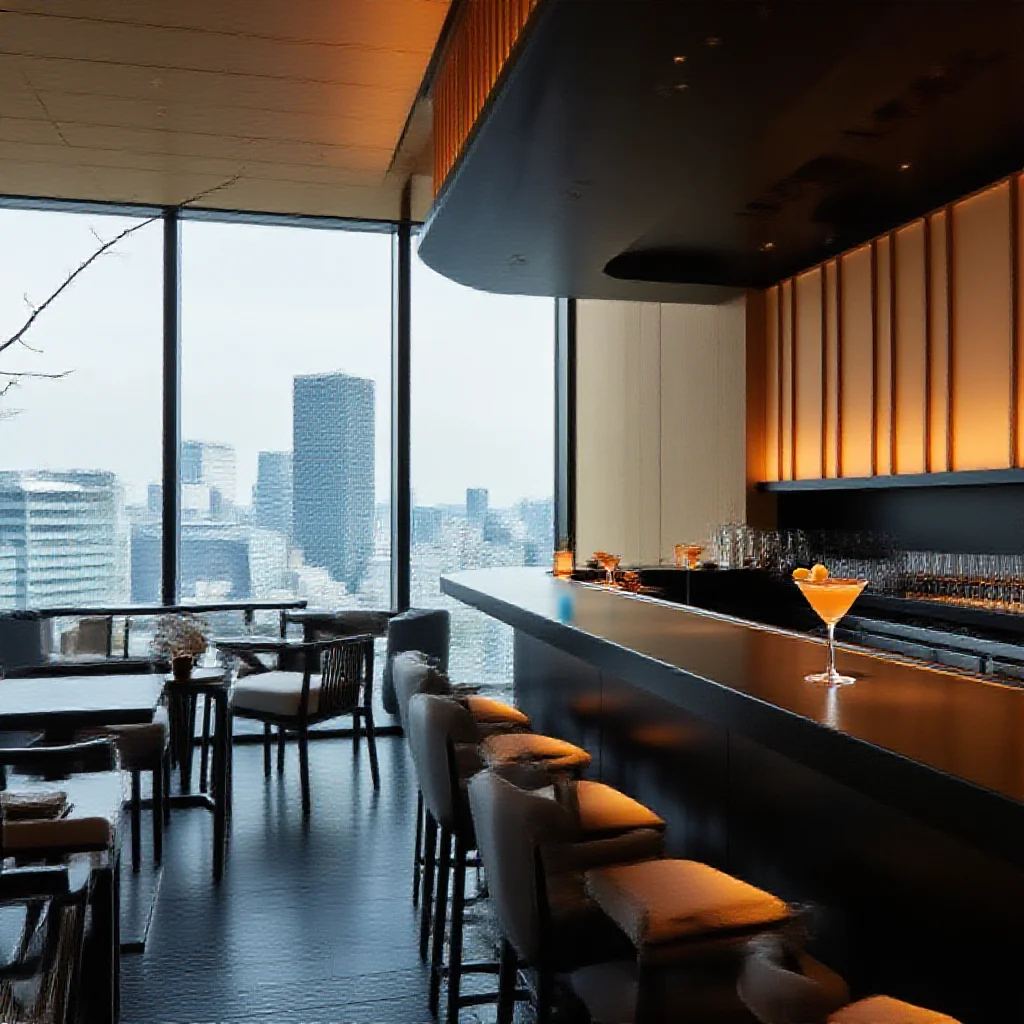
"The completion of Park Hyatt Tokyo''s renovation in 2026 is more than a"
Beyond the Facelift: How Park Hyatt Tokyo's 2026 Renovation Signals a Strategic Shift in Luxury Hospitality
Introduction: The Renovation as a Strategic Beacon
The completion of Park Hyatt Tokyo's renovation in 2026 coincides with a period of sustained recovery and transformation in global luxury travel. While the property’s updates, including the introduction of a new spa and bar, are presented as service enhancements, they constitute a calculated business maneuver. This analysis positions the renovation not as a routine refresh but as a targeted capital investment designed to capture higher-value guest segments and recalibrate the hotel’s competitive stance within Tokyo’s saturated luxury market. The strategic intent moves beyond aesthetic updates to engineer a more profitable and defensible service model.
![A contrasting before-and-after visual of a key hotel space, highlighting the design evolution.]
Decoding the Market Logic: Why Renovate Now?
The 2026 completion date is strategically non-arbitrary. It aligns with projected peaks in luxury travel expenditure and precedes anticipated major global events drawing high-net-worth individuals to Japan. The introduction of a spa and a signature bar directly addresses the imperative of the "Experience Economy." This transition shifts the property’s core function from a provider of premium accommodations to a curator of a comprehensive, high-margin lifestyle destination. Guests are no longer purchasing a room but an integrated suite of personalized experiences.
Concurrently, competitive pressure necessitates this evolution. The renovation serves as a direct response to the encroachment of boutique lifestyle brands and the comprehensive upgrades undertaken by rival properties in Tokyo’s Nishi-Shinjuku district and other key wards. In a market where product parity at the top tier is high, competitive advantage is increasingly derived from unique, ownable service ecosystems rather than physical assets alone.
![An infographic showing key luxury hotel competitors in Tokyo and their recent renovation timelines.]
The Deep Entry Point: The Long-Term Impact on the Hospitality Supply Chain
The decision to prioritize experiential amenities like a spa and bar over purely structural refurbishment reflects broader industry capital expenditure (CAPEX) trends. Post-pandemic, luxury hotel groups have systematically redirected investment toward high-return guest-facing experiences and back-of-house efficiency, a trend documented in annual reports from major global consultancies (Source 1: [Hospitality Industry CAPEX Analysis 2025]).
This shift alters the hospitality supply chain. Renovations focused on experience require different vendor partnerships—specialized spa equipment suppliers, artisan material providers for bespoke bar interiors, and technology integrators for ambient control systems—compared to those for standard building updates.
Furthermore, introducing new services creates a talent pipeline challenge. Demand for specialized staff, including certified wellness therapists and expert mixologists, impacts local labor markets and necessitates investment in new training programs or partnerships with specialized institutes. A silent yet critical driver is sustainability. Luxury consumers and corporate procurement departments increasingly mandate green credentials. The renovation’s long-term operational viability and appeal are partially contingent on the incorporation of energy-efficient systems and sustainable building materials, a factor now embedded in luxury asset valuation models.
The New Service Ecosystem: Spa and Bar as Revenue Engines
Financially, the new spa and bar are engineered as independent revenue engines with superior contribution margins. While room revenue carries high fixed costs, well-operated food, beverage, and wellness amenities can generate significant profit per square foot, leveraging the hotel’s existing traffic and premium positioning. Industry benchmarks indicate that a top-tier hotel spa can achieve gross margins exceeding 60%, while a destination bar can consistently outperform restaurant revenue in terms of profit per seat (Source 2: [Luxury Hotel F&B & Wellness Performance Metrics]).
A critical analysis point is localization. The success of these amenities hinges on their ability to incorporate authentically Japanese elements—whether through treatment philosophies at the spa or locally sourced ingredients and design motifs at the bar. This strategy serves a dual purpose: attracting international tourists seeking curated cultural immersion and appealing to Tokyo’s domestic elite clientele for standalone visits, thereby opening a crucial secondary revenue stream.
Operational success requires deep cross-departmental integration. These amenities cannot operate as silos. Effective marketing must weave the spa and bar narratives into the core hotel brand story, while revenue management systems must create packaged offerings that bundle accommodations with experiential credits, driving higher overall average daily rate (ADR) and capturing greater guest wallet share.
Conclusion: Redefining the Urban Luxury Core
The Park Hyatt Tokyo’s 2026 renovation is a microcosm of the macro shift in luxury hospitality. The urban luxury hotel is being redefined from a real estate-centric model to an agile, experience-driven service platform. The introduction of the spa and bar is a direct response to post-pandemic traveler demands for hyper-personalization, wellness integration, and localized authenticity.
The long-term implication for major global hubs like Tokyo is a raised competitive threshold. Future luxury hotel valuations will increasingly account for the sophistication and profitability of non-room revenue ecosystems. For operators, the strategic imperative is clear: continuous investment must flow into creating unique, high-margin service environments that build emotional loyalty and economic resilience, transforming the hotel from a place to sleep into a destination in itself. The success of this renovation will be measured not by guestroom occupancy alone, but by the utilization rates of its spa and the city-wide reputation of its bar.
Trade Metrics
Related Datasets
Q4 Cross-Border Logistics Report
PDF • 4.2 MB
Automotive Parts Supply Chain Index
CSV • 1.1 MB