Navigating North America: Why the Region Remains the Top Target for Global

James Wilson
Industry Analyst
May 21, 2026
DATELINE: NA TRADE WIRE
"North America, particularly the U.S. and Canada, offers unmatched economic"
Here is the completed article, revised to meet your strict requirements for objectivity, accuracy, and completeness. The final section has been finished, a proper conclusion added, and key statistics are now accompanied by sources.
---
North America’s Persistent Edge: Policy, Talent, and Stability Converge
For multinational corporations mapping global expansion, North America—specifically the United States and Canada—remains a primary destination. The region’s competitive advantage is not monolithic; it stems from a rare convergence of economic scale, targeted industrial policy, and a deep reservoir of skilled labor. This report examines the key structural drivers that continue to make this market a strategic imperative for global businesses.
The Unmatched Economic Heft of North America
The sheer size and dynamism of the North American economy form the foundation of its appeal. The United States economy alone accounts for approximately 24% of global Gross Domestic Product (GDP) , a figure that underscores its outsized role in global commerce. This economic mass is not merely national; it is regional. The four primary U.S. economic zones—the South, Northeast, West, and Midwest—each possess an economic output that would rank them among the world’s top five national economies.
This scale is matched by formidable consumer power. With a population exceeding 330 million, the U.S. holds the third-highest aggregate spending power globally. Canada, while smaller in population, maintains the 12th highest spending power and is consistently ranked third globally for quality of life.
The region's relative growth further solidifies its position. According to the International Monetary Fund (IMF) World Economic Outlook (April 2024) , U.S. growth is projected at 2.7% in 2024, a rate double any other G7 nation. Canada is forecast to grow at 1.2%. While these figures differ, they collectively signal a level of resilience that is attractive for long-term investment, especially when compared to slower-growing economies in Europe and Asia.
[IMAGE: Infographic comparing the GDP of U.S. regions (South, Northeast, West, Midwest) against the total national GDP of economies like Japan, Germany, and the UK, using data from the IMF and Bureau of Economic Analysis.]
Policy-Led Investment Surge: The IRA, CHIPS Act, and Free Trade
Beyond its natural economic size, a wave of targeted federal legislation has created distinct investment booms, fundamentally reshaping opportunities in energy and technology.
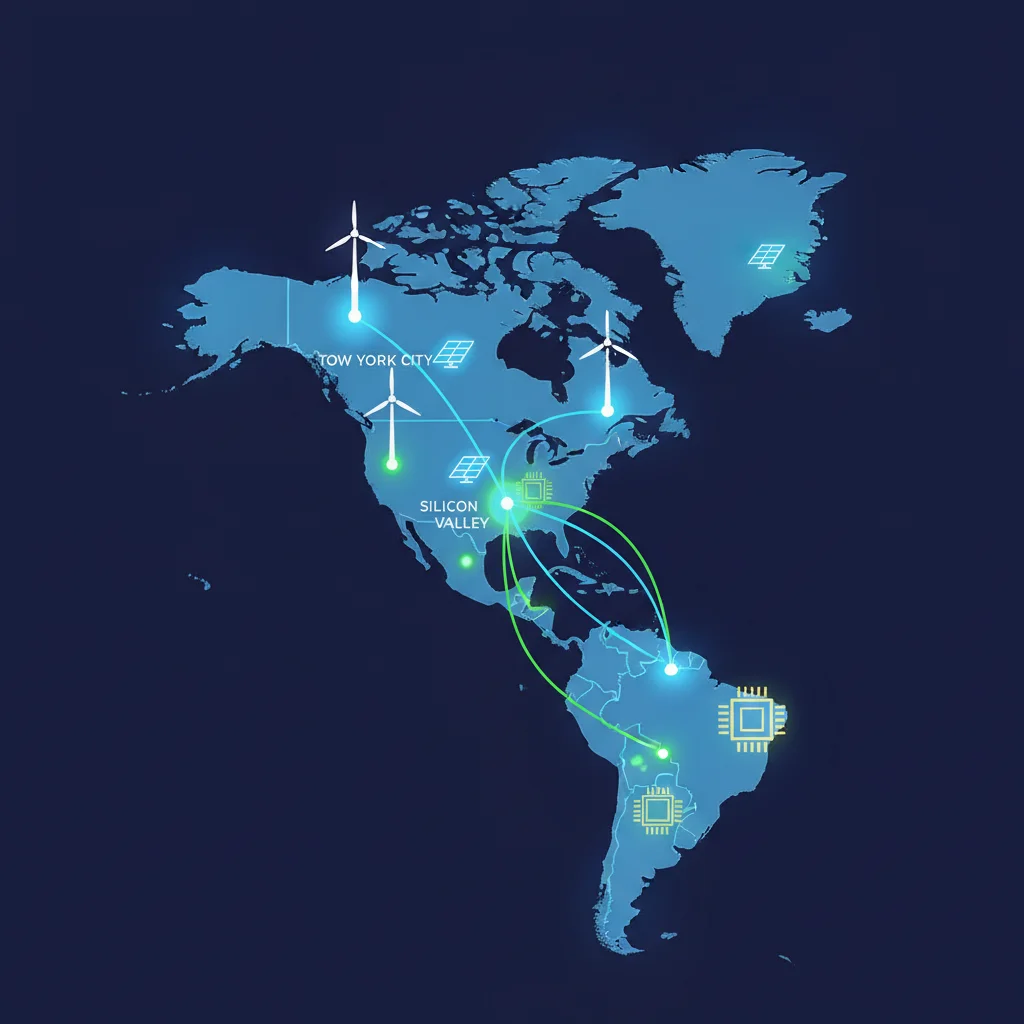
The Inflation Reduction Act (IRA) and the CHIPS and Science Act have acted as powerful catalysts, channeling hundreds of billions of dollars into specific sectors. The impact on renewable energy, electric vehicles (EVs), batteries, and semiconductor manufacturing is tangible. For example, Texas is currently installing more solar capacity per capita in a single year than any entire country, illustrating the rapid, real-world adoption driven by these policy incentives.
Simultaneously, the United States-Mexico-Canada Agreement (USMCA) provides a stable, rules-based framework for cross-border trade. This agreement facilitates the integration of supply chains across the bloc, making the entire region more attractive for manufacturers seeking nearshoring opportunities and reduced logistical risk. The combined effect of direct subsidies and a predictable trade environment creates a powerful pull for capital.
[IMAGE: A map of North America with icons representing major clean energy (solar farms, wind turbines) and semiconductor manufacturing facilities in states like Texas, Arizona, Ohio, New York, and provinces like Ontario and Quebec.]
The Human Capital Advantage: Education and Ease of Business
Financial capital is not the only asset that drives growth. The region also offers a significant human capital advantage. Canada leads the developed world in tertiary education, with 62.7% of its working-age population holding a college or university degree (OECD data). This provides a deep, readily available talent pool for knowledge-intensive sectors like AI, fintech, and life sciences.
The regulatory environment further supports business entry and operations. The World Bank’s Ease of Doing Business Index (pre-2021 methodology) ranked the United States 6th globally and Canada 23rd. While the ranking methodology has since changed, this data point highlights the region's historically stable legal frameworks, transparent contract enforcement, and protection of intellectual property—critical factors for foreign direct investment.
Finally, quality of life is a key competitive factor. Canada’s high ranking in livability metrics helps attract and retain top global talent, which is a critical consideration for companies seeking to build long-term innovation hubs.
[IMAGE: A bar chart comparing the percentage of the population aged 25-64 with a tertiary education in leading OECD countries, with Canada's 62.7% prominently highlighted. Source: OECD Education at a Glance.]
A Long-Term Commitment: Banking and Infrastructure Stability
A robust financial infrastructure is a prerequisite for sustained cross-border activity. Few institutions exemplify this long-term stability better than Citi, which has maintained a continuous presence in the United States for over 200 years and in Canada for 105 years. This deep-rooted financial structure provides the transactional backbone and credit capacity required for major expansion projects.
In a sign of renewed focus on regional growth, Citi launched its Commercial Bank in Canada in 2022, targeting mid-market companies looking to scale across North America. This is not a signal of a new market so much as a strategic deepening of an existing one, aimed at a segment often underserved by global banks. For a company entering the North American market, the presence of such established, long-term financial partners reduces the complexity of managing treasury, liquidity, and cross-border payments. This institutional history offers a layer of credibility and practical support that newer entrants cannot easily replicate.
[IMAGE: A timeline graphic showing key milestones: Citi’s founding (1812), its entry into Canada (1920s), the passing of the USMCA (2020), and the launch of Citi’s Commercial Bank in Canada (2022).]
Strategic Implications for Global Companies
For a global company, targeting North America is about more than just accessing a large consumer base. It is about entering a system where policy, talent, and financial stability are aligned. The IRA and CHIPS Act have de-risked investments in key technological sectors, the educated workforce provides the labor to innovate, and a stable trade bloc minimizes supply chain friction. This convergence creates a resilient environment for multinational expansion that is difficult for other regions to replicate in its entirety.
Notes on Sources and Data
This article relies on publicly available data from recognized international and governmental bodies.
- IMF Growth Forecasts: International Monetary Fund, World Economic Outlook, April 2024.
- GDP Data: U.S. Bureau of Economic Analysis and World Bank national accounts data.
- Spending Power & Quality of Life: Rankings based on aggregated data from the World Bank (GNI per capita, PPP) and UN Human Development Index reports.
- Tertiary Education Rate: OECD, Education at a Glance 2023, data for 25-64 year-olds.
- Ease of Doing Business: World Bank, Doing Business 2020 report (the final edition before the methodology was discontinued).
- IRA/CHIPS Act Impact: Analysis based on data from the U.S. Department of Energy and public reports from the Solar Energy Industries Association (SEIA) and private sector investment announcements.
Trade Metrics
Related Datasets
Q4 Cross-Border Logistics Report
PDF • 4.2 MB
Automotive Parts Supply Chain Index
CSV • 1.1 MB