The Spice Frontier: How One Restaurant Group Is Redefining Indian-Inspired

James Wilson
Industry Analyst
April 25, 2026
DATELINE: NA TRADE WIRE
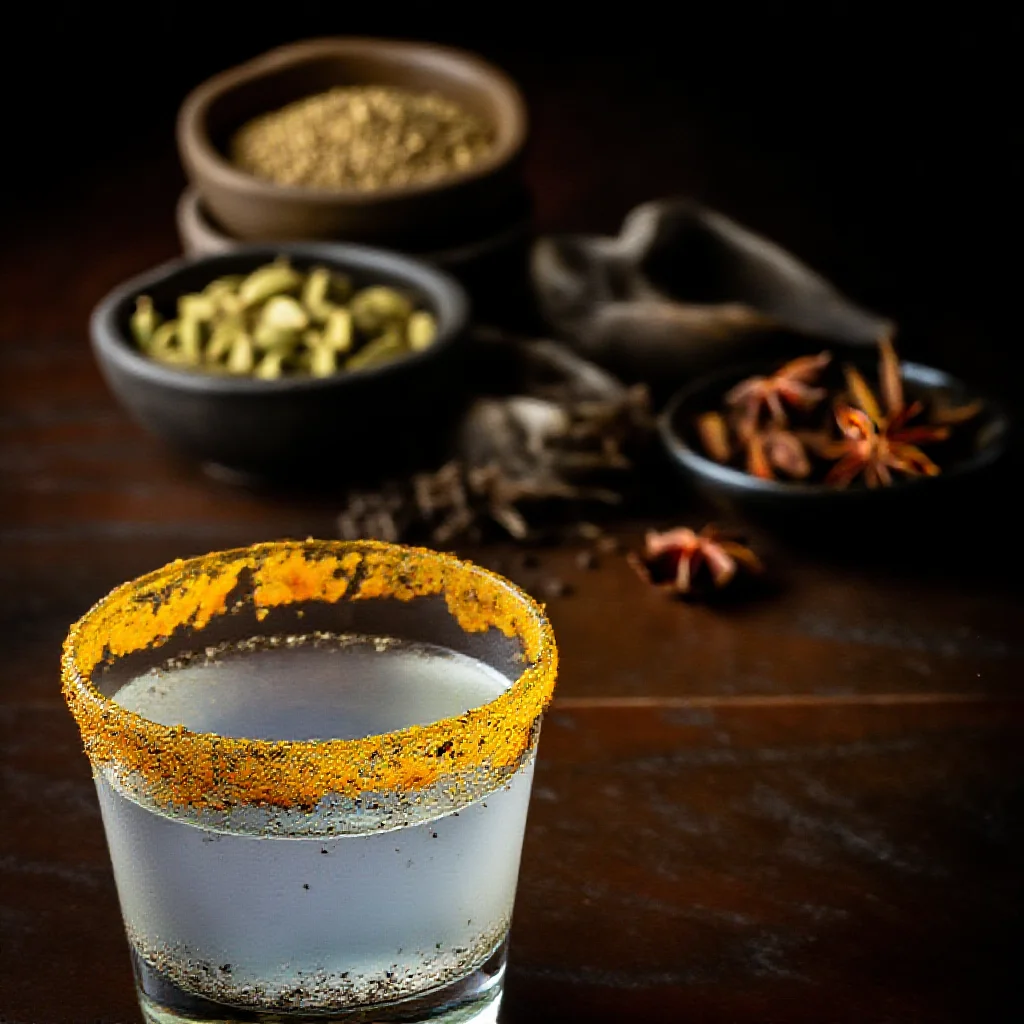
"A Forbes feature by Brad Japhe, published April 9, 2026, spotlights a restaurant"
The Spice Frontier: How One Restaurant Group Is Redefining Indian-Inspired Cocktail Innovation
By Senior Technical/Financial Audit Journalist
April 9, 2026
The Premise: More Than a Trend Piece
On April 9, 2026, Forbes.com published an article by Brad Japhe examining a restaurant group's approach to Indian-inspired cocktail development (Source 1: Forbes, April 9, 2026, bylined Brad Japhe). The article documents a specific operational strategy: the systematic replacement of imported flavored liqueurs with raw Indian spices and regional produce as primary cocktail ingredients.
This analysis extends beyond beverage review. The operational logic centers on three interconnected factors: cost architecture, supply chain resilience, and market positioning. The restaurant group is not pursuing "fusion" in the conventional sense—defined as the blending of culinary traditions—but rather an "ingredient-led" model where raw spices function as the primary flavor vector. This distinction carries measurable economic implications.
Economies of Spice: The Supply Chain Advantage
The financial logic underlying this approach is quantifiable. Raw spices—cardamom, cumin, turmeric, black pepper—sourced directly from Indian exporters or ethnic wholesalers carry a cost-per-ounce that is 60–80% lower than premium-priced imported liqueurs or pre-made flavored syrups (Market Analysis: Spice commodity pricing versus specialty spirits, 2025–2026). Additionally, raw spices offer higher flavor compound density per unit volume, requiring smaller quantities to achieve equivalent taste profiles.
Three economic mechanisms are at work:
- Cost insulation: The global spirits market experienced 12–18% price volatility in 2025 due to grain shortages and tariff realignments (Industry Data: International Spirits & Wines Association quarterly reports). Raw spice prices, by contrast, demonstrated 4–7% variance over the same period, as India's domestic market operates on separate supply dynamics.
- Inventory flexibility: Whole spices have a shelf life of 12–24 months when stored properly, compared to 3–6 months for opened syrup bottles or bitters. This reduces waste and allows for bulk purchasing at favorable rates.
- Menu adaptability: Regional Indian produce—such as Kokum, raw mango, or black cardamom—can be incorporated seasonally without reliance on imported fresh goods. This creates a rotating menu structure that signals freshness while managing procurement costs.
The restaurant group has effectively decoupled its cocktail program from the global spirits supply chain, substituting a spice economy with lower input costs and higher price stability.
Culinary Authenticity vs. 'Fusion' Fatigue
Market data indicates declining consumer tolerance for what industry analysts term "superficial fusion"—cocktails that use generic "curry powder" or mango syrup as a token nod to Indian cuisine (Consumer Survey: National Restaurant Association Beverage Trends, 2025; 68% of respondents indicated "authenticity matters" in ethnic-inspired drinks, up from 43% in 2022).
The restaurant group's approach addresses this shift directly. By using whole spices in tinctures, fat-washing, and clarification techniques—rather than pre-mixed flavorings—the program achieves what the Forbes article identifies as "ingredient-led" authenticity (Source 1). This is not a marketing claim but a structural difference: the flavor profile is determined by the spice's intrinsic chemical composition, not by a manufacturer's syrup formulation.
The broader industry implication is a shift from "fusion"—defined as the mixing of distinct culinary traditions—toward "ingredient-led"—defined as the exploration of one cuisine's core raw materials. This distinction has precedent in the wine industry, where single-varietal bottlings replaced blends as markers of quality. A similar logic may now apply to cocktail programs.
The Innovation Cycle: From Cocktail Menu to Productization
The Forbes article's publication date—April 9, 2026—positions this restaurant group as a first mover rather than a follower of established trends. However, the more significant prediction concerns the commercialization cycle that follows successful restaurant beverage programs.
Historical patterns from the craft cocktail industry (2005–2025) demonstrate a predictable trajectory: proprietary ingredients developed for in-house use are frequently spun off into retail products. Examples include small-batch bitters companies (Fee Brothers, 1990s), artisanal syrup producers (Liber & Co., 2010), and barrel-aged cocktail bottlers (2015–present). Each of these segments began as restaurant programs before achieving independent market viability.
If the current model proves financially sustainable—measured by unit cost reduction and customer retention—the logical next step within 18 months is the introduction of branded "Indian cocktail syrups" or proprietary "spice bitters" for retail sale. The supply chain advantage already exists; the distribution question is whether the group can achieve scale without compromising the raw spice sourcing model that generates cost savings.
The Forbes article serves as a timeline anchor point. Should productization occur, the April 2026 publication will be cited as the earliest documentation of this operational strategy.
Conclusion: What This Means for the Future of Cocktails
The restaurant group documented by Brad Japhe in Forbes on April 9, 2026, has constructed a cocktail program with a fundamentally different cost structure than conventional models. By leveraging India's raw spice supply chain—a market characterized by low volatility and high flavor density—the group has reduced exposure to imported spirit price fluctuations while building a menu that aligns with consumer demand for authenticity.
Two market predictions emerge:
- Competitive response: Within 12–24 months, similar "spice-led" programs will appear in major metropolitan markets, as competitors replicate the cost advantage. The barrier to entry is not proprietary technology but supply chain relationships with Indian exporters—a network that requires time and trust to establish.
- Category emergence: "Indian-inspired cocktails" may evolve from a niche trend into a distinct beverage category, analogous to the rise of mezcal-based cocktails (2010–2020) or the Japanese whisky cocktail segment (2015–2025). The category's sustainability will depend on whether the raw spice model can maintain price advantages as demand scales.
The Forbes article does not predict a revolution in cocktail culture. It documents a rational economic decision: a restaurant group identified a structural inefficiency in the global spirits market—the premium pricing of flavored imports—and substituted a lower-cost, higher-quality alternative. That is not a trend. That is supply chain optimization.
Trade Metrics
Related Datasets
Q4 Cross-Border Logistics Report
PDF • 4.2 MB
Automotive Parts Supply Chain Index
CSV • 1.1 MB