Beyond the Headline: The Hidden Economics of On-Set Injuries in the Blockbuster

James Wilson
Industry Analyst
April 12, 2026
DATELINE: NA TRADE WIRE
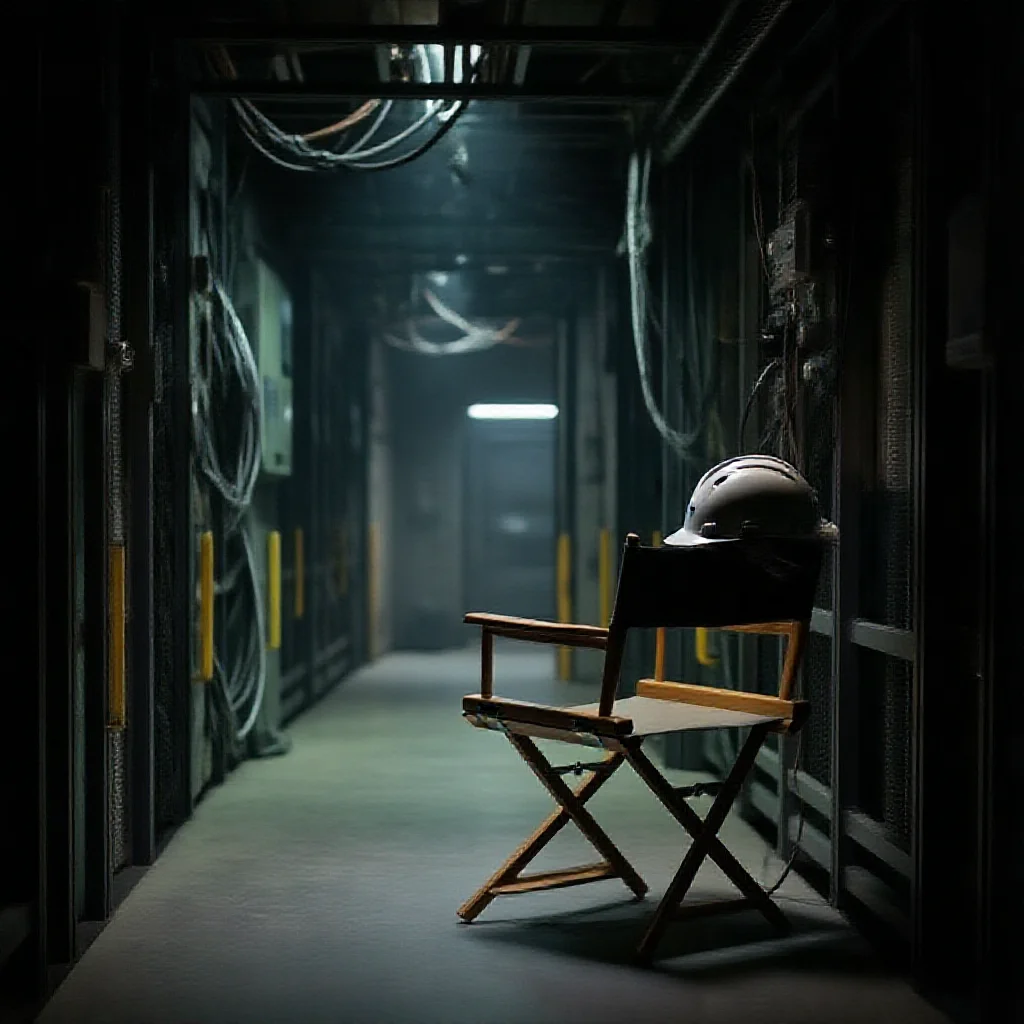
"The reported injury of actor Sophie Turner on a 'Tomb Raider' set is more"
Beyond the Headline: The Hidden Economics of On-Set Injuries in the Blockbuster Film Industry
The Tip of the Iceberg: Decoding a Single Incident Report
On April 8, 2026, Forbes reported that actor Sophie Turner sustained an injury during filming for a Tomb Raider production (Source 1: [Primary Data]). This single data point, while notable for its association with a high-profile franchise and star, is not an isolated anomaly. It functions as a diagnostic entry point into a complex and high-stakes operational environment. The incident report is a surface-level symptom of entrenched economic and structural pressures inherent to modern franchise filmmaking. The analysis of such events must transcend celebrity news framing to examine the systemic conditions that elevate risk probability across entire productions. The focus shifts from the individual case to the underlying calculus where safety protocols intersect with, and are often pressured by, financial and temporal constraints.
The Pressure Cooker: Economic Drivers That Compromise Set Safety
The financial architecture of a contemporary blockbuster creates a inherent pressure cooker environment. Productions with budgets exceeding two hundred million dollars operate on a financial knife-edge, where daily costs can surpass one million dollars. This "blockbuster math" generates immense, quantifiable pressure to maintain schedule integrity. Any delay, including time taken for rigorous safety checks or procedural adjustments, translates directly into exponential cost overruns. The drive for efficiency can marginalize non-immediate operational priorities, with safety protocols occasionally perceived as friction within a tightly optimized schedule.
This pressure is compounded by the "franchise imperative." Studios manage interconnected cinematic universes with fixed, strategically vital release dates. A delay on one production can cascade through a slate of interconnected films, marketing partnerships, and merchandise launches, jeopardizing billions in potential revenue. This institutional need to protect valuable intellectual property and meet immovable deadlines accelerates production pace. Furthermore, the widespread use of complex subcontracting chains—where specialized tasks like stunts, rigging, and special effects are hired out to third-party vendors—can diffuse clear lines of safety accountability. This creates a hierarchy where ultimate financial liability may rest with the studio, but direct operational control and safety culture are fragmented across multiple employers.
The Financial Fallout: Insurance, Liability, and the Cost of Risk
The economic repercussions of an on-set injury activate a specialized and costly financial ecosystem. Film production is underpinned by intricate insurance packages, notably "production liability" and "cast insurance." Premiums for these policies are actuarially determined based on a production's risk profile: budget, schedule, location, and the specific physical demands placed on cast. A single significant injury, particularly to a principal actor, constitutes a major claim. This event recalibrates the risk model, leading to substantially higher premiums for subsequent productions with similar profiles or involving the same key personnel. For an actor, a serious injury can affect their "insurability," a critical factor in securing future roles.
The chain of liability determines where the financial burden ultimately settles. While the production's insurance is the first line of defense, policies include large deductibles and may have liability caps. Costs exceeding these caps, or claims related to proven negligence, can flow back to the production company or studio. This structure creates a financial incentive for studios to mandate robust safety standards to mitigate their own risk exposure. However, for smaller subcontractors, the cost of a major liability claim can be existential. Talent contracts further complicate the landscape. "Pay-or-play" clauses guarantee actor compensation regardless of work stoppage, but injury-related delays can trigger force majeure provisions and complicate backend participation deals, creating multifaceted financial disputes that extend far beyond medical costs.
Beyond the A-List: The Unseen Impact on Below-the-Line Crew
The focus on star injuries obscures a more frequent and economically severe reality for below-the-line crew members. Stunt performers, riggers, lighting technicians, and other crew experience a vastly higher rate of workplace incidents, which rarely attract public attention. The economic vulnerability of this workforce is pronounced. Many operate on project-by-project contracts without long-term pay continuity or comprehensive health benefits. While unions provide critical protections in major markets, non-union productions and filming in regions with weaker labor laws expose crew to greater risk and less recourse.
The pressure to "work through" minor injuries or discomfort is an endemic economic calculation for crew members whose income is directly tied to daily attendance. A high-profile injury to a star can paradoxically lead to a temporary tightening of on-set safety measures, but sustained systemic change is less common. The financial impact of a career-ending or altering injury for a crew member is catastrophic, with limited safety nets compared to the multi-million dollar insurance payouts and continued earning potential of A-list talent. This disparity highlights a tiered risk economy within the same physical workspace.
The Calculus of Care: Future Trends in Risk Management and Liability
The long-term trajectory points toward an increasing financialization of safety. As production budgets and associated liabilities continue to grow, the economic cost of failures in duty of care becomes more unsustainable. This will likely drive three key developments. First, insurance underwriters will demand more granular, real-time data on set safety conditions and may employ independent auditors, effectively making safety protocols a direct factor in capital costs. Second, talent agencies and powerful actors will negotiate for greater contractual authority over safety assessments for their clients, shifting some risk management control from producers to the insured assets themselves.
Third, the proliferation of virtual production technologies (e.g., LED volume stages) presents a potential economic disrupter. While not eliminating physical risk, these technologies can reduce hazardous location shooting, complex physical stunts, and unpredictable environmental factors. The significant capital investment in such technology may be justified not only by creative flexibility but by a long-term reduction in insurance premiums and liability exposure. The central prediction is that on-set safety will evolve from a primarily regulatory and ethical concern to a core financial engineering challenge. The studios that most effectively integrate rigorous risk mitigation into their production financial models will gain a competitive advantage by managing downside exposure and securing more favorable terms from insurers and top-tier talent, for whom safety is becoming an increasingly quantifiable component of their professional value.
Trade Metrics
Related Datasets
Q4 Cross-Border Logistics Report
PDF • 4.2 MB
Automotive Parts Supply Chain Index
CSV • 1.1 MB