Global Business Trends 2026: How Top Companies Are Adapting to Digital Transformation

James Wilson
Industry Analyst
June 24, 2026
DATELINE: NA TRADE WIRE
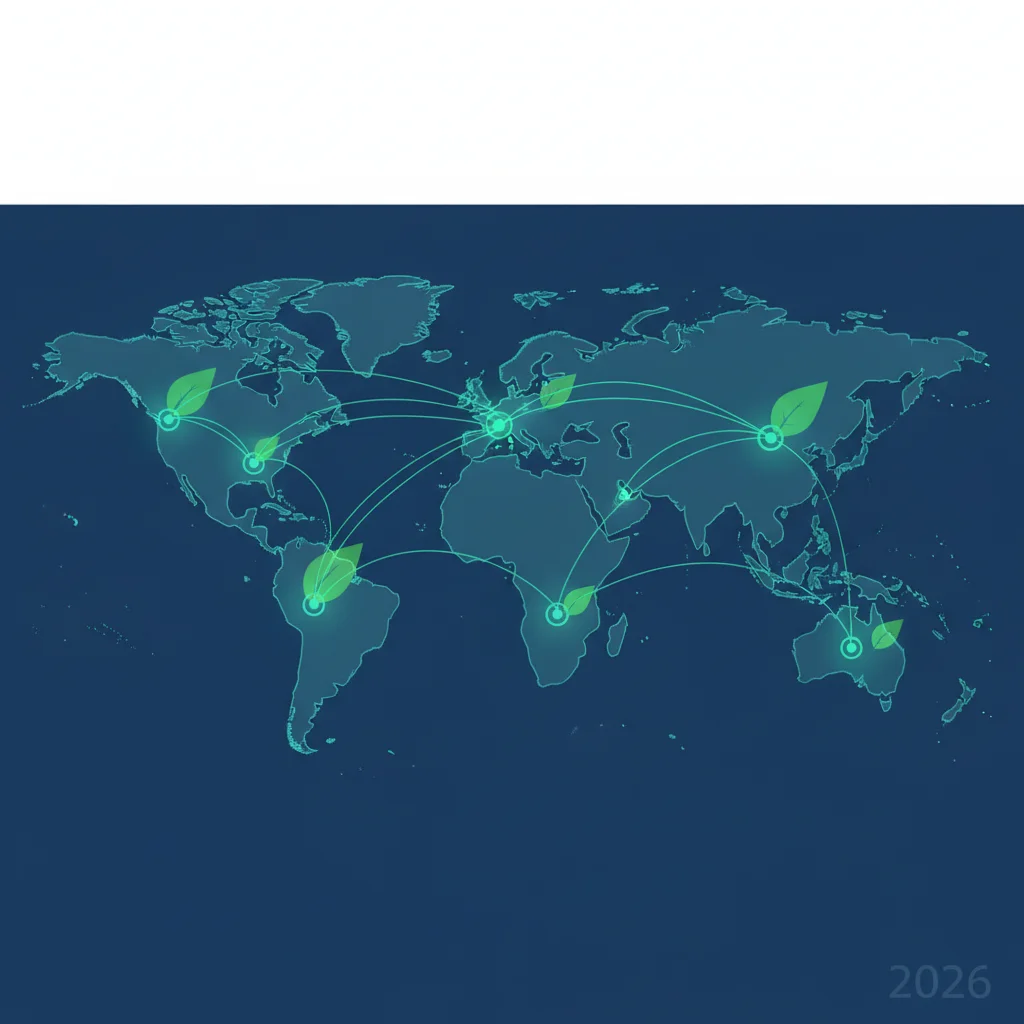
"This article provides a deep analysis of the global business trends shaping"
``markdownGlobal Business Trends 2026: How Top Companies Are Adapting to Digital Transformation and Sustainability
Introduction: The Strategic Imperative of Trend Intelligence
In 2026, the difference between market leaders and laggards is no longer about which company has the largest budget or the most employees. It is about which organization can read the signals of change fastest—and act on them with precision. Global business trends 2026 are not abstract forecasts; they are live forces reshaping supply chains, consumer expectations, and regulatory frameworks. For business leaders, understanding these trends has become a competitive necessity.
The hidden logic at play is a delicate balancing act: companies must accelerate digital transformation to deliver hyper-personalized experiences, while simultaneously embedding sustainability strategy into every operational decision. This dual-track pressure—speed and responsibility—creates both risk and opportunity. This article provides a systematic, case-study-driven analysis of how top companies like Netflix, Tesla, Amazon, Uber, Coca-Cola, and Airbnb are navigating this landscape. We will move beyond surface-level observations to reveal the underlying supply chain implications, policy dynamics, and actionable frameworks that any organization can adopt.
[IMAGE: A montage of company logos (Netflix, Tesla, Amazon, Uber, Coca-Cola, Airbnb) arranged around a central '2026 Trends' icon]
---
Step 1: Identifying Relevant Trends – A Systematic Approach
Before any strategy can be formed, leaders must separate signal from noise. The abundance of data in 2026 makes this harder, not easier. A structured approach using proven market analysis tools is essential.
How to Filter Noise from Signal
The most effective organizations employ a three-layer scanning process:
- Layer 1: Quantitative Data – Tools like Statista and IBISWorld provide hard market sizing, growth rates, and industry benchmarks. For example, Statista’s 2025 report showed that global spending on AI-driven personalization tools exceeded $45 billion, with a projected 18% CAGR through 2028. This is not a trend to debate; it is a trend to act on.
- Layer 2: Social and Cultural Signals – Platforms like Brandwatch and WGSN capture real-time consumer sentiment. In early 2025, Brandwatch detected a 34% increase in negative mentions of single-use plastics among Gen Z consumers in Southeast Asia, months before any regulatory change. That early warning allowed proactive companies to adjust packaging strategies ahead of compliance deadlines.
- Layer 3: Expert and Institutional Analysis – Reports from McKinsey, Deloitte, and Gartner synthesize macro trends into strategic implications. Deloitte’s 2026 Global Sustainability Report, for instance, highlighted a shift from voluntary ESG reporting to mandatory disclosure in 14 new jurisdictions, directly affecting supply chain transparency requirements.
Practical Steps for Your Organization
- Identify three to five priority markets or segments and run a Statista custom query for five-year historical data.
- Set up a Brandwatch dashboard tracking key sustainability keywords, competitor names, and regulatory buzz.
- Conduct a competitive analysis by reviewing the annual reports and thought leadership of the top three players in your industry.
- Perform an internal capability audit – do you have the data infrastructure to act on these trends?
Real-World Application
Uber exemplifies how local market data can reshape a global model. When expanding into India, Uber found that digital payment adoption was far lower than in the U.S., but cash-on-delivery was deeply trusted. Instead of forcing its credit-card-first model, Uber adapted by integrating cash payments and local wallet systems like Paytm. This market-specific adaptation, driven by on-the-ground data, allowed Uber to capture 45% of the ride-hailing market in India within two years.
Similarly, Airbnb faced regulatory pushback in cities like Barcelona and New York. Rather than fighting regulations, the company used government collaboration as a trend intelligence tool. By analyzing municipal databases of short-term rental complaints, Airbnb preemptively adjusted its host policies, introducing automated night limits and registration requirements. This not only reduced friction with regulators but also improved trust among local residents—a critical factor in maintaining growth.
[IMAGE: A flowchart showing the trend identification process: data collection → analysis → competitor scan → internal audit → action]
---
Core Strategies: Innovation, Technology, Sustainability, and Global Expansion
Once trends are identified, the next step is implementing coherent strategies. Based on the practices of market leaders, five core strategies consistently emerge as pillars for harnessing global business trends 2026.
Embrace Innovation: Netflix’s Content Bet
Netflix invested over $17 billion in original content in 2025, but the strategy is not about volume alone. It is about data-driven personalization. Netflix uses viewer behavior metrics—when a user pauses, fast-forwards, or re-watches a scene—to train its recommendation algorithm and even to greenlight new series. The result: 80% of content discovery on the platform comes from algorithmic recommendations, reducing churn by an estimated 15%.
Leverage Technology: Amazon and Tesla
Amazon’s logistics AI is a hidden engine of digital transformation. Its predictive inventory system, which forecasts demand at the SKU level for each fulfillment center, has reduced delivery times by 40% in the past three years. Meanwhile, Tesla has digitized its battery supply chain, creating a real-time digital twin of every Gigafactory. This allows engineers to simulate disruptions—from lithium shortages to shipping delays—and adjust procurement strategies before problems materialize.
Focus on Sustainability: Coca-Cola’s Circular Economy
Coca-Cola set a 2026 target of making 50% of its packaging from recycled materials. To achieve this, the company redesigned its supply chain: instead of sourcing virgin PET plastic, it partnered with regional recycling facilities and invested in bottle-to-bottle recycling technology. The shift is not just ethical—it reduces exposure to volatile oil prices (plastic is petroleum-based) and meets tightening EU regulations on single-use plastics. This is a sustainability strategy that creates both environmental and economic value.
Personalize Offerings: Data-Driven Recommendations
Personalization extends beyond entertainment. Amazon uses purchase history, browsing patterns, and even mouse movement heatmaps to generate product recommendations that drive 35% of total sales. For B2B companies, the same principle applies: personalized pricing, tailored product bundles, and custom content marketing all increase conversion rates when backed by rich analytics.
Expand Globally While Adapting Locally
Global expansion in 2026 must be glocal—global scale with local roots. Uber’s market-specific services (Uber Moto in Southeast Asia, Uber Boat in Turkey, and Uber Flash for package delivery in Latin America) demonstrate how a single platform can serve wildly different needs. Airbnb’s policy engagement model, where it works with city governments to co-create rental rules, is another example of building local trust while maintaining a global brand.
[IMAGE: A grid of four icons: lightbulb (innovation), circuit board (tech), leaf (sustainability), globe (expansion)]
---
Deep Dive Case Studies: The Underlying Supply Chain and Policy Dynamics
Data-Driven Personalization (Netflix & Amazon): Reshaping Content and Logistics
Netflix’s personalization engine does more than surface recommendations—it directly influences supply chain decisions. The company’s data shows that viewers in different regions have distinct genre preferences. This has led to a decentralization of content production: Netflix now maintains production hubs in Spain, South Korea, and Brazil, each focusing on local-language originals. The result is a more resilient content pipeline, less dependent on Hollywood studio schedules.
Amazon’s personalization extends to its warehouse layout. By analyzing which products are frequently bought together, Amazon optimizes shelf placements within fulfillment centers to reduce picker travel time by up to 20%. This seemingly small optimization, multiplied across 1,000+ warehouses, saves billions in operational costs annually.
Green Innovation (Tesla & Coca-Cola): Raw Material Sourcing and Energy Integration
Tesla’s green innovation is not just about electric vehicles—it is about battery supply chain transparency. The company uses blockchain-based tracking for lithium sourced from Australia and cobalt from the DRC, ensuring ethical mining practices. This traceability has become a competitive advantage as regulators in the EU and U.S. now require battery passports for all EVs sold after 2027.
Coca-Cola’s sustainability strategy has a raw material angle that is less visible: water conservation. In water-stressed regions like India and Mexico, Coca-Cola has partnered with local farmers to implement drip irrigation and rainwater harvesting, reducing its water usage per liter of beverage by 28% since 2020. This not only lowers operational risk but also strengthens community relations—a form of social license to operate that regulators increasingly consider in permitting decisions.
Local Adaptation (Uber & Airbnb): Navigating Regulatory Landscapes
Uber’s regulatory strategy in 2026 is more sophisticated than the “move fast and break things” era. In London, where Transport for London revoked its license in 2019, Uber now shares real-time trip data with city authorities to monitor congestion and emissions. This policy shift—from confrontation to collaboration—has secured long-term operating agreements in over 200 cities.
Airbnb’s approach to policy dynamics is equally instructive. In Japan, the company worked with the government to design a “minpaku” (private lodging) registration system that caps rental nights but allows homeowners to earn supplemental income. By embracing regulation rather than fighting it, Airbnb turned a potential barrier into a structural advantage that competitors like Booking.com have struggled to replicate.
[IMAGE: A split visual: left side shows a supply chain network map with icons for lithium, recycled plastic, and data flows; right side shows regulatory documents with city hall and government building icons]
---
Conclusion: Turning Trends into Competitive Advantage
The global business trends 2026 analyzed here are not fleeting fads—they represent structural shifts in how value is created and captured. Companies that succeed will be those that systematically identify trends using robust market analysis tools, translate them into core strategies of innovation, technology, sustainability, and local adaptation, and then execute with a deep understanding of supply chain and policy implications.
To measure impact, leaders should track a small set of key KPIs:
- Innovation: Revenue from products/services launched in the last 12 months (target: >20%)
- Technology: Average order-to-delivery cycle time reduction (target: 15% year-over-year)
- Sustainability: Percentage of recycled content in packaging or supply (target: 50%+ by 2027)
- Local adaptation: Regulatory approval rate in new markets (target: >90%)
The framework is clear: digital transformation provides the speed; sustainability strategy provides the license to operate; and a systematic approach to trend intelligence ensures you are not chasing yesterday’s headlines. For business leaders and strategists, the question is no longer whether to adapt, but how fast you can turn insights into action.
The companies in this article—Netflix, Tesla, Amazon, Uber, Coca-Cola, and Airbnb—have all made mistakes and course-corrected. But their shared trait is an institutional ability to read trends, invest ahead of the curve, and recalibrate when the landscape shifts. That ability, more than any single technology or product, is the ultimate competitive advantage in 2026 and beyond.
``
Trade Metrics
Related Datasets
Q4 Cross-Border Logistics Report
PDF • 4.2 MB
Automotive Parts Supply Chain Index
CSV • 1.1 MB