Coachella 2026: How Billboard Marketing and Gen-Z''s Physical Media Revival

James Wilson
Industry Analyst
April 21, 2026
DATELINE: NA TRADE WIRE
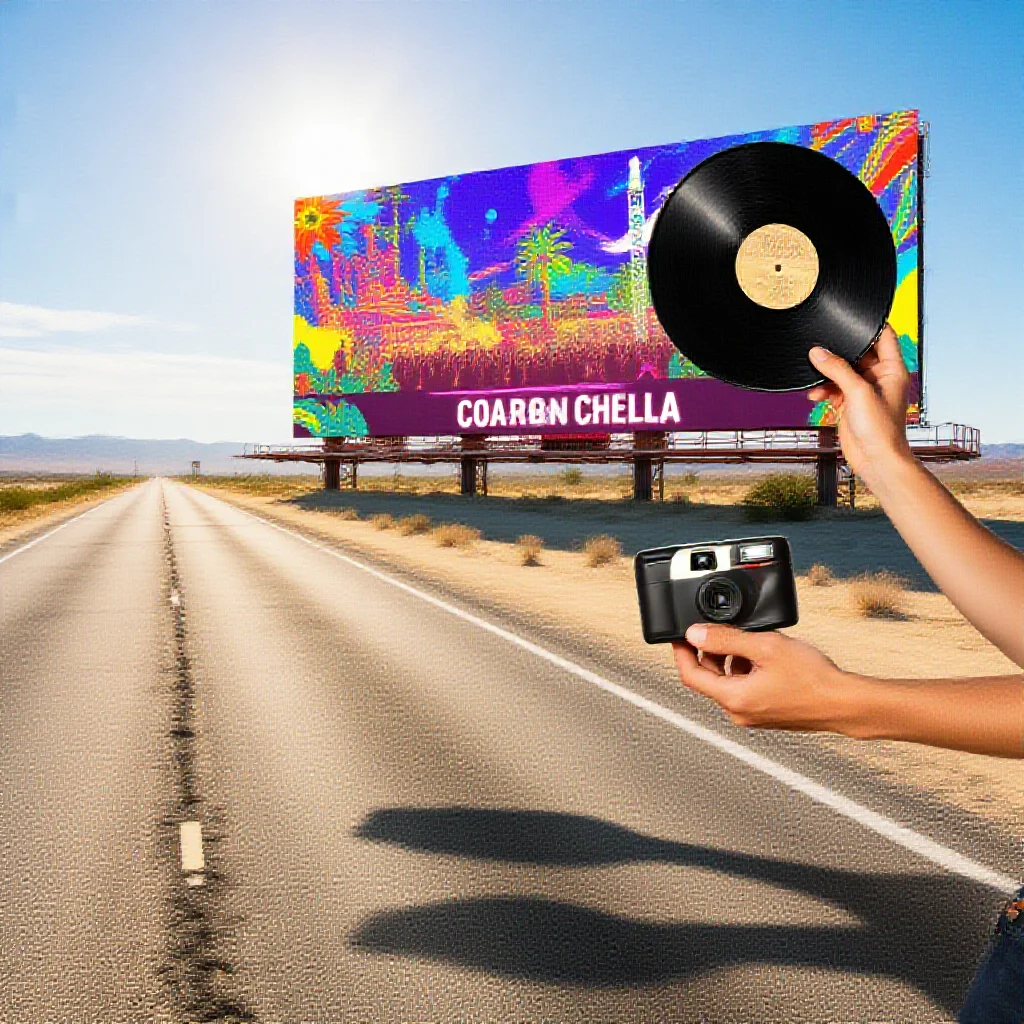
"The marketing landscape around Coachella 2026 reveals a profound counter-trend"
Coachella 2026: How Billboard Marketing and Gen-Z's Physical Media Revival Signal a Post-Digital Shift
Introduction: The Coachella Paradox – Digital Festival, Analog Signals
The Coachella Valley Music and Arts Festival operates as a pinnacle of digital-age experience, defined by live-streamed performances, social media saturation, and cashless transactions. Contradicting this environment, the marketing and media consumption patterns emerging around its 2026 iteration present a distinct analog counter-trend. The billboards along the festival route are described as some of the most anticipated marketing of the year (Source 1: [Primary Data]). Concurrently, demographic analysis indicates Gen-Z is embracing physical media (Source 1: [Primary Data]). These phenomena are not isolated anomalies but interconnected indicators of a strategic real-world recapture. This analysis examines the underlying economic and cultural logic driving this shift, moving beyond surface-level trend reporting to identify systemic market patterns.Deconstructing the Billboard Phenomenon: Scarcity and Shared Experience in an Ad-Blocked World
In a media landscape dominated by personalized, skippable digital advertisements, the resurgence of the static highway billboard as a premier marketing event requires examination. The anticipation for Coachella 2026 route billboards stems from their operation within a framework of enforced scarcity and communal experience. Their impact is geographically and temporally constrained to the physical journey to the festival, creating a captive audience. This model contrasts sharply with digital advertising, which faces declining engagement rates among younger demographics increasingly adept at deploying ad-blockers and subscription services to avoid commercial interruption.The economics of attention are being recalibrated. Where digital advertising promises hyper-targeting, its effectiveness is diluted by oversaturation and distrust. The billboard offers a democratized, non-skippable cultural moment. Its value is derived from forced exposure within a specific, high-intent context—the pilgrimage to Coachella. This aligns with broader market data showing rising cost-per-mille (CPM) for premium out-of-home (OOH) advertising locations in high-traffic event corridors, even as digital display ad CPMs stagnate or decline in certain segments. The billboard capitalizes on a collective, real-world experience, functioning as a shared touchpoint in an otherwise fragmented digital ecosystem.
Gen-Z's Physical Media Embrace: Beyond Nostalgia, Towards Ownership and Curation
The Gen-Z engagement with vinyl records, cassette tapes, and print media is frequently mischaracterized as mere nostalgia for eras they did not experience. A functional and psychological analysis reveals deeper drivers. Tangibility provides a form of verifiable ownership absent from ephemeral digital licenses and subscriptions. The physical object operates as a value-stable asset within a collector economy, contrasting with the transient access granted by streaming platforms.This consumption pattern also represents a deliberate escape from algorithmic curation. A physical record or book presents a finite, artist- or curator-defined sequence, resisting the endless, engagement-optimized feeds of digital services. The act of collecting and displaying physical media serves as a tangible signal of identity and taste. The economic implications extend beyond retail. Renewed demand pressures niche manufacturing supply chains—such as vinyl pressing plants and specialty paper mills—that were largely abandoned by mainstream media in previous decades. This revival impacts raw material sourcing, specialized machinery production, and distribution logistics, creating a micro-economy centered on analog production.
The Converging Axis: The 'Analog Premium' and the New Marketing Calculus
The parallel trends of premium out-of-home advertising and physical media consumption converge on a single economic principle: the assignment of higher value to scarce, tactile, and experience-bound objects and messages. This can be termed the "Analog Premium." It is a market correction responding to the oversupply and perceived disposability of digital content and advertising.For marketers, the calculus is shifting. The value of a marketing impression is increasingly tied to its perceived authenticity and its integration into a tangible experience. The Coachella billboard works because it is part of the event's physical journey. Similarly, a branded vinyl release or a high-quality print magazine can achieve deeper engagement than a digital equivalent because it leverages the Analog Premium. This premium is quantified through higher price points for physical media, greater brand recall associated with experiential OOH advertising, and the willingness of consumers to invest in objects that offer permanence.
Conclusion: Implications for a Post-Digital Market Structure
The signals from Coachella 2026 marketing and Gen-Z consumption habits indicate a structural, not cyclical, shift. The post-digital market will not reject technology but will selectively layer analog experiences and physical objects over a digital infrastructure to create value. The future competitive landscape will reward entities that master hybrid models: digital platforms that facilitate the discovery and community around physical goods, and physical experiences that are enhanced, but not dominated, by digital interaction.Market predictions based on this analysis include: the continued growth of niche manufacturing supporting physical media, increased brand investment in high-impact, experience-linked physical advertising, and the further segmentation of media into disposable digital streams and premium physical artifacts. The defining economic battle will be for attention in the physical world, with value accruing to assets and strategies that successfully embody scarcity, tangibility, and authentic experience.
Trade Metrics
Related Datasets
Q4 Cross-Border Logistics Report
PDF • 4.2 MB
Automotive Parts Supply Chain Index
CSV • 1.1 MB