Industry Focus
Beyond the Flux Capacitor: How a Stage Musical Extends the ''Back to the Future'

James Wilson
Industry Analyst
April 9, 2026
DATELINE: NA TRADE WIRE
Wire Insight
"The development of a 'Back to the Future' stage musical, led by co-creator"
Beyond the Flux Capacitor: How a Stage Musical Extends the 'Back to the Future' Franchise Without Sequels
Introduction: The Stage as a New Temporal Platform
Bob Gale, co-creator of the Back to the Future franchise, is spearheading the development of a stage musical adaptation of the original 1985 film. (Source 1: [Primary Data]) This initiative presents a central strategic question: why pursue a live theatrical adaptation for a decades-old film property at this time, rather than a new cinematic sequel or reboot. The development is not merely an artistic endeavor but a calculated maneuver in intellectual property (IP) management. It represents a deliberate strategy to sustain a dormant franchise through a curated, experiential platform, circumventing the pitfalls associated with modern film sequels.The Unspoken Economics of Dormant Franchises
The financial calculus for reviving a beloved film franchise through new sequels is increasingly unfavorable. Modern blockbuster production entails exorbitant costs, significant financial risk, and intense scrutiny from a dedicated fanbase sensitive to narrative missteps. The market also exhibits signs of sequel and reboot fatigue. In contrast, the economic model of a major stage musical, while capital-intensive, operates on a different risk profile. It leverages premium ticket pricing, high-margin merchandise, and the potential for long-term runs and lucrative touring productions. The scale of investment, though substantial, is typically lower than that of a global film marketing and distribution campaign. This approach aligns with a model of "IP Stewardship," where the primary objective is to maintain and gently appreciate asset value through high-quality, limited extensions rather than high-volume, high-risk production.Legacy Over Sequel: The Strategic Intent Behind the Curtain
Bob Gale has explicitly framed the musical as a vehicle to "keep the franchise's legacy alive." (Source 1: [Primary Data]) In commercial IP terms, "legacy" encompasses sustained cultural relevance, preservation of emotional connection, and facilitation of generational handover. The strategic decision to adapt only the first film, with no plans to stage the sequels, is significant. (Source 1: [Primary Data]) This choice protects the narrative integrity of the original film and avoids associating the brand extension with the potentially divisive or less universally acclaimed storylines of the follow-ups. Consequently, the musical is positioned as a "canon-adjacent" experience. It functions as a celebratory, nostalgic event that reaffirms the core brand without altering or expanding the canonical cinematic history, thereby creating a safe, curated space for fan engagement.The Live Experience as a Premium Product
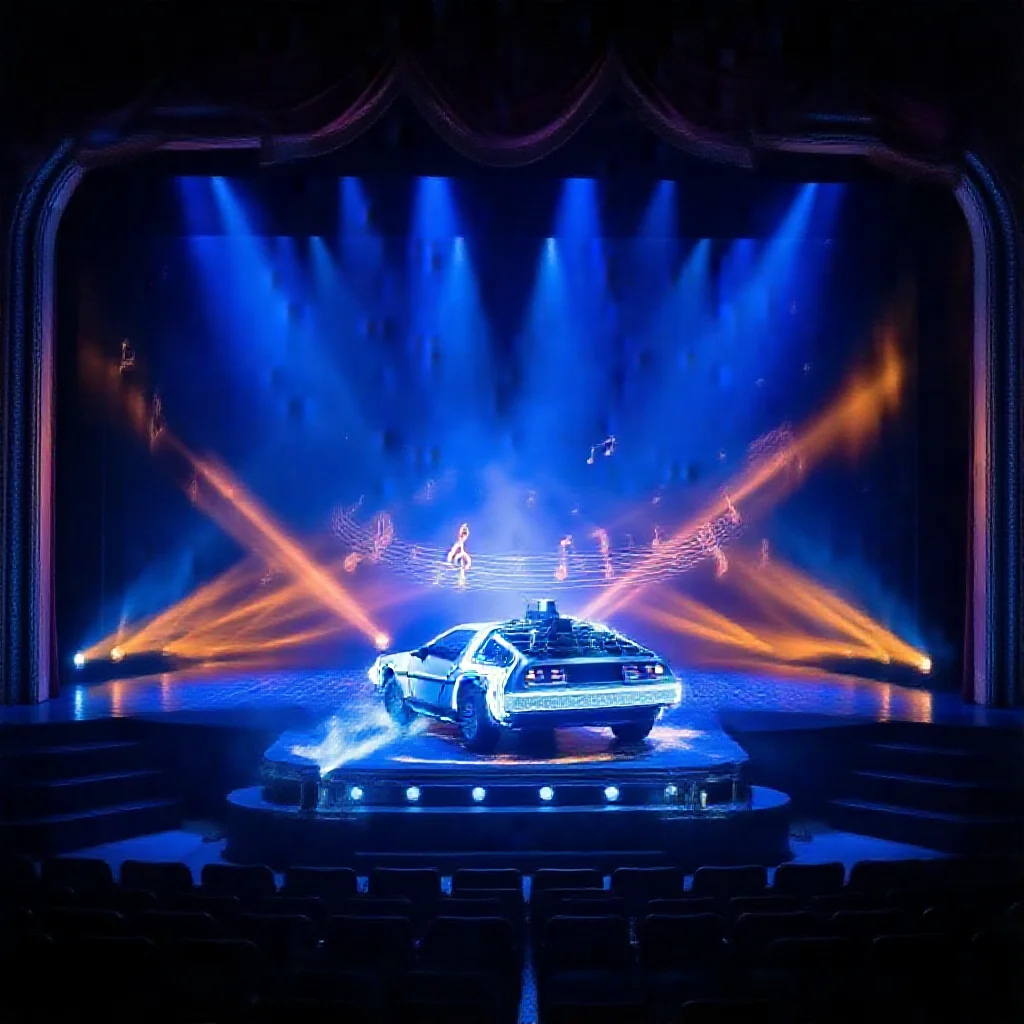
Theatrical adaptation transforms passive viewership into a communal, event-driven experience. This live element creates a more memorable and inherently shareable brand interaction, aligning with contemporary marketing emphasis on experiential consumption. A key unique selling proposition is the potential for innovative stagecraft. The practical realization of the DeLorean time machine and the visualization of temporal displacement on stage present engineering and design challenges whose solutions become a headline attraction—a feat a new film could not claim as novel. This focus on tangible spectacle differentiates the product from a digital streaming re-watch, justifying its premium positioning. The production becomes a destination event, generating word-of-mouth marketing rooted in the awe of live performance.A Case Study in Franchise Lifecycle Management
The Back to the Future stage musical project serves as a pertinent case study in managing mature intellectual property. It demonstrates a viable third path between franchise dormancy and risky cinematic revival. The strategy acknowledges the limitations of the original medium for continued story expansion while identifying an alternative platform that can monetize brand equity in a sustainable manner. This model is likely applicable to other franchises with strong foundational single films but complicated sequel histories. The approach allows rights holders to maintain trademark visibility, engage core audiences, and generate revenue streams without the binary gamble of a new film's success or failure. It is a hedging strategy that prioritizes asset preservation and controlled monetization over market conquest.Conclusion: The Future of Legacy IP is Live
The development of the Back to the Future musical underscores a strategic evolution in franchise management. When direct cinematic continuation is deemed commercially or creatively untenable, the live theater stage emerges as a sophisticated tool for legacy IP extension. It offers a high-touch, low-volume alternative that emphasizes quality of engagement over quantity of content. The long-term industry implication is the further legitimization of theatrical adaptation as a core pillar of franchise strategy, distinct from and complementary to film, television, and gaming. For dormant properties with enduring appeal, the stage may represent the most logical next step—not back to the past, but forward into a sustainable future. The ultimate measure of this strategy's success will be its ability to attract new generations to the franchise while satisfying existing fans, thereby fulfilling the core mandate of legacy stewardship.#Back-to-the-Future-musical#Bob-Gale#franchise-legacy#stage-adaptation#intellectual-property-strategy#film-to-musical#theater-production#brand-extension
Trade Metrics
Sector ImpactCritical
Growth Potential+12.4%
Risk LevelModerate
Related Datasets
Q4 Cross-Border Logistics Report
PDF • 4.2 MB
Automotive Parts Supply Chain Index
CSV • 1.1 MB