The Hidden Cost of Injury: How Alex Bowman''s Return Exposes NASCAR''s Performance

James Wilson
Industry Analyst
April 22, 2026
DATELINE: NA TRADE WIRE
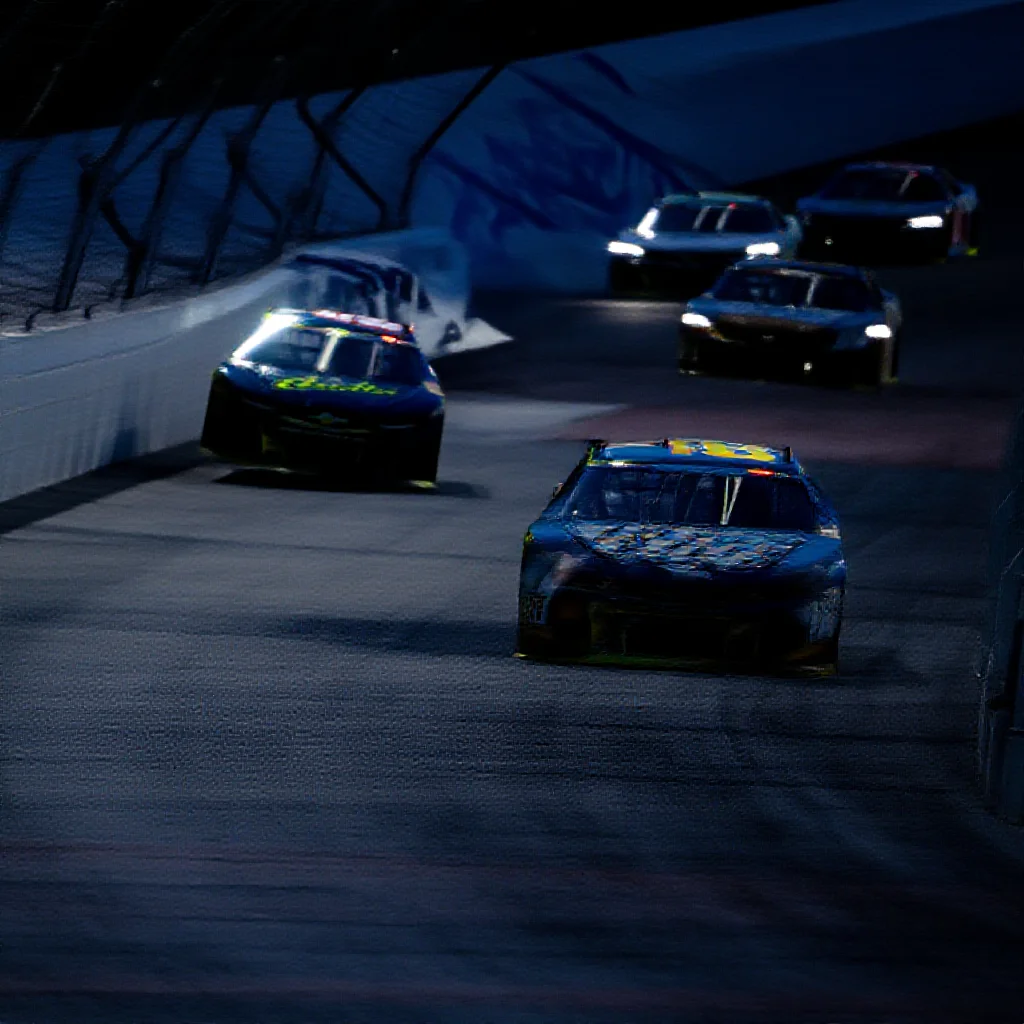
"Alex Bowman's return to the No. 48 Chevrolet after a fractured vertebra was"
The Hidden Cost of Injury: How Alex Bowman's Return Exposes NASCAR's Performance Cliff
Opening Factual Summary
Alex Bowman returned to NASCAR Cup Series competition on April 9, 2023, piloting the No. 48 Chevrolet for Hendrick Motorsports at Martinsville Speedway after a five-race absence due to a fractured vertebra (Source 1: [Primary Data]). He finished 33rd. Bowman currently holds 20th position in the series standings, 100 points below the playoff cutline with eight races remaining in the regular season. The No. 48 team has not recorded a top-10 finish in the last ten races, with its most recent occurring at Dover Motor Speedway on May 1 (Source 2: [Primary Data]). This confluence of a driver's return and a team's protracted slump presents a compressed, high-stakes challenge for one of the sport's premier organizations.
Beyond the Comeback: A Team in Crisis
The narrative surrounding Bowman’s return focused on individual resilience. The subsequent performance data, however, indicates a separate, collective operational crisis. A ten-race absence of top-10 finishes is statistically significant for any competitive team; for a flagship entry from Hendrick Motorsports, a organization with a historical performance baseline among the highest in the sport, it constitutes an anomaly. The core conflict is no longer the driver's physical recovery, but the team's technical and strategic performance, which remains unhealed. The 33rd-place finish at Martinsville upon return (Source 3: [Primary Data]) functions not as a standalone result of race rust, but as a data point within a larger trend of underperformance.The Compressed Clock: Anatomy of an Eight-Race Sprint
The 100-point deficit creates a mathematical imperative that dictates strategy. Eliminating this gap within eight races requires an average points gain of approximately 12.5 positions per event relative to the current bubble position, a target that necessitates consistently finishing near the front. This compressed timeline exerts extreme pressure on the team's engineering and strategic apparatus. The problem-solving cycle—identifying issues, developing solutions, implementing them at the track, and validating results—must be executed with unprecedented speed and precision. Unlike in sports with longer regular seasons, the margin for iterative error in this scenario is virtually nonexistent. The economic pressure is immediate, as playoff inclusion carries significant financial ramifications.The Ripple Effect: Performance Slumps and the NASCAR Ecosystem
The financial impact of missing the playoffs extends beyond lost prize money. Sponsorship agreements often contain performance-based clauses, and sustained visibility during the postseason is a key value driver. Internally, morale and resource allocation for the following season can be affected. Analytically, the No. 48's slump raises a systemic question: is it an isolated issue or symptomatic of broader technical challenges within Hendrick Motorsports? Furthermore, the introduction of the Next Gen car has demonstrably compressed the competitive field. This analysis must consider whether the car's standardized components have reduced the capacity for elite teams to engineer a rapid, dominant rebound from a performance trough, creating a new paradigm of competitive fragility.Verification and Context: Separating Slump from Decline
The performance data is verified by official NASCAR standings and race results, confirming the 33rd-place finish at Martinsville and the 100-point gap to the cutline (Source 4: [Primary Data]). Historical context is critical for analysis. The No. 48 team underwent a transition following the retirement of seven-time champion Jimmie Johnson, but its recent performance dip is distinct in its depth and timing within a season. Expert commentary on recovery timelines post-injury in modern NASCAR suggests physical acclimation is typically swift for drivers; prolonged performance drops are more frequently tied to car performance and team dynamics, shifting the analytical focus from Bowman's health to the team's operational output.The Strategic Crossroads: Scenarios for the No. 48 Team
Facing the eight-race window, the team's strategic options are defined by high risk.* Scenario A: The Targeted Technical Fix. This path relies on the team identifying a specific, correctable flaw in the car's setup or simulation correlation. Feasibility is high if the issue is discrete; it is low if the problems are multifaceted or rooted in a fundamental speed deficit.
* Scenario B: Aggressive Race Strategy. The team could employ unconventional pit strategies, tire calls, and risk-on racing to secure stage points and race finishes that defy the car's raw speed. This high-variance approach can yield large point gains but also increases the probability of catastrophic results.
* Scenario C: Planning for 2024. If early efforts in the eight-race window fail, a rational, albeit stark, strategic pivot involves accepting a non-playoff 2023 and reallocating resources—including test sessions and developmental parts—toward a comprehensive rebuild for the next season.
Neutral Market/Industry Predictions
The outcome of this compressed timeline will serve as a case study with implications beyond a single team. A successful rebound by the No. 48 team would reinforce the narrative of Hendrick Motorsports' deep resource pool and adaptive prowess. Failure to make the playoffs, however, would validate observations that the Next Gen era has increased the year-to-year and week-to-week volatility for all teams, including historic powerhouses. The financial ecosystem of NASCAR, particularly sponsor valuations tied to playoff participation, may see increased hedging if such volatility is perceived as systemic. The final eight races of the regular season will provide a real-time experiment on the limits of recovery in a spec-heavy, hyper-competitive racing series.
Trade Metrics
Related Datasets
Q4 Cross-Border Logistics Report
PDF • 4.2 MB
Automotive Parts Supply Chain Index
CSV • 1.1 MB