The Great Shift: How Adidas is Gaining Ground on Nike in the Global Sportswear

James Wilson
Industry Analyst
April 13, 2026
DATELINE: NA TRADE WIRE
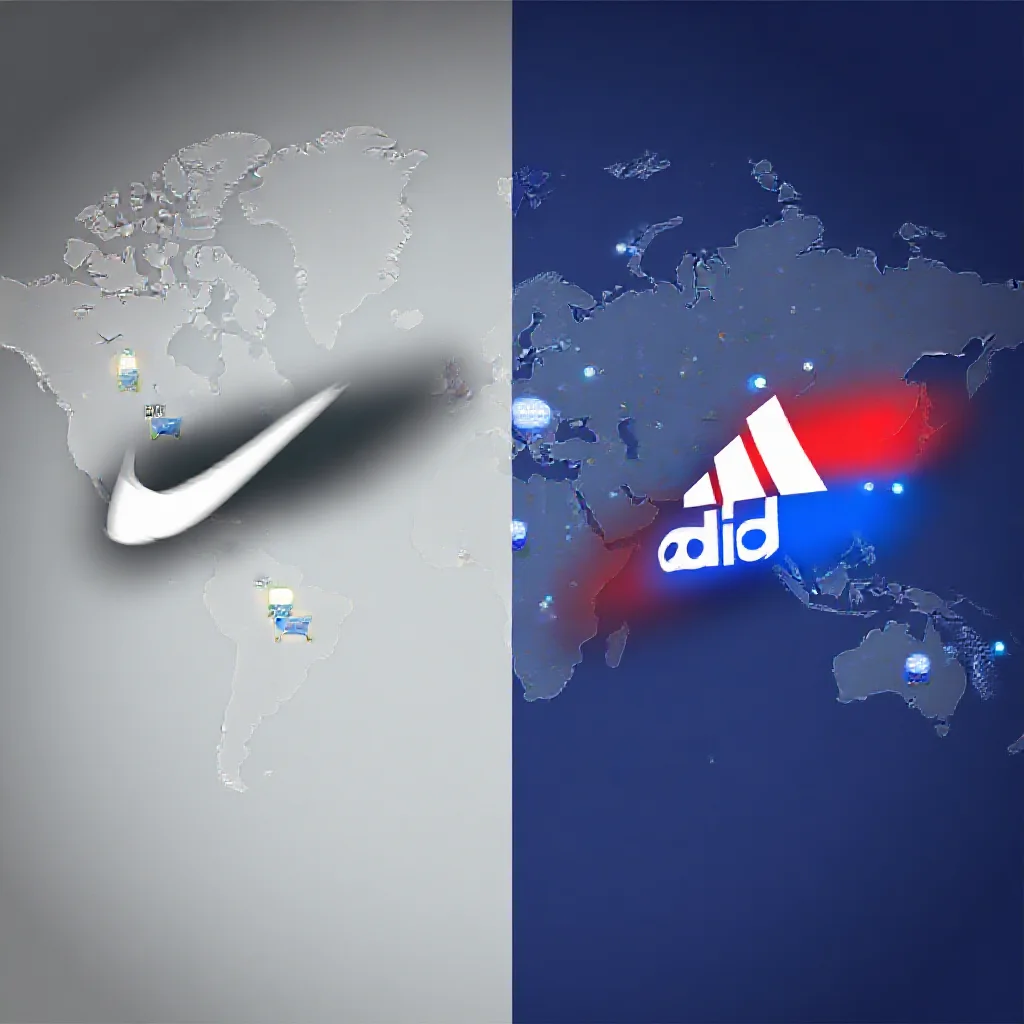
"A seismic shift is underway in the global sportswear market. While Nike's"
The Great Shift: How Adidas is Gaining Ground on Nike in the Global Sportswear War
Introduction: Reading the Data - A Clear Reversal of Fortune
For decades, the narrative in the global sportswear industry has been one of sustained, often overwhelming, dominance by Nike. This narrative is now being challenged by a synchronized, multi-market shift in consumer perception. Data from Morning Consult’s brand tracking surveys reveals a clear, multi-year trend: Adidas’s brand consideration is rising across critical markets, while Nike’s is declining in parallel. This reversal presents a central analytical question. The evidence points not to an isolated fluctuation but to a potential fundamental realignment in the competitive landscape, demanding an examination of underlying causes and long-term implications.The Evidence: A Synchronized Global Downturn for Nike, A Unified Rise for Adidas
The trend is consistent and geographically widespread. Between 2023 and 2026, Morning Consult data shows a uniform pattern across the four largest and most influential sportswear markets.In the United States, Adidas’s brand consideration rose from 38% to 43%, while Nike’s fell from 53% to 46% (Source 1: [Primary Data]). This shift translated into tangible market share movement in 2025, with Adidas growing from 4.7% to 5.1% and Nike declining from 18.6% to 17.6% (Source 1: [Primary Data]). This represents a significant transfer of revenue and retail shelf space.
The pattern repeats in other key regions. In the United Kingdom, Adidas rose from 41% to 46% as Nike fell from 50% to 45% (Source 1: [Primary Data]). In Germany, Adidas’s home-turf advantage widened, increasing from 56% to 60% against Nike’s decline from 42% to 39% (Source 1: [Primary Data]). Even in China, a historically competitive battleground, Adidas advanced from 51% to 55% consideration, as Nike retreated from 56% to 52% (Source 1: [Primary Data]). The synchronization of this trend across diverse consumer cultures indicates a systemic, rather than regionally isolated, phenomenon.
Beyond the Survey: Unpacking the 'Why' Behind the Shift
The data establishes the what; logical deduction points to potential whys. For Adidas, the resurgence appears driven by a confluence of successful product strategy and cultural resonance. The sustained popularity of classic silhouettes like the Samba and Gazelle has provided a stable revenue base and high-visibility streetwear credibility. This has been amplified by strategic collaborations that feel organic to the brand’s heritage in fashion and football. Concurrently, Adidas’s long-standing commitment to sustainability (e.g., Parley for the Oceans, Futurecraft.Loop) may be aligning with growing consumer sentiment, providing a coherent, long-term brand narrative.For Nike, the relative decline suggests potential headwinds. The law of large numbers presents a challenge: maintaining hyper-growth atop a massive market share base is inherently difficult. There may be elements of brand fatigue or a perceived plateau in technical innovation that fails to justify premium pricing for a broad consumer base. Furthermore, the brand’s deep entanglement with high-profile athlete endorsements and social positions, while a historic strength, introduces a volatility factor not present in product-led revivals. The shift may reflect a change in the underlying "cultural currency" of the brands, where Adidas’s association with timeless style and subcultural authenticity is gaining value against a performance-at-all-costs narrative.
The Ripple Effect: Implications for the Broader Sportswear Ecosystem
A sustained realignment would trigger secondary and tertiary effects throughout the sportswear value chain. The most immediate impact would be on retail partnerships. Buyers for major global and regional retailers operate on forward-looking data. A consistent positive trajectory for Adidas in brand health metrics will translate into more favorable shelf placement, larger dedicated shop-in-shop spaces, and greater collaborative marketing budgets from retailers, creating a virtuous cycle.The supply chain would recalibrate. Manufacturing partners and material suppliers, who plan capacity years in advance, would see a reallocation of forecasted demand. This could improve Adidas’s leverage in procurement negotiations and potentially accelerate its innovation pipeline as factory partners prioritize its projects. For Nike, the opposite pressure would apply, potentially squeezing margins or forcing a strategic re-prioritization of resource allocation.
Finally, the talent and collaboration ecosystem would shift. Designers, athletes, and cultural icons make partnership decisions based on a brand’s momentum and audience connection. A rising Adidas becomes a more compelling partner, potentially allowing it to secure next-generation talent on more favorable terms, thereby fueling the next cycle of product and marketing success.
Conclusion: A New Competitive Equilibrium
The 2023-2026 data series from Morning Consult provides compelling evidence that the sportswear market is undergoing a structural adjustment. Adidas’s gains and Nike’s declines are too consistent and widespread to be dismissed as noise. The logical deduction points to a period where Adidas’s product and brand strategy is more effectively capturing consumer mindshare.The long-term prediction is not necessarily the outright dethroning of the market leader, but the establishment of a new, more competitive equilibrium. Nike’s scale, distribution, and marketing machinery remain unparalleled, and it retains a significant market share lead. However, the data suggests its historical dominance can no longer be assumed. The most likely outcome is a protracted period of intensified competition, where Nike must innovate not just in product technology but in brand rejuvenation, while Adidas must prove it can scale its appeal without diluting the authenticity driving its current success. The inertia of the market has been altered, setting the stage for the most dynamic phase of the sportswear war in a generation.
Trade Metrics
Related Datasets
Q4 Cross-Border Logistics Report
PDF • 4.2 MB
Automotive Parts Supply Chain Index
CSV • 1.1 MB