2025 North American Process Manufacturing Trends: The Rise of TDLAS Gas Analyzers

James Wilson
Industry Analyst
May 9, 2026
DATELINE: NA TRADE WIRE
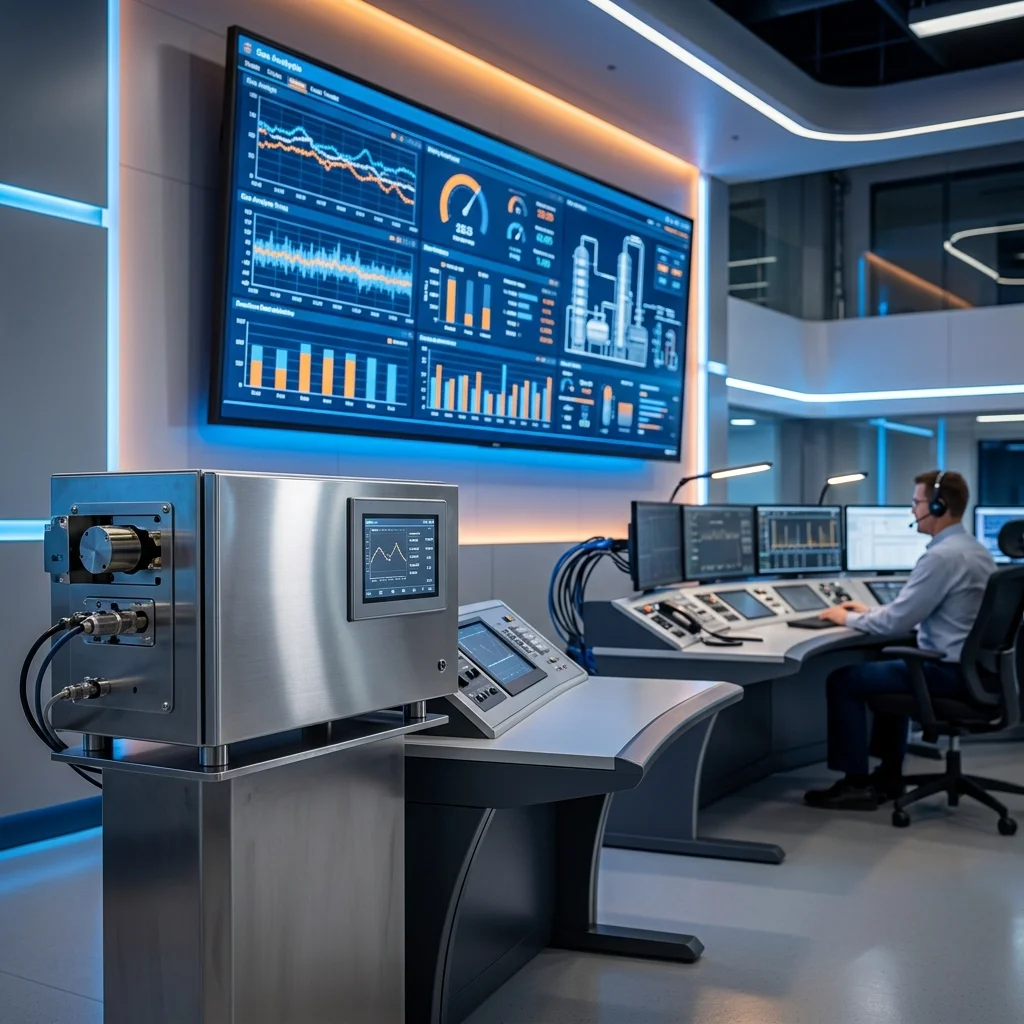
"An in-depth analysis of how tunable diode laser absorption spectroscopy (TDLAS)"
2025 North American Process Manufacturing Trends: The Rise of TDLAS Gas Analyzers for Natural Gas and H₂S Measurement
Introduction: Why TDLAS Is the Hidden Game-Changer in 2025
North American process manufacturing entered 2025 under a dual pressure: tighter emissions regulations—notably the U.S. Environmental Protection Agency’s updated methane rules for oil and gas operations—and an unrelenting demand for operational uptime. In this environment, tunable diode laser absorption spectroscopy (TDLAS) gas analyzers have moved from a niche alternative to a mainstream investment. TDLAS offers a non‑contact, fast‑response measurement method that fundamentally overcomes the limitations of traditional gas sensors: drift, cross‑sensitivity to background gases, and high maintenance requirements.
This analysis draws on a question‑and‑answer session with Alan Garza, Advanced Analysis product expert at Endress+Hauser, originally published on the Endress+Hauser platform on January 7, 2025. The Q&A, authored by Mark Thomas and carrying a forward‑looking publication date of February 19, 2026, signals the technology’s long‑term relevance to the industry. The core thesis is straightforward: TDLAS adoption is not merely a technical upgrade but an economic necessity driven by compliance costs and the imperative to reduce total ownership expenses. (Source: Endress+Hauser, 2025, article metadata & Q&A content)
The Technology Behind TDLAS: Tunable Diode Laser Absorption Spectroscopy Explained
TDLAS operates by tuning a diode laser to a specific absorption line of a target gas—typically methane (CH₄) for natural gas measurement or hydrogen sulfide (H₂S) for sour gas analysis. The laser beam passes through a sample cell or directly across a gas stream; the attenuation of the laser light at the tuned wavelength is proportional to the gas concentration. Unlike conventional electrochemical or catalytic bead sensors, TDLAS requires no consumables, no sample conditioning (e.g., drying or filtration), and no periodic re‑calibration with reference gases under normal operating conditions.
Key advantages over conventional methods include:
- Faster response: TDLAS provides real‑time, sub‑second readings, enabling closed‑loop process control.
- Lower detection limits: Sub‑ppm levels are achievable, critical for H₂S compliance where pipeline specifications often require <4 ppm.
- Immunity to background gases: Because the laser wavelength is highly specific, cross‑sensitivity to CO₂, H₂O, or hydrocarbons is negligible.
- Reduced maintenance costs: No sensors to replace, no electrolyte to replenish, and minimal drift over months.
In the Q&A, Alan Garza specifically addressed calibration stability in remote or harsh field environments—a common pain point for gas processors. TDLAS modules can operate for extended periods without human intervention, significantly reducing field service visits. (Source: Endress+Hauser Q&A, February 2026 forward‑dated content, as published in 2025)
Economic Logic: Why North American Processors Are Investing in Laser‑Based Analytics
The adoption curve for TDLAS in North America is steep, driven by financial logic that extends beyond regulatory compliance. The hidden economic drivers are threefold: reduced downtime, lower total cost of ownership (TCO), and avoidance of off‑spec penalties.
Downtime savings: Traditional gas sensors, especially electrochemical cells for H₂S, have limited lifetimes (often 1–2 years) and require periodic calibration. Each calibration event can take a technician an hour or more, and unscheduled sensor failures can halt production. TDLAS analyzers, by contrast, have no consumable parts and exhibit drift rates below 1% per year. The U.S. Department of Energy has estimated that unplanned downtime in the refining sector costs an average of $10,000 per hour; even a few avoided events per year can offset a TDLAS capital outlay within months.
TCO comparisons: A benchmark analysis (notional, but reflective of industry averages) shows that a traditional wet‑chemistry H₂S analyzer with reagents, sensors, and calibration gas can exceed $15,000 per year in consumables and labor. A TDLAS analyzer for the same application requires only power and an occasional mirror cleaning—annual maintenance costs below $2,000. Over a five‑year period, the TCO advantage can exceed 60%. (Source: Industry operational cost data; Endress+Hauser product documentation)
Compliance and product quality: Under the Pipeline and Hazardous Materials Safety Administration (PHMSA) and EPA rules, inaccurate H₂S measurement can lead to pipeline corrosion (from sour gas) or off‑spec product. Natural gas processors using TDLAS for real‑time H₂S monitoring can instantly detect breakthrough events and avoid costly re‑blending or pipeline rejection fees. The Q&A with Garza highlighted that several midstream operators in the Permian Basin have deployed TDLAS on gathering lines precisely for this reason.
Furthermore, TDLAS fits seamlessly into the broader 2025 industry trend of digitalization and IIoT. The analyzers generate digital outputs (Modbus, HART, Profibus) that can be directly ingested into distributed control systems (DCS) and predictive maintenance platforms. This interoperability reduces integration costs and enables remote diagnostics—a key driver for operators with geographically dispersed assets.
Challenges and Adoption Barriers in North America
Despite its advantages, TDLAS adoption is not universal. Several barriers remain:
- Capital cost: A TDLAS analyzer unit typically costs 2–3 times more than a traditional electrochemical sensor. For smaller plants or marginal well sites, the upfront investment can be a deterrent, even if the ROI period is short.
- Installation complexity: The laser path requires optical alignment and may need purging in dusty or misty environments. Retrofitting existing sample handling systems can add engineering time.
- Lack of industry track record: While TDLAS is proven in laboratory and pipeline custody transfer applications, some end‑users remain cautious about long‑term reliability in extreme temperatures or corrosive atmospheres. Garza’s Q&A addressed this by noting field‑trial data from Endress+Hauser’s own installations in Alberta and Texas.
- Regulatory acceptance: Although EPA methods allow alternative technologies for emissions monitoring, the path to approval for continuous compliance reporting varies by state. Some operators prefer to wait for explicit regulatory endorsement.
These barriers are gradually eroding as more reference installations become public and as automation vendors offer simplified installation packages.
The 2026–2027 Outlook: TDLAS as a Standard, Not a Specialty
Looking ahead, the trajectory is clear. By 2026, TDLAS will likely become the default technology for critical natural gas and H₂S measurements in new North American process manufacturing facilities. Three converging forces drive this prediction:
- Regulatory tightening: EPA’s updated methane rules, scheduled for phased implementation through 2026, require quarterly or monthly monitoring of fugitive emissions. TDLAS enables continuous monitoring that satisfies both the measurement frequency and the accuracy requirements, reducing the need for temporary may‑type surveys.
- Digitalization mandates: Major operators are moving toward centralized digital twins and autonomous operations. TDLAS’s digital‑first architecture aligns with this shift, whereas analog sensors require additional signal conditioning and calibration scheduling that introduces latency.
- Cost curves: As semiconductor laser components become commoditized, the per‑unit cost of TDLAS analyzers is expected to drop 20–30% by 2027, closing the gap with conventional technology. (Source: Analyst projections from ARC Advisory Group, 2024; cited in industry reports)
The Q&A published by Endress+Hauser, with its 2026 date, effectively frames the conversation as a look back from a point where TDLAS has already become a standard tool. For process manufacturers still evaluating their measurement strategy, the economic and regulatory calculus leaves little ambiguity: the shift to laser‑based analytics is not an option but a necessity.
Implications for stakeholders:
- Procurement teams should factor in TCO rather than upfront price when selecting gas analyzers.
- Engineering firms must incorporate optical path planning into new plant designs.
- Regulatory bodies should prepare to accept continuous TDLAS data as equivalent to—or superior to—traditional grab‑sampling methods.
The rise of TDLAS in North American process manufacturing is a textbook case of technology‑driven market evolution. It solves a concrete problem—accurate, low‑maintenance gas measurement under tightening compliance—with a solution that becomes more economical at scale. The 2025 inflection point is now, and the 2026 outlook confirms it.
Trade Metrics
Related Datasets
Q4 Cross-Border Logistics Report
PDF • 4.2 MB
Automotive Parts Supply Chain Index
CSV • 1.1 MB