The Data Center Gold Rush Hits a Wall: Why 11 U.S. States Are Pushing Back

David Thompson
Data Editor
April 8, 2026
DATELINE: NA TRADE WIRE
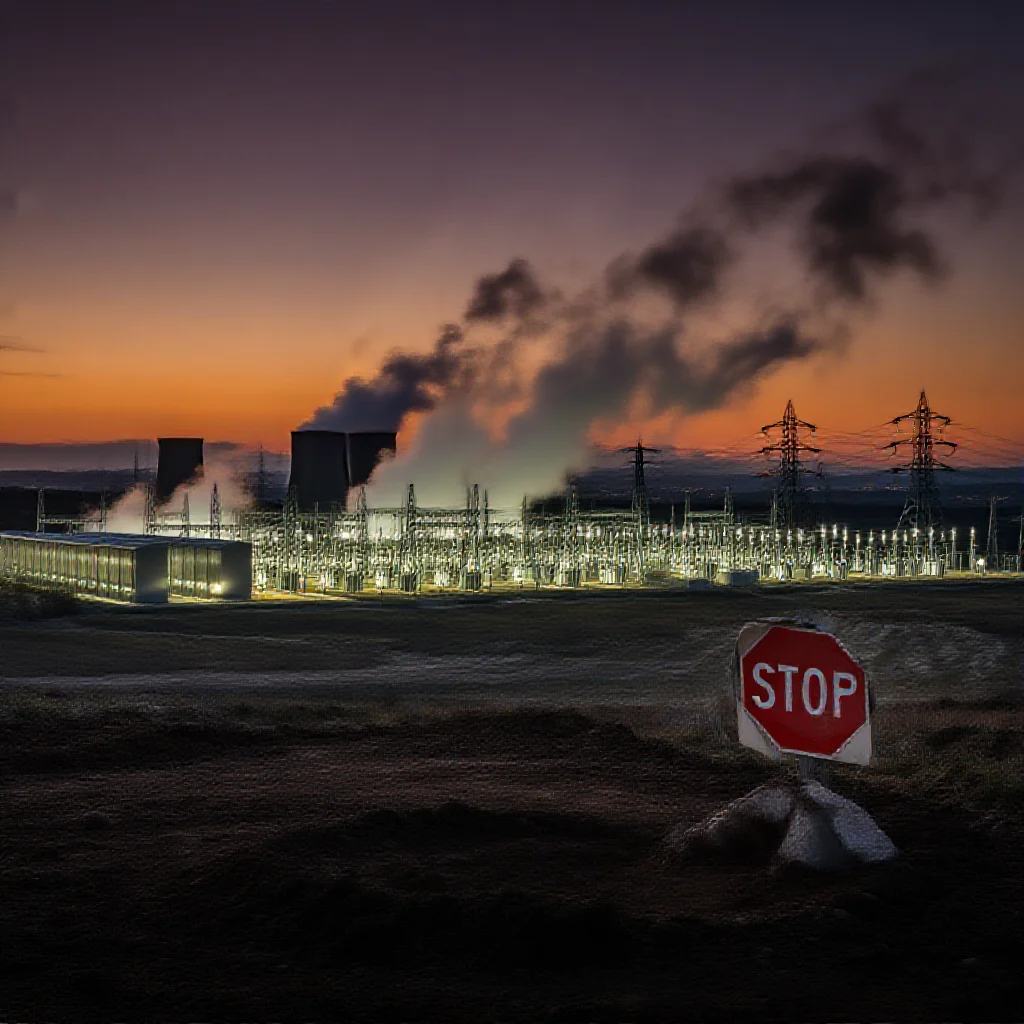
"A wave of legislative proposals across 11 U.S. states is threatening to halt"
The Data Center Gold Rush Hits a Wall: Why 11 U.S. States Are Pushing Back
Introduction: The Unprecedented Legislative Backlash
A coordinated legislative movement is emerging across the United States, targeting the physical infrastructure of the digital economy. Eleven states, from Virginia to Vermont, are currently considering proposals to ban, pause, or heavily condition the construction of new data centers (Source 1: [Primary Data]). The scale of proposed action ranges from conditional restrictions in states with hundreds of announced projects to preemptive bans in states with none. This phenomenon represents a strategic recalibration of the social contract between local communities and the digital economy's physical footprint, moving beyond localized opposition to a systemic reassessment of growth.
The Core Axis: Energy, Grid Stability, and the New Calculus of Growth
The legislative pushback is centrally organized around energy consumption and grid stability, reframing data centers from pure economic investments to complex public utility challenges. According to a state-by-state analysis by Stateline, the volume of proposed projects is staggering: Virginia has 498 announced data center projects, while Georgia has 340 (Source 1: [Primary Data]). The operational power demand of a single hyperscale campus can rival that of a mid-size city, creating an instantaneous and permanent load on regional grids.
This has triggered a new economic calculus. Proposed legislation explicitly ties development permission to energy infrastructure. Maryland's proposal would block construction without legislation requiring sites to co-locate with power generation. Wisconsin seeks a ban unless specific consumer protections are introduced, directly linking data center development to residential utility rates (Source 1: [Primary Data]). The shift is from welcoming capital investment to actively managing a new, dominant class of electrical load. The long-term supply chain impact is direct: constraining data center growth applies pressure upstream to chipmakers like NVIDIA and AMD, cloud providers like AWS, Azure, and Google Cloud, and AI developers by physically limiting where their computational capacity can be built.
Dual-Track Analysis: A 'Slow' Industry Deep Audit
This legislative trend is a prototypical "slow analysis" issue, concerning long-term infrastructure planning, energy policy, and foundational economic strategy rather than immediate news cycles. It signals the definitive end of the "build anywhere" era for hyperscale computing. Future location decisions will be dictated by a combination of political will and grid readiness, superseding traditional factors like land cost and tax incentives.
The preemptive actions in states with zero announced projects are particularly revealing. Vermont has proposed a ban on AI data centers until July 2030, while New Hampshire is considering a one-year temporary ban (Source 1: [Primary Data]). These moves function as a strategic canary in the coal mine. They indicate a desire by state governments to architect their economic and energy futures proactively, before being shaped by external capital. The goal may be to attract only specific, less resource-intensive forms of technology investment, or to avoid the grid strain experienced by neighboring states entirely.
Case Studies in Contrast: Virginia's Conditions vs. Georgia's Ban
The differing approaches of states with high project volumes illustrate the spectrum of strategic response. Virginia, with nearly 500 announced projects, is considering conditional restrictions tied to energy usage. This represents a managed-growth model, attempting to integrate existing industry momentum with new sustainability and grid reliability guardrails.
In contrast, Georgia, with 340 announced projects, has proposed a more drastic measure: a ban on new data center projects until March 2027 (Source 1: [Primary Data]). This moratorium suggests a need for a comprehensive pause to assess cumulative impacts and develop a coherent state-level policy framework. Other states propose similar intervals: New York considers a pause of up to three years, while Oklahoma is looking at a halt until November 2029 (Source 1: [Primary Data]). These multi-year timelines are not mere delays but periods intended for substantive regulatory and infrastructure planning.
Conclusion: The Inevitable Reckoning and Reshaped Landscape
The legislative activity across these eleven states constitutes an inevitable market correction. The first wave of data center expansion was governed by real estate and tax incentive paradigms. The second wave is colliding with the physical and political realities of finite energy infrastructure and community consent.
None of the state-level restrictions have yet been passed into law; they remain under consideration (Source 1: [Primary Data]). However, their simultaneous emergence indicates a pivotal transition. The outcome will reshape the geographic distribution of computational capacity in North America. Regions with robust, under-utilized power generation and transmission capacity, coupled with favorable regulatory environments, will gain competitive advantage. For the technology industry, the cost of compute will increasingly incorporate a "grid readiness" premium, potentially accelerating investment in on-site generation, advanced cooling technologies, and more distributed computing architectures. This recalibration asserts that the foundation of the AI and cloud era must be negotiated, not merely assumed.
Trade Metrics
Related Datasets
Q4 Cross-Border Logistics Report
PDF • 4.2 MB
Automotive Parts Supply Chain Index
CSV • 1.1 MB