Beyond the Bases: The Strategic & Economic Drivers Behind the Top 10 Host

David Thompson
Data Editor
April 8, 2026
DATELINE: NA TRADE WIRE
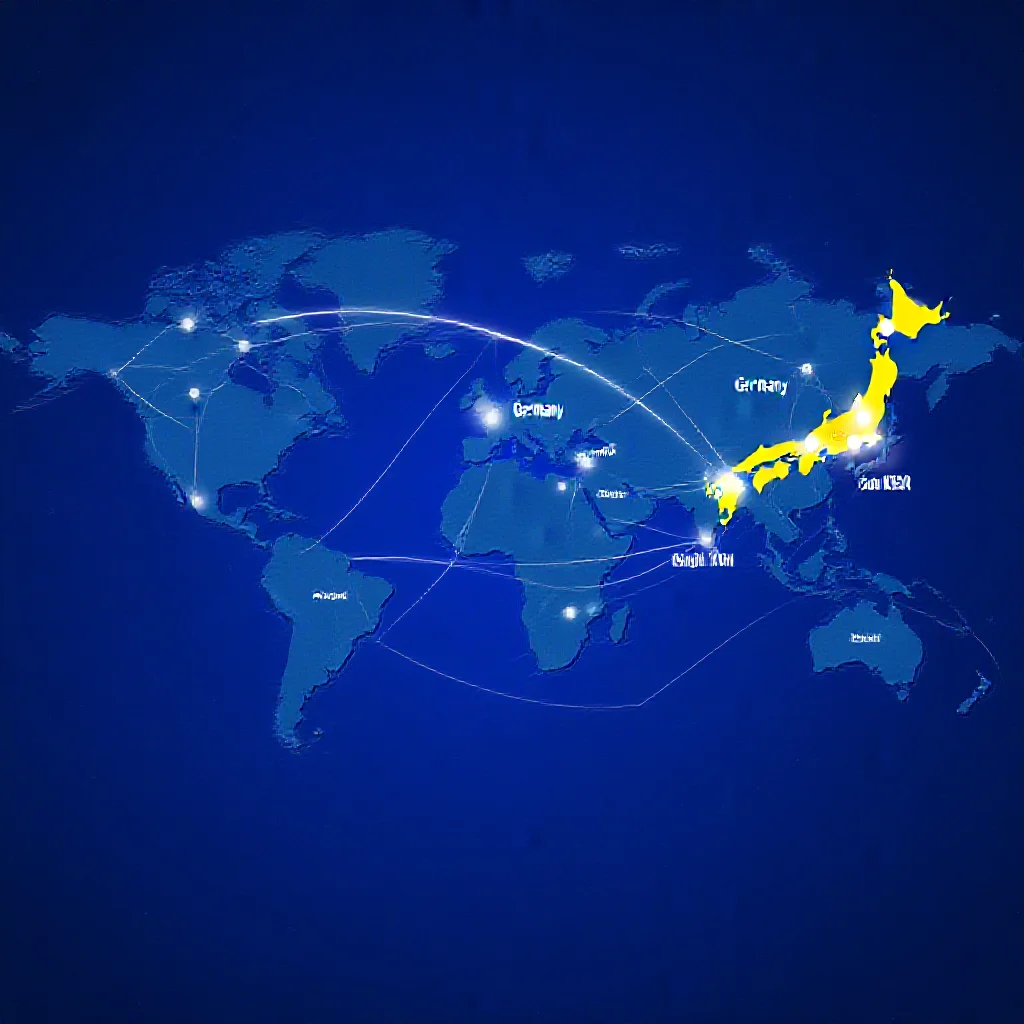
"While the 2025 ranking of nations hosting the most U.S. troops—led by Japan,"
Beyond the Bases: The Strategic & Economic Drivers Behind the Top 10 Host Nations for U.S. Troops in 2025
Introduction: The Numbers as a Geopolitical Compass
The 2025 ranking of nations hosting the most U.S. military personnel provides a quantitative snapshot of global defense posture (Source 1: [Primary Data]). The order—Japan, Germany, South Korea, the United Kingdom, Italy, Australia, Spain, Turkey, Poland, and Romania—represents more than a static list. It functions as a lagging indicator of formal treaty commitments and a leading indicator of strategic priority regions. Analysis of this distribution reveals a core strategic framework: a dual-axis effort to deter near-peer competitors and secure the global commons through a network of forward-operating positions.
!An infographic-style header image subtly showing the top 5 countries with iconographic markers.
Axis I: The Indo-Pacific Pivot - More Than Just Deterrence
The presence of three Indo-Pacific nations in the top six underscores the region's centrality to U.S. strategic planning. Japan's position at the top of the list is a function of its role as the primary cornerstone for power projection in the Western Pacific. The archipelago hosts critical command nodes, naval facilities, and air wings essential for monitoring activity in the East China Sea and the Taiwan Strait, and for providing a resilient basing structure in a contested environment.
South Korea's enduring garrison, the third largest, serves the traditional function of a tripwire deterrent against North Korean aggression. Its strategic value is expanding, however, into a hub for deepening trilateral integration with Japan, focusing on missile defense, technology collaboration, and seamless operational coordination.
Australia's rise to the sixth position reflects its evolution from a regional ally to a southern anchor for a distributed force posture. Facilities in northern Australia support force dispersal, enhanced logistics, and undersea warfare capabilities, contributing to a wider network designed to complicate an adversary's targeting calculus. The economic rationale underpinning this axis is clear: these deployments are positioned to ensure the security of sea lanes critical for global trade, semiconductor supply chains, and energy flows to major economies.
!Map of the Indo-Pacific region highlighting key sea lanes and US military facilities.
Axis II: The European Reassurance - Legacy, Adaptation, and the Eastern Flank
The European theater, led by Germany's second-place standing, demonstrates a posture in transition. Germany remains the logistical and command heart of U.S. European Command, a legacy of Cold War infrastructure. The current posture, however, is shifting from concentration to distribution.
The United Kingdom and Italy, in fourth and fifth places respectively, function as power projection platforms beyond Europe. Their bases enable operations and surveillance across the Mediterranean, into Africa, and toward the Middle East.
The inclusion of Poland and Romania in the ninth and tenth positions signals the most significant adaptation. These nations represent the new frontline of NATO's deterrence posture. The establishment of enhanced rotational and potentially permanent forces in these countries is a direct, measurable response to Russian military activity, physically extending the alliance's defensive perimeter eastward.
Turkey's complex position at number eight reflects its enduring strategic value derived from geography. Control of the Bosporus Strait and the operation of Incirlik Air Base provide critical access to the Black Sea and the Middle East, even amid periodic political friction within the alliance.
The Hidden Logic: Bases as Nodes in a Global System
The troop numbers obscure a more sophisticated architecture than simple "host nation" relationships. These locations are nodes within a global system. For instance, naval and air facilities in Spain, the seventh-ranked host, are less about the Iberian Peninsula and more about enabling rapid force transit to and from Africa and the Middle East. Australian bases contribute to space domain awareness and cyber operations.
This reflects a "lily pad" strategy, complementing large, legacy installations with smaller, agile bases designed for rotational forces. This network prioritizes flexibility, resilience, and strategic redundancy. The economic dimension is intrinsic; these nodes protect the arteries of global commerce and enable rapid crisis response, factors that underwrite market stability and energy security. The infrastructure investment and local procurement associated with these presences create tangible, long-term economic interdependence between the United States and host nations.
Conclusion: A Posture for Strategic Competition
The 2025 troop distribution is not a relic of the past but a forward-looking investment calibrated for an era of strategic competition. The analysis indicates a sustained commitment to the Indo-Pacific as the primary pacing theater, matched by a reconstituted and reinforced European posture. The trendline suggests a continued evolution from large, static garrisons to a more dynamic, networked global presence. Future adjustments will likely be driven by technological advancements in long-range strike and surveillance, which may alter the value of specific geographic nodes, and by the evolving defense investments and political consensus of the host nations themselves. The enduring constant will be the use of forward-stationed forces as both a strategic signal and an operational necessity.
Trade Metrics
Related Datasets
Q4 Cross-Border Logistics Report
PDF • 4.2 MB
Automotive Parts Supply Chain Index
CSV • 1.1 MB