Beyond Numbers: The Strategic and Economic Logic Behind the World''s Largest

David Thompson
Data Editor
April 8, 2026
DATELINE: NA TRADE WIRE
"Projections for the world's largest air forces in 2026 reveal more than just"
Beyond Numbers: The Strategic and Economic Logic Behind the World's Largest Air Forces in 2026
Decoding the 2026 Projections: More Than a Simple Ranking
Projections for the world’s largest air forces in 2026 present a clear numerical hierarchy. According to the 2024 World Air Forces report by FlightGlobal, the United States Air Force is projected to maintain a dominant inventory of 13,209 aircraft. The Russian Aerospace Forces follow with 4,255 projected aircraft, and the People’s Liberation Army Air Force of China with 3,285. A subsequent tier includes the Indian Air Force (2,186), the Republic of Korea Air Force (1,567), the Japan Air Self-Defense Force (1,449), and the Pakistan Air Force (1,410) (Source 1: [FlightGlobal, 2024 World Air Forces Report]). The ranking is defined by the projected total aircraft inventory, a metric that includes all types of military aircraft but excludes those used primarily for training or held in long-term storage.
These figures, however, are not merely a measure of future military strength. They function as a lagging indicator, reflecting economic investments, industrial policy decisions, and strategic doctrines set in motion years, and often decades, prior. The 2026 snapshot is the tangible output of complex, long-cycle national programs. Analysis must therefore shift from a simple comparison of totals to an examination of the underlying systems that produce them.
The Quantity vs. Quality Conundrum: What the Numbers Hide
The stark numerical gap between the United States and its nearest peers is the most prominent feature of the data. The U.S. inventory, nearly triple the combined total of Russia and China, suggests unparalleled capacity for global reach and sustained operations. This figure, however, encompasses a vast and diverse fleet including strategic airlifters, tankers, intelligence-surveillance-reconnaissance platforms, and bombers—assets essential for power projection but less relevant for regional powers. The sustainability of this force is underpinned by immense maintenance and upgrade budgets, representing both a capability and a significant fiscal challenge.
For Russia and China, the aggregate numbers mask critical internal compositions. Both forces manage a mix of modern, domestically produced fourth- and fifth-generation fighters alongside larger quantities of older, legacy platforms. The rate at which these nations can retire older aircraft and scale production of advanced types is a more telling metric of actual capability than the gross inventory figure. The modernization curve, not the total, determines future combat effectiveness.
The cluster of middle powers—India, South Korea, Japan, and Pakistan—demonstrates how similar totals can represent vastly different strategic realities. A force of approximately 1,400-2,200 aircraft can be structured as a balanced, technologically advanced fleet with robust support assets (Japan, South Korea), or as a force heavily weighted towards tactical fighters for territorial defense (Pakistan). These structural choices directly reflect specific threat perceptions, available budgets, and doctrinal priorities.
The Industrial and Economic Engine Room: Procurement as Destiny
The projected inventory sizes are fundamentally a product of national industrial and economic capacity. The United States’ position is sustained by a deep, private-sector defense industrial base with unparalleled research and development infrastructure, extensive supply chains, and significant economies of scale. This allows for the simultaneous development, production, and sustainment of a highly diverse fleet.
China’s rapid ascent to the third-largest projected inventory is a direct reflection of its integrated military-civil fusion strategy and the scaling of its aerospace sector. Production rates for key fighter classes now rival or exceed those of other nations, enabled by a state-directed industrial model that prioritizes capacity and incremental technological advancement. The expansion mirrors methodologies seen in other Chinese industrial sectors, such as shipbuilding.
For many nations, force size is dictated by the complexities of foreign procurement. Countries like India, Egypt, and others navigate multi-year acquisition cycles, geopolitical constraints, technology transfer agreements, and offset obligations. Their projected inventories are a composite of deliveries from multiple international suppliers, creating logistical and operational challenges but also enabling access to technology not available domestically. This import dependency creates a different set of strategic vulnerabilities and opportunities compared to indigenous production.
The Unseen Drivers: Geopolitics, Doctrine, and the Unmanned Factor
The 2026 projections are crystallized expressions of contemporary geopolitical tensions. Procurement plans in the Indo-Pacific region, reflected in the growth of Japanese, South Korean, and Indian inventories, are direct responses to perceived regional shifts. Similarly, European air force modernization, though not in the top tier by sheer numbers, is accelerating in response to renewed continental threats. The numbers are a budgetary manifestation of national security assessments.
Doctrine is equally visible in fleet composition. A large transport and tanker fleet, as maintained by the United States, enables global power projection and sustained expeditionary warfare. A force composed predominantly of fighters and ground-attack aircraft, such as Pakistan’s, indicates a doctrine focused on territorial defense and rapid response to regional threats. The inventory structure reveals the intended mission set.
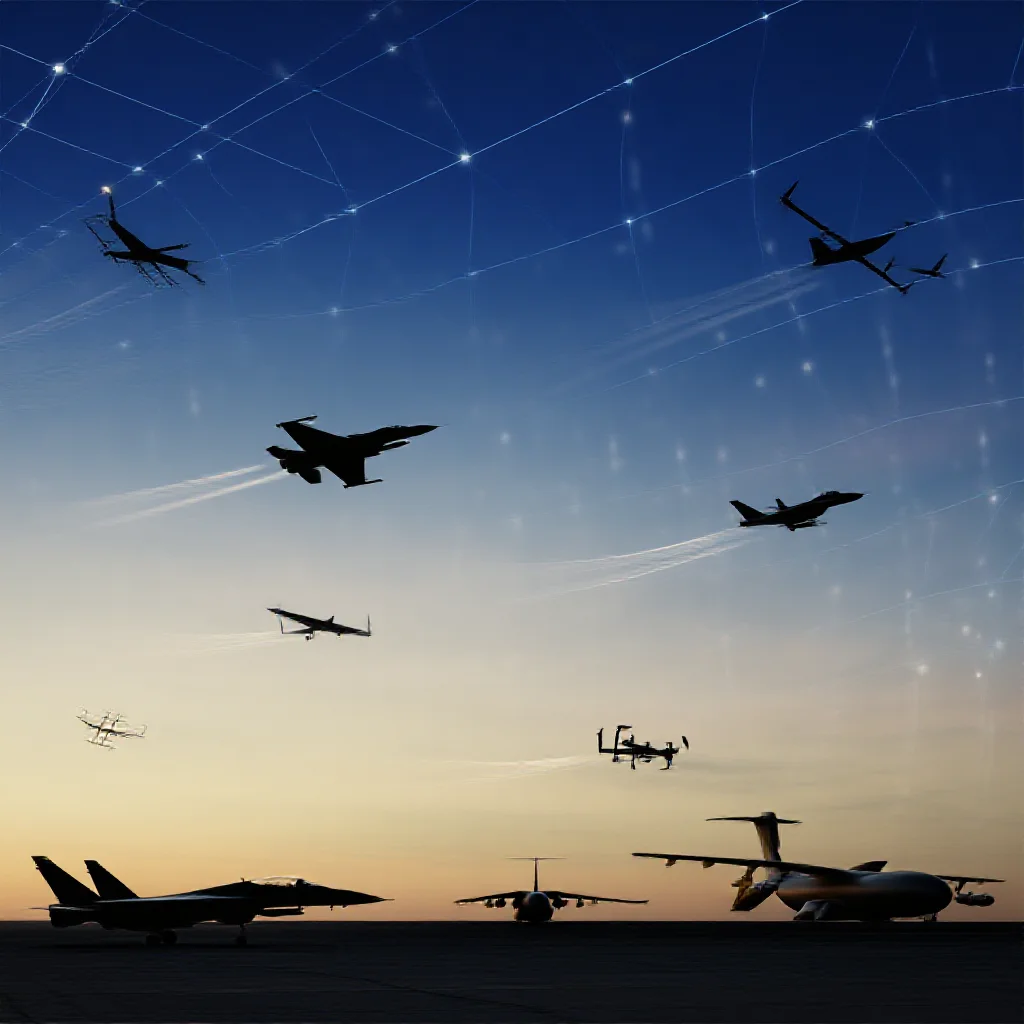
A significant analytical blind spot in traditional inventory counts is the unmanned dimension. These projections primarily account for manned aircraft. The rapid proliferation of advanced unmanned combat aerial vehicles (UCAVs), loyal wingman drones, and attritable systems is not fully captured in these totals. Nations may pursue "mass" through cheaper, more numerous unmanned systems while maintaining or even reducing manned fighter numbers. The future balance of aerial power may increasingly be determined by the integration of manned and unmanned assets, a factor that current inventory rankings inherently underweight.
Conclusion: The Future Trajectory of Aerial Power
The 2026 projections confirm the continued quantitative dominance of the United States but highlight the qualitative convergence underway. The strategic and economic logic points toward several neutral, industry-focused predictions. First, the premium on stealth, connectivity, and sensor fusion will accelerate the phase-out of legacy fourth-generation aircraft among top-tier forces, though financial constraints will ensure their prolonged service elsewhere. Second, the economic and technical barriers to developing indigenous fifth-generation fighters will solidify a bifurcated market: a handful of producer nations and a larger group of careful, strategic customers. Third, the most significant disruption to future rankings will come from autonomous systems. Nations that successfully integrate large numbers of advanced unmanned platforms into their force structure and doctrine may achieve effective combat mass without a corresponding increase in traditional inventory counts, challenging the very metrics used to define air power in the coming decade.
Trade Metrics
Related Datasets
Q4 Cross-Border Logistics Report
PDF • 4.2 MB
Automotive Parts Supply Chain Index
CSV • 1.1 MB