Beyond Calories: The Hidden Geography of True Food Independence

David Thompson
Data Editor
April 12, 2026
DATELINE: NA TRADE WIRE
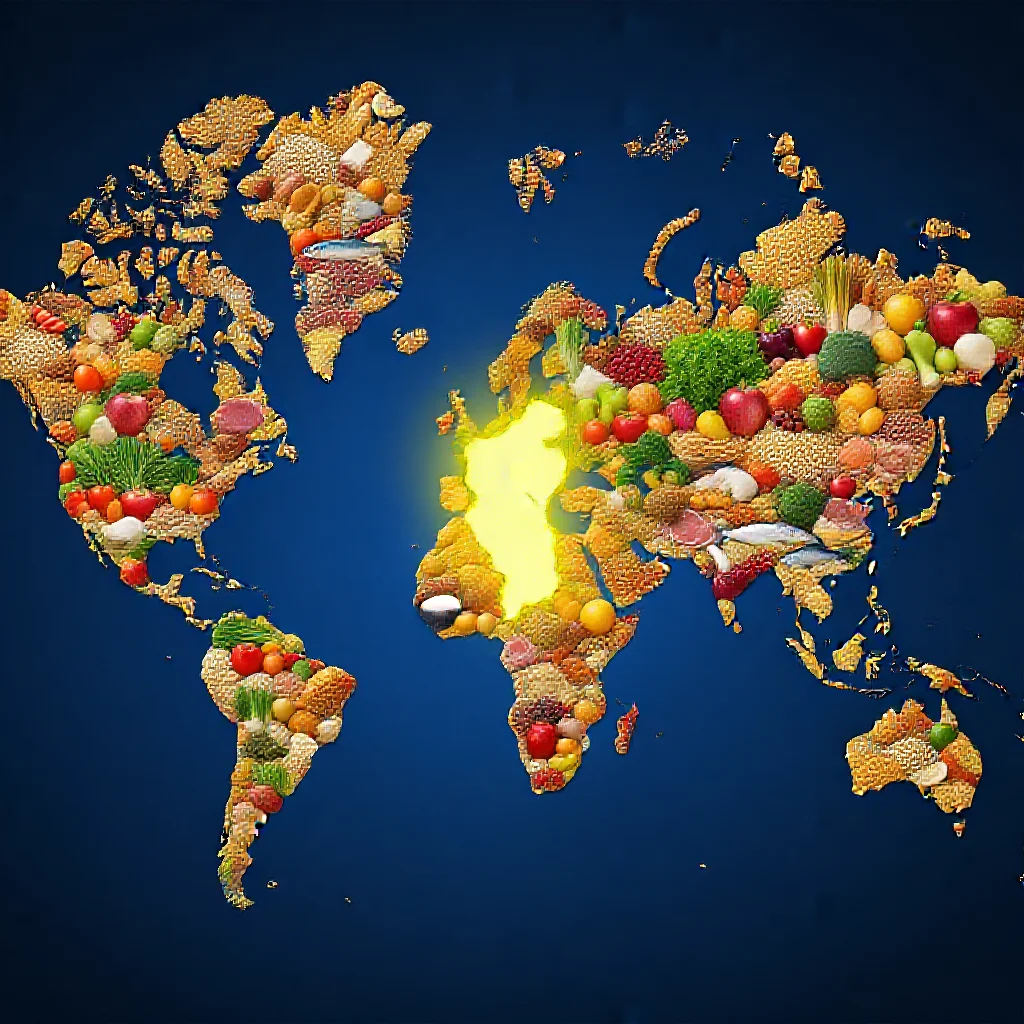
"A groundbreaking study in Nature Food reveals a stark new reality of global"
Beyond Calories: The Hidden Geography of True Food Independence
The Self-Sufficiency Illusion: Why Calorie Counts Aren't Enough
The conventional metric for national food security—total caloric production—is an incomplete and potentially misleading indicator. A paradigm shift is emerging from a recent global analysis, which moves beyond aggregate calories to assess domestic production capacity across seven essential nutritional categories: starchy staples, fruits, vegetables, dairy, meat, fish, and legumes. This framework, established by a study published in Nature Food, redefines true food independence as the ability to domestically source a balanced diet. The findings dismantle the assumption that high-volume agricultural output equates to nutritional sovereignty. When measured against this comprehensive benchmark, the global landscape of self-sufficiency is radically reconfigured, revealing widespread, hidden dependencies.
The Sole Survivor: Decoding Guyana's Unexpected Dominance
According to the Nature Food analysis, only one nation meets the threshold for full nutritional independence: Guyana. This South American country not only produces sufficient quantities across all seven essential food groups but also exceeds its domestic requirements for starchy staples and fruit. This achievement stands in stark contrast to the performance of global economic and agricultural superpowers. The result presents a counter-intuitive lesson: small-scale, geographically and climatically favorable agro-ecology can outperform industrialized, export-oriented monoculture systems in achieving nutritional completeness. Guyana’s abundance of freshwater and tropical climate likely underpin this diversified production capacity, suggesting that factors beyond economic might and technological advancement are primary determinants of holistic food sovereignty.
The Vulnerability of Giants: Exposing Hidden Dependencies in the US and China
The deficits of major agricultural producers expose critical vulnerabilities masked by wealth and production volume. The United States and Canada each domestically cover only four of the seven essential groups, demonstrating a pronounced reliance on imports for fruits and vegetables. Similarly, China and Vietnam, while covering six groups, share a critical shortfall in dairy production. These patterns indicate that economic power does not guarantee nutritional independence; it often facilitates a complex web of imports to compensate for domestic climatic limitations or consumer diet preferences. This creates strategic dependencies within global supply chains, where disruptions in trade or logistics could swiftly translate into nutritional gaps, even within nations considered breadbaskets.
Regional Patterns and the Water-Food Nexus
Structural deficits follow distinct geographical patterns, closely tied to environmental constraints. Regions like the Middle East and North Africa rank among the least self-sufficient, a status directly correlated with severe water scarcity that limits diverse agricultural production. In contrast, Asia’s dominance in aquaculture—accounting for 91% of global output according to the Food and Agriculture Organization (FAO)—demonstrates how geography dictates regional specialization. This specialization, while efficient, simultaneously creates systemic dependencies, as regions become net importers of food groups they cannot viably produce. The long-term risk is that climate change will exacerbate existing water stress, potentially locking certain regions into permanent import dependence for key nutritional components, thereby increasing systemic fragility.
Neutral Market and Industry Predictions
The analytical shift from calorie-centric to nutrient-group-centric assessment will likely influence future agricultural and trade policy. Investment may increasingly flow towards controlled-environment agriculture and cellular food production technologies in water-scarce or climatically limited regions, aiming to reduce specific nutritional dependencies. Trade agreements may begin to incorporate resilience metrics based on diversified food group sourcing rather than mere volume. Furthermore, national food security strategies are predicted to evolve, placing greater emphasis on domestic production of currently deficient essential food groups, potentially at the expense of maximizing export-oriented monoculture. This reorientation could lead to a gradual reconfiguration of global agricultural trade patterns, prioritizing nutritional completeness alongside economic efficiency.
Trade Metrics
Related Datasets
Q4 Cross-Border Logistics Report
PDF • 4.2 MB
Automotive Parts Supply Chain Index
CSV • 1.1 MB