Beyond the Money Flow: The Hidden Economics of Remittance-Dependent Nations

David Thompson
Data Editor
April 8, 2026
DATELINE: NA TRADE WIRE
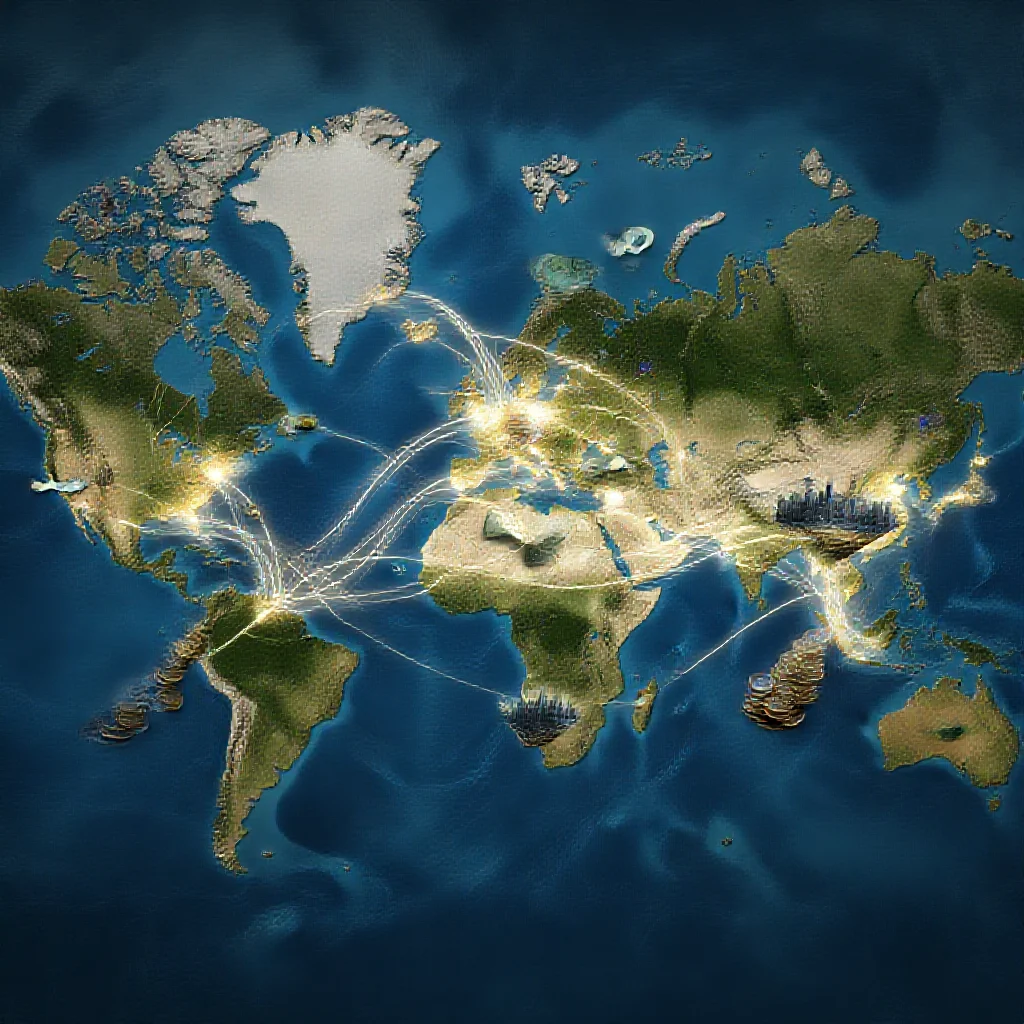
"While global remittances reached $860 billion in 2023, their impact is measured"
Beyond the Money Flow: The Hidden Economics of Remittance-Dependent Nations
Introduction: The $860 Billion Lifeline and Its Double-Edged Sword
In 2023, global remittance flows reached an estimated $860 billion, with $669 billion directed to low- and middle-income countries (Source 1: [World Bank 2023 Estimate]). These transfers constitute a financial lifeline, exceeding foreign direct investment in many nations. The core paradox, however, lies in the metric of dependence. When remittances constitute a significant fraction of a nation’s Gross Domestic Product, they signal both vital stability and profound economic vulnerability. This analysis deconstructs the hidden economic architecture behind the World Bank’s dependence rankings, moving beyond headline figures to examine the systemic distortions and fragile equilibrium they create.
The Dependence Index: More Than Just a Ranking
The standard metric for economic reliance is personal remittances received as a percentage of a country’s GDP, as calculated and reported by the World Bank (Source 2: [World Bank Development Indicators]). This ratio reveals economies where external private transfers from diasporas rival or surpass the scale of domestic productive output. The most dependent economies form a distinct archetype.
In 2022, Tajikistan led with remittances equivalent to 48% of its GDP (Source 3: [World Bank 2022 Data]). Tonga followed closely at 44% (Source 4: [World Bank 2022 Data]). Lebanon’s ratio stood at 35% (Source 5: [World Bank 2022 Data]), a figure that assumes critical importance within its specific context. This pattern extends to other nations including Samoa, the Kyrgyz Republic, and The Gambia, indicating a widespread structural phenomenon rather than isolated cases.
The Hidden Economic Logic: How Remittances Reshape National Economies
The influx of remittances establishes a distinct and often parallel economic logic within recipient nations, with four primary effects.
The Consumption Engine: A significant portion of remittance inflows fuels immediate household consumption—food, housing, utilities, and consumer goods. While this raises living standards and reduces poverty metrics, it does not automatically translate into productive investment in local business or infrastructure. The economy becomes oriented toward servicing consumption demand rather than generating exportable goods or services.
Labor Market Distortion: The prospect of migration and sending remittances creates a powerful incentive structure. This "migration dividend" can lead to skill depletion or "brain drain," as the most educated or capable workers seek opportunities abroad. Domestically, it may alter workforce participation rates and wage expectations, as families with remittance income may have reduced pressure to engage in local labor markets, particularly in lower-wage sectors.
The Dual Economy: High dependence fosters a two-tiered economic system. A remittance-fueled consumption economy operates with different purchasing power and access to foreign currency, often insulated from the productivity and fiscal constraints of the local productive economy. This duality can widen inequality between households with and without diaspora connections.
Exchange Rate & Inflation Effects: Sustained remittance inflows represent a constant source of foreign exchange. This can lead to an appreciation of the local currency in real terms, making the nation’s exports less competitive on global markets—a phenomenon known as "Dutch disease." Conversely, the consumption demand they generate can contribute to inflationary pressures in non-tradable goods and services, such as real estate.
Case Study: Lebanon - Remittances as a Failed State's Circulatory System
Lebanon’s 35% dependence ratio requires analysis within the context of its concurrent banking collapse, sovereign debt default, and political paralysis. Here, remittances have evolved beyond a supplement to become the de facto circulatory system for the national economy. They function as the primary social safety net, replacing eviscerated state functions by directly funding household survival amid hyperinflation. Furthermore, they serve as the critical source of hard currency, enabling imports of essential goods like medicine, fuel, and food in a country with negligible foreign reserves.
The long-term institutional risk is profound. When basic survival is outsourced to the diaspora, the state faces diminished pressure and capacity to enact necessary structural reforms, rebuild credible institutions, or restore fiscal and monetary sovereignty. Remittances provide stability that prevents total collapse but may also enable a form of dysfunctional equilibrium, postponing a definitive reckoning with systemic failures.
Future Trajectories: Between Resilience and Vulnerability
The economic trajectory of remittance-dependent nations is contingent on external stability and internal policy. These economies exhibit resilience against localized shocks, as their income source is geographically diversified. However, this exposes them to global systemic risks—economic downturns, geopolitical tensions, or immigration policy changes in host countries can abruptly constrict flows.
Neutral market analysis suggests two divergent pathways. The first is a continued equilibrium of dependence, where remittances sustain consumption and basic import capacity but contribute to persistent structural distortions, limiting sustainable development. The second pathway involves strategic policy intervention to harness these flows. This could include diaspora bond instruments, incentives for investment in productive sectors, and financial products that channel a portion of remittances into local capital markets or small and medium enterprise financing. The success of such policies, however, is predicated on a level of institutional credibility and governance that is often absent in the most dependent states.
The data indicates that remittance flows will remain a dominant feature of the global financial landscape. For nations like Tajikistan, Tonga, and Lebanon, the central challenge is no longer merely attracting these funds, but managing their profound and often hidden economic consequences to avoid permanent fragility.
Trade Metrics
Related Datasets
Q4 Cross-Border Logistics Report
PDF • 4.2 MB
Automotive Parts Supply Chain Index
CSV • 1.1 MB