Beyond Oil: How Gulf States Are Redefining Economic Sovereignty Through Tourism

David Thompson
Data Editor
March 27, 2026
DATELINE: NA TRADE WIRE
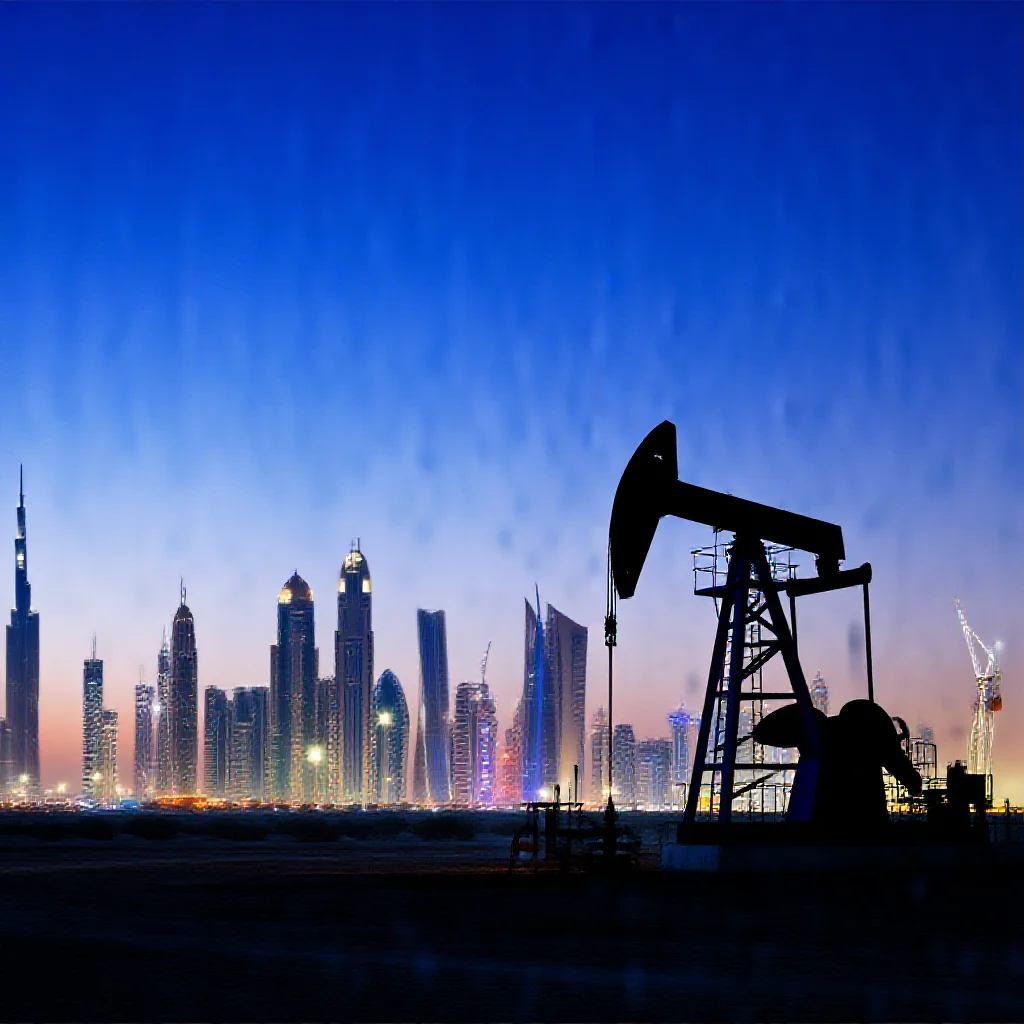
"While oil wealth defines the Gulf's image, a quiet revolution is underway."
Beyond Oil: How Gulf States Are Redefining Economic Sovereignty Through Tourism
While hydrocarbon wealth remains a defining feature of the Gulf Cooperation Council (GCC) economies, a structural shift is in progress. The development of the tourism sector is a central component of national diversification strategies, yet the underlying economic logic varies significantly between member states. Analysis of 2022-2023 data reveals a strategic landscape where tourism is not merely a revenue stream but a calculated instrument for reducing oil dependence, shaping global influence, and building post-hydrocarbon resilience (Source 1: [Primary Data]).
The Illusion of Rankings: Decoding the GCC's Tourism Data Duality
The headline figures for Gulf tourism present an immediate paradox. In 2022, tourism's contribution to national GDP was highest in Bahrain at 6.4%, followed by the UAE at 5.1%, Saudi Arabia at 4.3%, Qatar at 3.6%, Oman at 2.9%, and Kuwait at 2.8% (Source 1: [Primary Data]). This metric functions as an indicator of economic exposure; a higher percentage in a smaller, less diversified economy like Bahrain signifies a greater relative dependence on the sector for economic output.
The 2023 data on absolute scale reveals a different hierarchy. The United Arab Emirates generated $51.9 billion in total tourism revenue, the highest in the region by a significant margin. Saudi Arabia recorded the highest number of international tourist arrivals at 27.4 million, followed by the UAE (26.7 million) and Bahrain (11.4 million) (Source 1: [Primary Data]). These figures are metrics of scale and global reach. The UAE's revenue dominance indicates a mature, high-value tourism ecosystem, while Saudi Arabia's arrival numbers signal a strategy of aggressive market capture and volume growth.
This duality demonstrates that a singular ranking is misleading. The data must be interpreted through the lens of each nation's economic size and strategic intent.
Tourism as Geoeconomic Strategy: The Three Archetypes in the Gulf
Divergent national circumstances and long-term visions have crystallized into three distinct strategic archetypes for tourism development within the GCC.
Archetype 1: The Niche Diverter (Bahrain, Oman). For these nations, with more limited hydrocarbon reserves relative to their neighbors, tourism is a vital economic lifeline and a primary tool for diversification. The high GDP contribution in Bahrain is a strategic necessity. The focus is often on regional tourism and cultivating specific niches, such as cultural heritage in Oman or leisure tourism from neighboring Saudi Arabia in Bahrain's case. The sector's role is to divert the economic base away from a singular reliance on oil and gas.
Archetype 2: The Global Hub (UAE, Qatar). In these economies, tourism is a core pillar of a broader global city and soft power strategy. The objective transcends the sector's direct GDP contribution. Massive absolute revenue—such as the UAE's $51.9 billion—funds world-class infrastructure and reinforces a global brand as a crossroads for commerce, talent, and ideas. Tourism is integrated with aviation, logistics, finance, and real estate to create a resilient, knowledge-based economic hub less susceptible to commodity price cycles.
Archetype 3: The Nation-Builder (Saudi Arabia). Here, tourism is deployed as a comprehensive tool for domestic transformation, aligned with Vision 2030. The initial priority on arrival volume (27.4 million in 2023) is designed to catalyze a vast new ecosystem. The strategy targets massive domestic job creation for a young population, the spatial development of new regions like NEOM and the Red Sea, and a fundamental reshaping of both national self-perception and the country's global image. Tourism is the engine for building entirely new non-oil economic supply chains from the ground up.
The Underlying Supply Chain: What the Headline Numbers Hide
The long-term significance of tourism investment lies beneath the headline revenue and arrival figures, in its capacity to generate a non-oil-linked domestic supply chain. The development of large-scale tourism projects forces the creation and maturation of supporting industries: specialized construction, hospitality management, logistics, food and beverage supply chains, and entertainment. This has a pronounced economic multiplier effect, fostering small and medium-sized enterprises and creating skilled employment pathways outside the public and energy sectors.
The maturity of this supply chain varies. The UAE's high revenue per visitor suggests a deep, high-value chain encompassing luxury retail, global aviation connectivity, and high-margin business tourism. Saudi Arabia's current strategy necessitates building this chain concurrently with attracting visitors, representing a different order of operational challenge but also a potentially more transformative domestic economic impact.
Neutral Market and Industry Predictions
The trajectory of Gulf tourism will be defined by several measurable factors. The sector in Bahrain and Oman will likely see increased competition as regional offerings expand, pressuring them to deepen their niche specializations. The UAE and Qatar will continue to evolve towards higher yield segments, leveraging technology and sustainability to maintain a premium global position. Saudi Arabia's success will be measured by its ability to convert its volume growth into sustainable yield and, more critically, by the domestic job creation and enterprise development figures within the tourism ecosystem.
Convergence in arrival numbers may occur, but strategic divergence will remain. The ultimate metric of success for all GCC states will not be a tourism ranking, but the sector's measurable contribution to reducing the correlation between national fiscal health and the price of crude oil. Tourism, in its varied forms, is being engineered as a foundational component of future economic sovereignty.
Trade Metrics
Related Datasets
Q4 Cross-Border Logistics Report
PDF • 4.2 MB
Automotive Parts Supply Chain Index
CSV • 1.1 MB