Beyond the Numbers: The Hidden Story of Global Productivity in 2023

David Thompson
Data Editor
April 14, 2026
DATELINE: NA TRADE WIRE
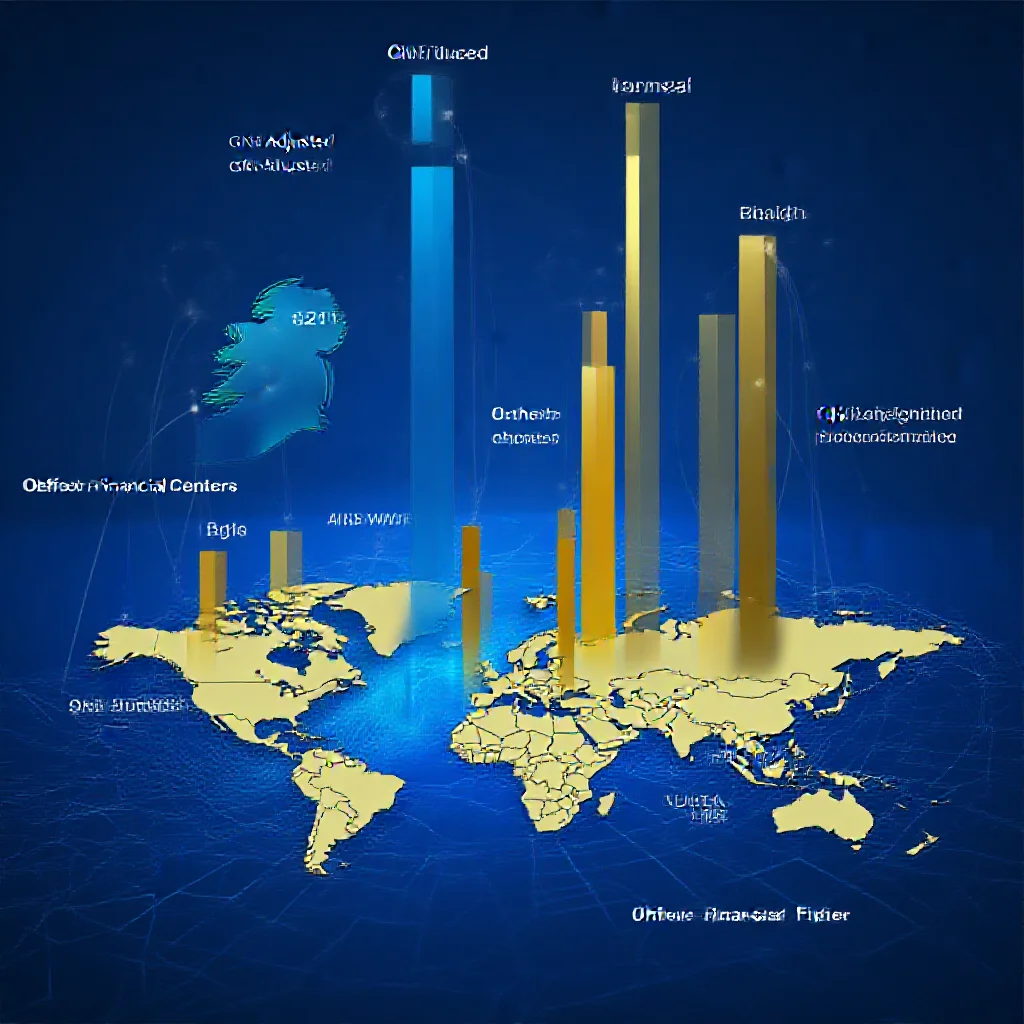
"Ireland's top ranking in OECD productivity data for 2023, with a GDP per"
Beyond the Numbers: The Hidden Story of Global Productivity in 2023
The Productivity Podium: A First Look at the 2023 OECD Rankings
The Organisation for Economic Co-operation and Development (OECD) data for 2023 presents a clear hierarchy of labor productivity, measured as Gross Domestic Product (GDP) per hour worked and adjusted for Purchasing Power Parity (PPP). Ireland occupies the top position with a figure of $151 (Source 1: [Primary Data]). It is followed by Norway at $132, Luxembourg at $125, and the United States at $97 (Source 1: [Primary Data]). The aggregate average for OECD member states is $71 (Source 1: [Primary Data]). This metric, which standardizes the value of economic output generated per hour of labor across different national price levels, serves as the foundational tool for international productivity comparison. The initial ranking suggests a significant performance gap between a cluster of leading economies and the broader OECD mean.
The Illusion of Output: How Profit Shifting Distorts the Picture
The headline figure for Ireland, and to a similar extent Luxembourg, represents a significant statistical distortion rather than a pure measure of domestic economic activity. The primary cause is the profit-shifting activities of multinational corporations, which attribute intellectual property revenues and global profits to subsidiaries in these jurisdictions for tax and accounting purposes. This activity, often involving "brass plate" entities with minimal physical operations, inflates the host country's GDP. A more accurate measure of domestic income is Gross National Income (GNI), which excludes profits repatriated to foreign parent companies. When applying a GNI-adjusted measure, Ireland's productivity figure declines by 31% to approximately $115 (Source 1: [Primary Data]). Luxembourg's figure experiences a more pronounced correction, falling by 54% (Source 1: [Primary Data]). This adjustment reveals that these nations function as productivity "mirage" states within the OECD rankings, their elevated status an artifact of global corporate finance structures rather than underlying labor efficiency.
The Real Engines of Productivity: Capital, Knowledge, and Scale
Sustained high productivity derives from structural economic factors. Norway's position is underpinned by capital-intensive hydrocarbon extraction, where high-value output is generated by significant technological investment relative to labor input. The United States' strength is a function of scale, deep capital markets, and leading positions in high-margin knowledge-based industries such as technology and pharmaceuticals. Germany's robust manufacturing sector, characterized by advanced automation and specialized engineering, provides another model of durable productivity. These economies contrast with those dominated by labor-intensive service sectors, which face inherent limitations on output-per-hour gains. The foundational drivers are long-term investment in physical capital, research and development ecosystems, and education systems that cultivate advanced skills, creating advantages not reliant on accounting reallocations.
Interpreting the OECD Average: A World of Two Tiers
The OECD average of $71 per hour worked obscures a bifurcated landscape. A small group of nations, led by the United States and several Western European economies, consistently operates well above this line. A larger cohort, including many advanced economies, remains at or below the average. This divergence indicates that the challenges of productivity growth are widespread. Structural factors such as a high share of low-productivity service employment, regulatory barriers to competition, and lower rates of business investment can suppress gains. Persistent stagnation in this metric has direct causal links to constrained real wage growth and inflationary pressures, as unit labor costs rise when output per hour fails to increase.
The Future of Measurement and Work
The 2023 data underscores a growing disconnect between traditional economic metrics and economic reality in a globalized, digital economy. Reliance on GDP-based productivity measures for jurisdictions like Ireland and Luxembourg yields a misleading comparative analysis. Future economic assessment may require the standardized adoption of supplementary metrics like GNI* for cross-country comparison. The trajectory of productivity will be determined by the diffusion of automation and artificial intelligence from capital-intensive sectors into services, and the capacity of nations to adapt regulatory and educational frameworks. The enduring divide will likely be between economies that generate high-value intellectual property and capital and those that consume them, a distinction that current productivity rankings only partially and imperfectly capture.
Trade Metrics
Related Datasets
Q4 Cross-Border Logistics Report
PDF • 4.2 MB
Automotive Parts Supply Chain Index
CSV • 1.1 MB