Beyond Geography: The Hidden Infrastructure Chokepoints Reshaping Global LNG

David Thompson
Data Editor
March 23, 2026
DATELINE: NA TRADE WIRE
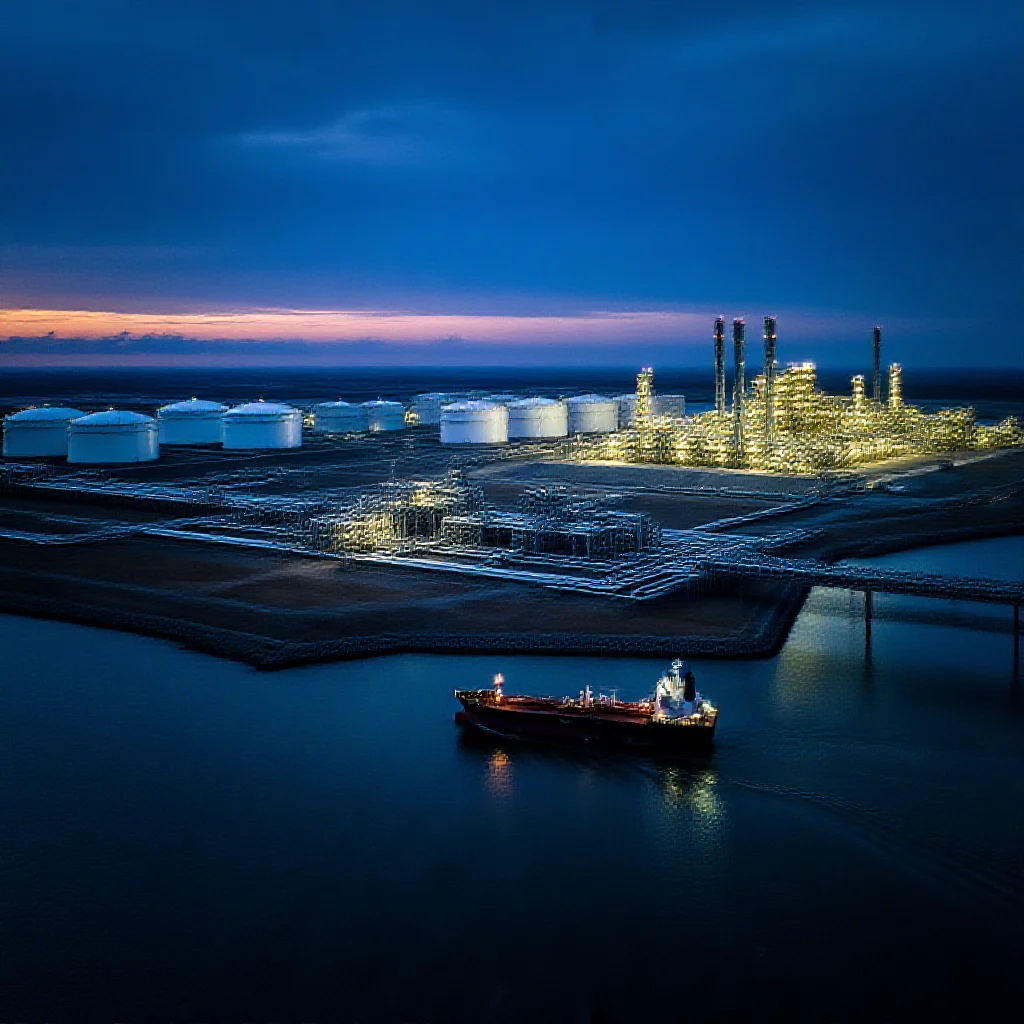
"While canals and straits dominate discussions of LNG trade vulnerability,"
Beyond Geography: The Hidden Infrastructure Chokepoints Reshaping Global LNG Security
Introduction: Redefining the LNG Chokepoint
The security of global liquefied natural gas (LNG) trade is conventionally framed by maps highlighting narrow maritime passages. The Strait of Hormuz, the Panama Canal, and the Suez Canal dominate risk assessments as geographic bottlenecks. This narrative is incomplete. The LNG supply chain’s fundamental vulnerability is industrial, not merely geographic. The core chokepoints are the high-cost, technically complex, and geographically concentrated facilities required to liquefy and regasify the gas. The process itself introduces fragility: natural gas must be supercooled to approximately -162°C (-260°F) for transport via specialized, insulated tankers, before being warmed back to a gaseous state at receiving terminals (Source 1: [Primary Data]). This cryogenic chain, with its massive, fixed infrastructure, creates systemic risks that transcend the rerouting of vessels.
The Industrial Bottleneck: Concentration and Capital Intensity
The first-order constraint on LNG flows is the limited number of facilities capable of processing it. As of 2024, the entire seaborne LNG trade is serviced by approximately 45 export terminals and 170 import terminals globally (Source 1: [Primary Data]). This represents a staggering concentration of critical capacity. A disruption at a single major facility can remove a significant percentage of global supply capacity for an extended period.
The capital intensity and lead times for these projects deepen this risk. Constructing a world-scale LNG liquefaction terminal typically requires over four years and a multi-billion-dollar investment. Lost capacity cannot be quickly replaced. This concentration is also geographic. For example, U.S. LNG export dominance is heavily concentrated on the Gulf Coast, a region with high exposure to hurricanes. This links regional natural disaster risk directly to global supply stability. The drive for economies of scale, resulting in ever-larger terminals, paradoxically increases systemic risk by deepening this concentration.
Maritime Passages: Amplifiers of Infrastructure Risk
Maritime straits do not create gas; they amplify the risks inherent in the infrastructure network. They act as force multipliers for the concentration of export and import capacity. The Strait of Hormuz is critical precisely because it is the sole maritime outlet for LNG from Qatar’s massive liquefaction complex. Similarly, the Panama Canal is a key route linking the concentrated U.S. Gulf Coast export zone with major Asian markets.
These passages introduce technical and operational constraints that compound infrastructure vulnerability. The Panama Canal’s draft limits restrict the transit of the largest LNG carriers, adding cost and complexity. The Turkish Straits (Bosporus and Dardanelles) present navigational hazards that lead to restrictions on LNG carrier transit, creating bottlenecks for shipments from Russian facilities. Strategic exposure is heightened at passages like Bab-el-Mandeb and the Taiwan Strait, where geopolitical volatility can threaten the flow of gas from already-critical infrastructure clusters in sensitive regions.
The Deep Audit: Long-Term Implications for Supply Chain Design
A long-term analysis indicates that the traditional infrastructure model compounds chokepoint risk. The industry’s pursuit of efficiency through mega-terminals and mega-vessels creates fewer, larger nodes of failure. A single outage—whether from technical failure, geopolitical action, or climate event—can have cascading global impacts, as market participants scramble for alternative supplies from an inherently inflexible system.
Emerging counter-trends may influence future supply chain design. Floating LNG (FLNG) units and smaller-scale, modular liquefaction and regasification technologies offer potential for greater geographic diversification of infrastructure. These solutions could reduce dependence on massive coastal complexes and allow for more agile deployment of capacity. Furthermore, the development of new export regions, such as East Africa and the Eastern Mediterranean, could gradually dilute the current concentration of capacity. The market’s long-term resilience will be determined by whether investment flows toward reinforcing existing concentrated nodes or toward a more distributed and technically diversified infrastructure network. The evolution of this capital allocation will define the next generation of LNG security challenges.
Trade Metrics
Related Datasets
Q4 Cross-Border Logistics Report
PDF • 4.2 MB
Automotive Parts Supply Chain Index
CSV • 1.1 MB