Beyond the Numbers: The Economic and Geopolitical Forces Reshaping Global

David Thompson
Data Editor
April 15, 2026
DATELINE: NA TRADE WIRE
"Between 2000 and 2025, the world added over 2 billion people, but the story"
Beyond the Numbers: The Economic and Geopolitical Forces Reshaping Global Population Growth (2000-2025)
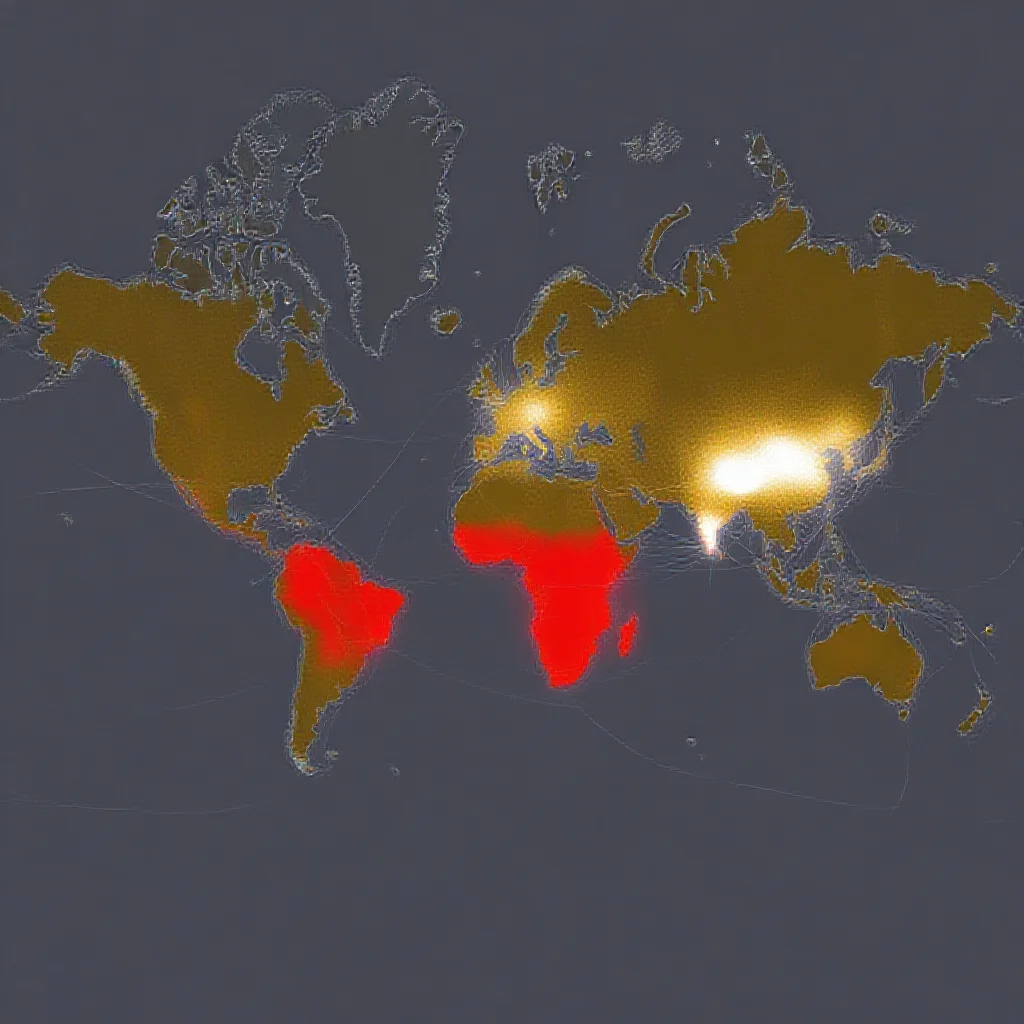
Cover Image Prompt: A striking, minimalist global map from a high angle, with three distinct glowing regions: a large, densely packed amber glow over India, a vibrant red pulse over Africa, and intense, concentrated white hotspots over the Arabian Peninsula. The rest of the world is in muted, dark tones with faint network lines connecting these bright zones. No text, no people, abstract and data-visualization style.
Introduction: The Two Billion Person Shift – More Than Just Birth Rates
Between 2000 and 2025, the global population increased by more than 2 billion people (Source 1: [Primary Data]). This aggregate figure, however, masks profoundly divergent regional narratives. The growth was concentrated in Africa and South Asia, while certain states in the Arabian Gulf recorded growth rates exceeding 250% (Source 1: [Primary Data]). These disparities are not merely demographic curiosities. They are direct manifestations of underlying economic models and geopolitical realignments. This analysis posits that contemporary population trends serve as a key indicator of capital flows, labor mobility, and shifts in global economic gravity.
The Engine of Scale: India's Rise and the New Demographic Pole
India accounted for the largest absolute increase in population during this period, adding 406 million people, a 38% rise (Source 1: [Primary Data]). This expansion is a function of past fertility rates yielding a massive, and still growing, working-age cohort. The milestone of India surpassing China as the world's most populous nation in 2023 is not merely symbolic (Source 1: [Primary Data]). It marks a tangible shift in demographic and economic scale.
The implications are structural. India's demographic profile, characterized by a broad-based age pyramid, presents a dual engine: a vast labor pool for global manufacturing and services, and an emerging consumer market of unprecedented size. This scale attracts investment in technology, infrastructure, and industrial capacity, positioning the country as a central node in global supply chains. The economic ascent is, therefore, both a cause and a consequence of its demographic trajectory, creating a new pole of global economic activity distinct from the aging demographics of East Asia and the West.
The Transient Boom: Decoding the Gulf's Supercharged Growth Model
In contrast to organic growth, the Arabian Gulf states exemplify a deliberate, economic model-driven demographic strategy. Qatar's population grew by 423.4% and the United Arab Emirates' by 249.7% from 2000 to 2025 (Source 1: [Primary Data]). This hyper-growth is a "population-for-rent" phenomenon, directly tied to the demands of hydrocarbon-fueled development and diversification into finance, logistics, and tourism.
The demographic structure reveals the model's core. In Qatar, less than 15% of the population consists of citizens, with the majority being foreign-born workers (Source 1: [Primary Data]). Population growth in this context is a variable input, closely correlated with construction booms, energy export capacity, and service sector expansion. This model offers rapid scalability but introduces specific vulnerabilities, including economic sensitivity to global energy prices and geopolitical risks, and social sustainability questions related to long-term residency and citizenship policies. The population is an economic asset, highly mobile and contingent on continued capital investment.
The Next Frontier: Africa's Demographic Ascent and Its Global Implications
The most significant concentration of future growth has shifted to the African continent. Nigeria alone added 113 million people between 2000 and 2025, and West Africa's population now exceeds 400 million (Source 1: [Primary Data]). The continent is projected to surpass 2 billion people by 2038 (Source 1: [Primary Data]). This represents the emergence of a new demographic and economic center of gravity.
The long-term implications are poised to reshape global economic geography. Africa's youthful population surge is creating a future labor pool and consumer market of a scale that will inevitably attract capital seeking new frontiers for manufacturing and low-cost production. This demographic preparedness positions the continent as a potential successor to parts of Asia in global supply chain configurations. The key determinants will be the rate of human capital development, infrastructure investment, and regional economic integration. The demographic trend is a pre-condition for this economic transition, setting the stage for the next major reallocation of global productive forces.
Conclusion: Demographics as a Driver of 21st-Century Reality
The period from 2000 to 2025 demonstrates that population dynamics are a powerful driver, not merely a consequence, of economic reality. Three distinct patterns have emerged: the scale-driven growth of India, reinforcing its economic ascent; the transient, model-dependent growth of the Gulf, reflecting a specialized economic niche; and the frontier growth of Africa, signaling a future reconfiguration of global labor and markets.
Neutral analysis suggests several forward-looking trends. Global labor markets will become increasingly dependent on South Asian and, subsequently, African cohorts, influencing wage structures and migration patterns. Supply chain strategies will evolve to leverage these demographic realities, potentially reducing concentration risks. Finally, international economic and political influence will gradually correlate with demographic and economic scale, indicating a continued shift in global power structures toward Asia and Africa. The story of global population is no longer one of simple arithmetic increase, but a complex map of economic ambition and geopolitical change.
Trade Metrics
Related Datasets
Q4 Cross-Border Logistics Report
PDF • 4.2 MB
Automotive Parts Supply Chain Index
CSV • 1.1 MB