Beyond the Rankings: The Economic and Cultural Drivers Behind Global Perceptions

David Thompson
Data Editor
March 28, 2026
DATELINE: NA TRADE WIRE
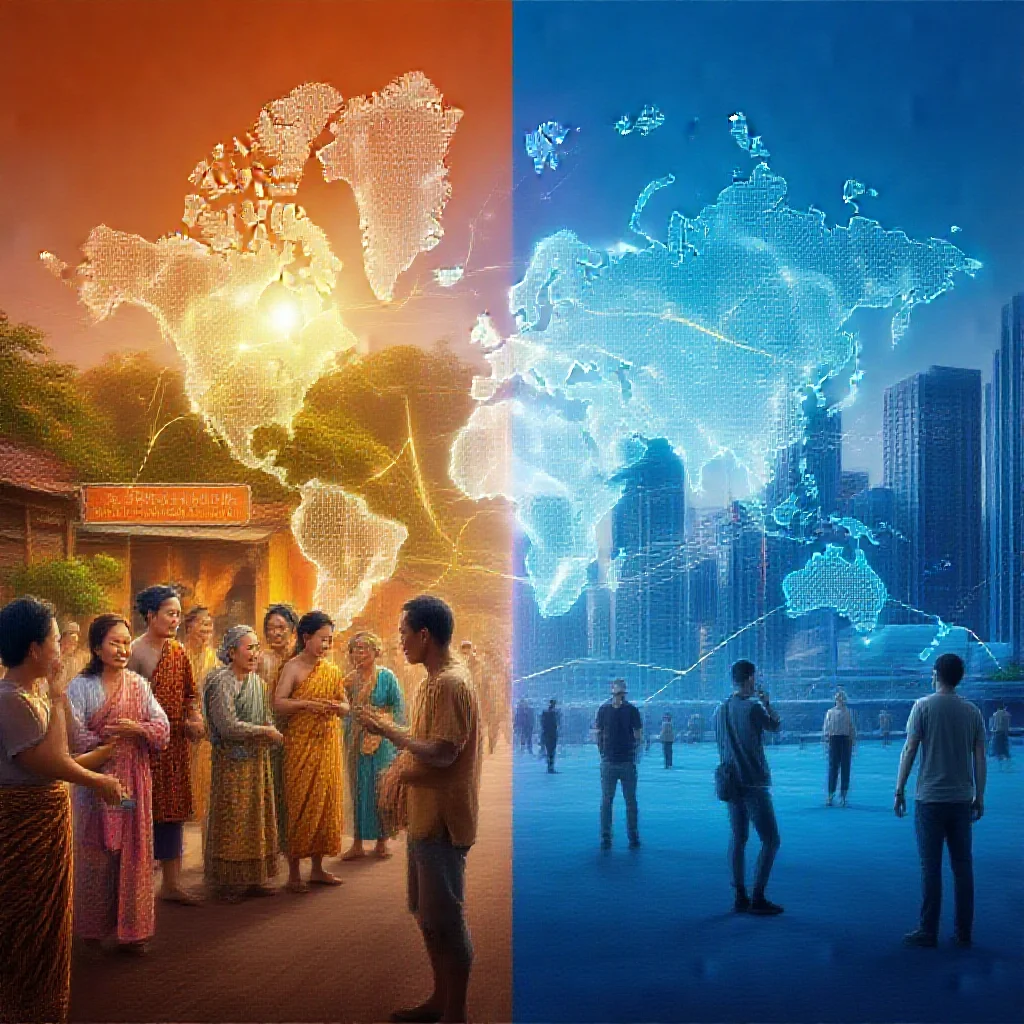
"A 2023 Pew Research Center survey ranking 34 countries by their citizens"
Beyond the Rankings: The Economic and Cultural Drivers Behind Global Perceptions of Morality
Summary: A 2023 Pew Research Center survey ranking 34 countries by their citizens' belief in national morality reveals a stark global divide, with the Philippines (90%) and Indonesia (86%) at the top and Sweden (24%) and Japan (29%) at the bottom. This article moves beyond the simple ranking to explore the hidden economic logic and cultural narratives shaping these perceptions. We analyze how factors like social trust capital, economic inequality, collectivist versus individualist values, and the role of media and religion create a 'perception gap' that influences everything from social cohesion to economic policy and foreign investment. This is not just a snapshot of opinion, but a lens into the underlying health and future trajectory of societies.
---
The Data Point: A Global Snapshot of Moral Self-Perception
A 2023 survey conducted by the Pew Research Center across 34 countries presented respondents with a direct proposition: whether they believe people in their country are moral (Source 1: [Primary Data]). The resulting global ranking is not a measure of objective ethical behavior but a quantified metric of national self-perception regarding social virtue.
The polarity of responses is pronounced. At one extreme, the Philippines leads with 90% of respondents affirming the morality of their compatriots, followed closely by Indonesia at 86%. At the other extreme, Sweden records the lowest agreement at 24%, with Japan marginally higher at 29% (Source 1: [Primary Data]). This distribution immediately invalidates any simplistic correlation between perceived morality and economic development or governance quality. Instead, it frames the data as a diagnostic tool for understanding the complex interplay between social trust, cultural narrative, and economic function.
!A clean, modern bar chart infographic highlighting the top 5 and bottom 5 countries from the Pew Research Center survey.,+Indonesia+(86%25)...+Bottom+5:...+Sweden+(24%25),+Japan+(29%25))
The Hidden Economic Logic: Trust as Social Capital
The perception of widespread morality functions as a proxy for a society's stock of "social trust capital." This intangible asset reduces transaction costs, facilitates cooperation beyond kinship groups, and underpins the efficient function of institutions. The survey data, however, reveals a critical paradox. Nations like Sweden, which consistently score highly on objective metrics of institutional trust, rule of law, and low corruption, report the lowest levels of perceived general morality.
This discrepancy suggests a framework where high-trust societies maintain rigorous, self-critical standards. The low perception score may reflect not social dysfunction, but a culture of high expectations and a vigilant civil society and media that actively expose shortcomings. The social trust capital here is formalized and institutional, not necessarily interpersonal.
Conversely, high-perception countries often exhibit strong in-group loyalty and dense family or community networks, which powerfully boost affirmative responses. This form of trust capital is potent for social cohesion within groups but may not automatically translate into generalized trust toward formal institutions or outsiders. This perception gap has tangible economic consequences. Investors and multinational corporations may interpret high morality perception as a signal of stability and cooperative potential, while potentially underestimating the challenges of navigating informal networks. Domestically, a high perception can foster policy consensus, whereas a low perception in a high-trust society may drive continuous institutional reform.
Cultural Narratives and the Perception Engine
Cultural value systems act as the primary engine for these perceptions. A clear correlation exists between collectivist orientations, as seen in the Philippines and Indonesia, and high morality scores. In these frameworks, morality is often defined through relational harmony, duty to the group, and shared public virtues, leading to a positive collective self-assessment. Individualist societies like Sweden and Japan define morality more through personal autonomy, critical reasoning, and skepticism toward blanket statements, resulting in a more cautious self-rating.
The role of media and public discourse is a decisive amplifier. A media ecosystem oriented toward social unity and the reinforcement of positive national values will elevate perceived morality. In contrast, a media culture with a strong investigative, adversarial, and critical mandate—characteristic of many Scandinavian countries—systematically lowers perceived morality by highlighting societal flaws and holding power to account. This is not an indictment of either model but an observation of their perceptual output.
Religiosity presents another strong correlative factor. High levels of religious participation often provide a clear, shared vocabulary for virtue and vice, boosting affirmative perceptions. In secular societies, the decoupling of morality from religious doctrine leads to more fragmented, debated, and personally defined ethical standards, which can depress aggregate positive perception. The critical metric thus becomes the "Perception Gap": the distance between a society's idealized self-image and its perceived current reality. A small gap may indicate contentment or lack of critical discourse; a large gap may indicate self-criticism or profound social dissatisfaction.
The Perception Gap: Implications for Social Cohesion and Market Trajectories
The divergence in moral self-perception is more than an academic curiosity; it is a variable with predictive capacity for social and market trajectories. In societies with high perceived morality but lower institutional trust, the primary risk lies in the potential for rapid disillusionment if institutional performance fails to meet communal expectations. This can lead to volatile shifts in public sentiment. In low-perception, high-trust societies, the constant critical scrutiny serves as a stabilizing feedback mechanism, enforcing institutional accountability but potentially fostering excessive risk-aversion or pessimism.
From a market perspective, these perceptions shape brand narratives, corporate social responsibility strategies, and labor market dynamics. Companies operating in high-perception environments may leverage narratives of national pride and collective virtue. In low-perception environments, corporate strategy may instead emphasize transparency, ethical auditing, and demonstrable individual benefit to overcome baseline public skepticism.
The future trend suggests that globalization and digital interconnectedness will not homogenize these perceptions but may instead accentuate the gaps. As societies become more aware of alternative models through digital media, the internal discourse on morality will become more comparative and potentially more polarized. The survey data from 2023 provides a baseline. The movement of these percentages over the next decade will be a key indicator of whether social trust capital is being built or depleted, with direct consequences for economic resilience and geopolitical alignment. The metric of perceived morality, therefore, transitions from a simple survey question to a leading indicator for analysts monitoring the stability and direction of national social systems.
Trade Metrics
Related Datasets
Q4 Cross-Border Logistics Report
PDF • 4.2 MB
Automotive Parts Supply Chain Index
CSV • 1.1 MB