Beyond Megacities: The Surprising Geography of Billionaire Birthplaces in

David Thompson
Data Editor
March 23, 2026
DATELINE: NA TRADE WIRE
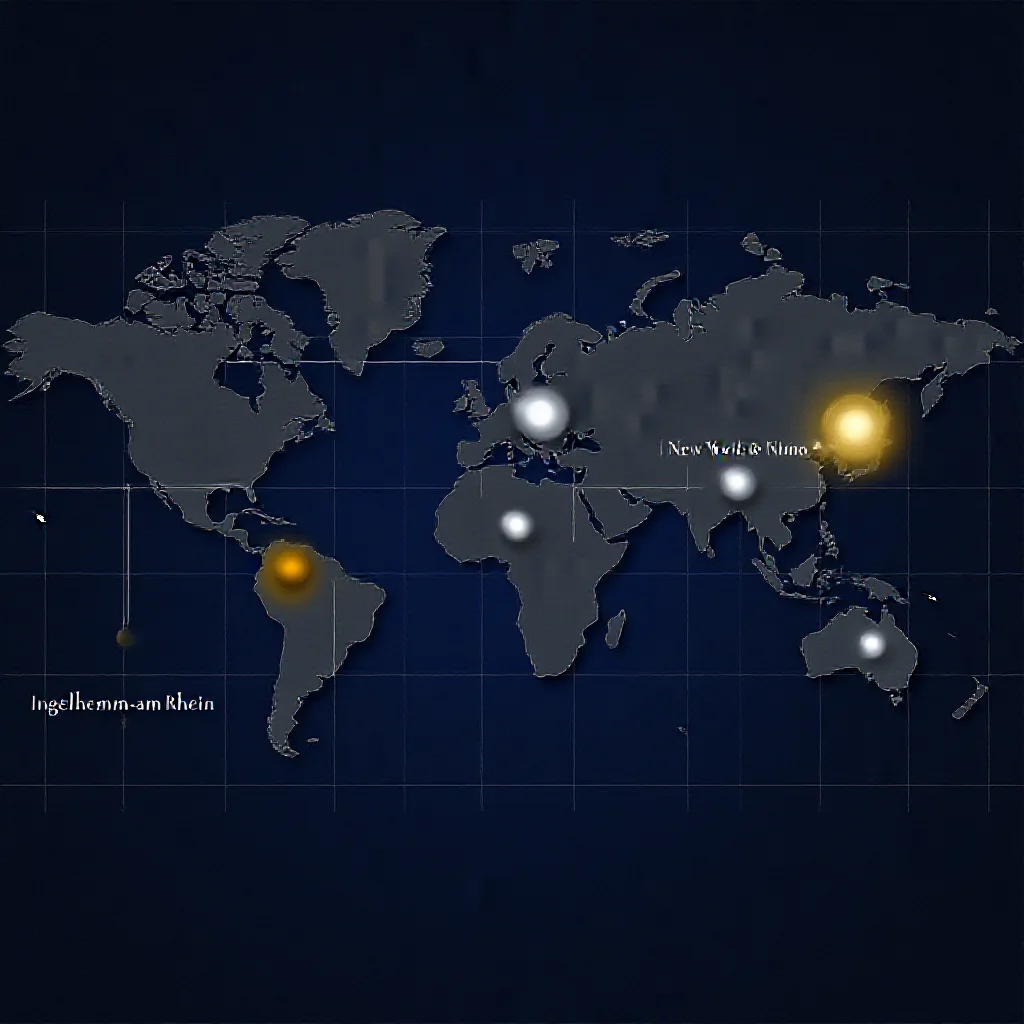
"A 2026 analysis of 1,680 billionaires reveals a complex map of wealth creation."
Beyond Megacities: The Surprising Geography of Billionaire Birthplaces in 2026
Introduction: Mapping the Cradles of Extreme Wealth
A 2026 demographic analysis of the Forbes Real-Time Billionaires List provides a distinct geographic lens on global wealth concentration. The study, covering the birthplaces of 1,680 individuals, moves beyond cataloging net worth to interrogate the origins of capital formation (Source 1: [Primary Data]). The resulting distribution presents a core analytical puzzle: it reveals a sustained tension between the agglomerative economic power of global megacities and highly specialized, legacy-driven wealth creation in unexpected, smaller locales. This map of extreme wealth origin points serves as a proxy for deeper structural patterns in the global economy.
The Established Hierarchy: Global Capitals as Billionaire Factories
The data confirms the primacy of traditional financial and commercial hubs. New York City leads with 69 native billionaires, functioning as the apex node for finance, technology, and multigenerational wealth transfer. The concentration is exemplified by Larry Ellison, born in the Bronx in 1944, whose net worth approaches $200 billion (Source 1: [Primary Data]). This dominance is mirrored by the Asian power bloc: Hong Kong (57 billionaires), Singapore (30), and Mumbai (28) operate as interconnected hubs of global trade, finance, and burgeoning technology sectors. A secondary tier of major Western cities—including Moscow (25), Milan (16), Los Angeles (16), and London—completes a recognizable network of capital, culture, and diversified industry. These centers represent the classical model of wealth agglomeration, where deep capital markets, talent concentration, and market liquidity act as primary engines.
!A collage of iconic skylines: New York, Hong Kong, Mumbai.
The Ingelheim Anomaly: A Case Study in Niche Wealth Generation
The most statistically significant outlier is Ingelheim am Rhein, Germany, with 10 billionaire birthplaces despite a resident population under 40,000 (Source 1: [Primary Data]). This anomaly is directly traceable to the "Boehringer Ingelheim Effect." The town is the founding and headquarters location of Boehringer Ingelheim, the world's largest privately-held pharmaceutical company, established in 1885 (Source 1: [Primary Data]). This single entity has acted as a multi-generational wealth engine, creating fortunes not through public market speculation but through executive compensation, ownership stakes, and spin-off enterprises within a tightly knit industrial ecosystem. The model demonstrated here is distinct from megacity wealth creation; it is based on deep, legacy industry dominance, private ownership structures, and geographic stability that localizes capital over decades.
Decoding the Patterns: Capital Agglomeration vs. Legacy Industry Enclaves
The global distribution points to two parallel, powerful engines for billionaire creation. The first is the dynamic, diverse global hub characterized by high liquidity in finance and technology, as seen in New York, Hong Kong, and San Francisco (13 billionaires). The second is the specialized, stable legacy industry enclave. Data from cities like Ingelheim, Montreal (13), and Stockholm (11) indicates that wealth derived from mature, often private or family-controlled industries—such as pharmaceuticals, commodities, and advanced engineering—generates a profound and geographically sticky impact. This "slow wealth" accumulates through corporate longevity and private capital structures, contrasting with the "fast wealth" of volatile tech hubs. The presence of Athens (10) and Istanbul (11) further suggests that within emerging markets, billionaire birthplaces can concentrate in singular dominant cities, blending both models.
Conclusion: What Birthplace Data Reveals About Future Wealth Networks
The geographic analysis of billionaire origins functions as a historical ledger of economic opportunity. The continued dominance of New York and Asian hubs signals the entrenched advantage of first-mover financial centers and their ability to reinvent themselves through successive technological waves. Concurrently, the persistent appearance of niche locales like Ingelheim am Rhein validates the enduring power of specialized industrial ecosystems and private capital. A predictive analysis suggests that future maps may see intensified clustering in established hubs, particularly in artificial intelligence and fintech corridors. However, the data also supports the forecast that new, unexpected clusters will emerge around highly specialized sectors like biotechnology, renewable energy infrastructure, and space technology, potentially in regions with favorable regulatory environments and pre-existing research capital. The geography of future billionaire birthplaces will thus be shaped by the interplay between the network effects of global finance and the deep, localized expertise of legacy and next-generation industries.
Trade Metrics
Related Datasets
Q4 Cross-Border Logistics Report
PDF • 4.2 MB
Automotive Parts Supply Chain Index
CSV • 1.1 MB