Beyond the Rankings: The Strategic Realities Behind 2025''s Top Arms Exporters

David Thompson
Data Editor
April 8, 2026
DATELINE: NA TRADE WIRE
"While the 2025 rankings of top arms exporters—led by the United States (42%),"
Beyond the Rankings: The Strategic Realities Behind 2025's Top Arms Exporters
Introduction: The Numbers Tell Only Half the Story
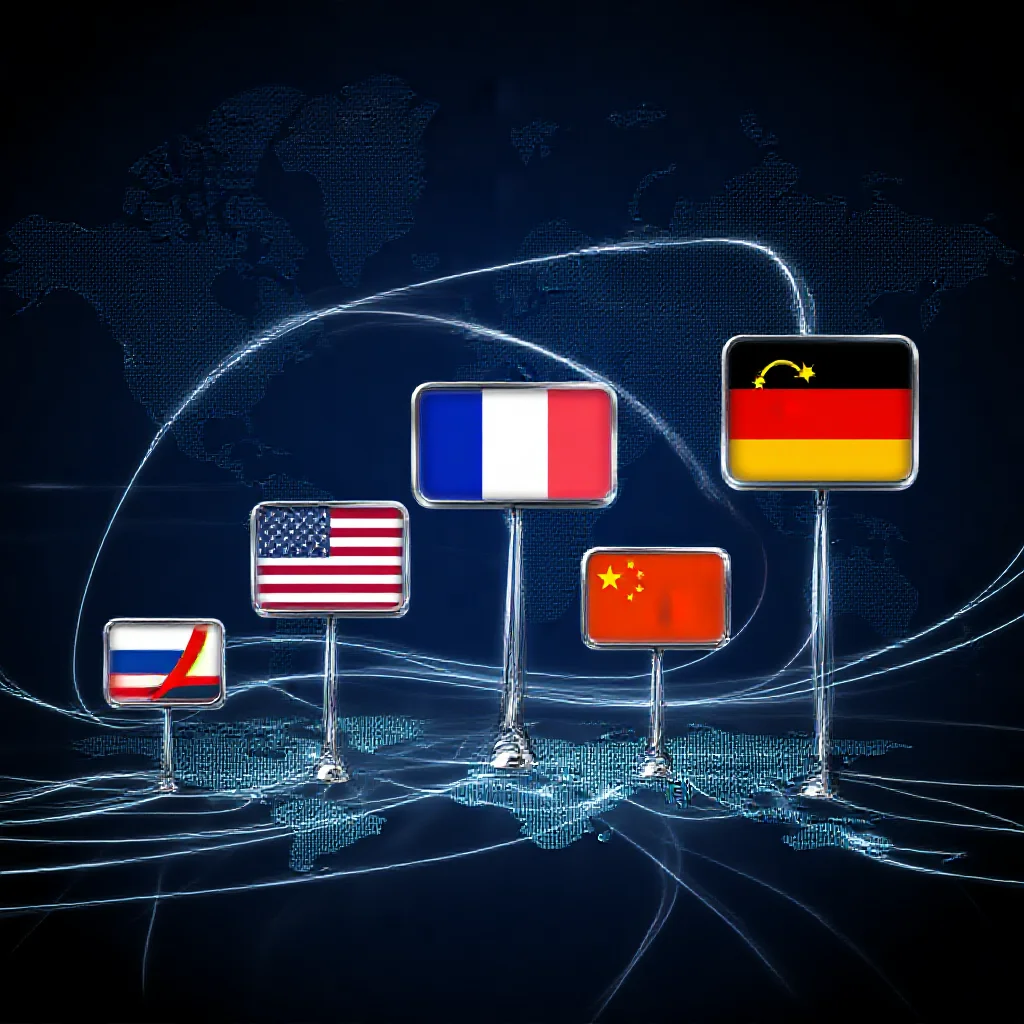
The 2025 hierarchy of global arms exporters presents a clear numerical order. The United States leads with a 42% share of the international market, followed by Russia at 17%, France at 11%, China at 5.8%, and Germany at 5.6% (Source 1: [Primary Data]). These figures, however, function as a lagging indicator, reflecting the culmination of multi-year contracts, established political partnerships, and industrial output from a prior era. They do not, in isolation, articulate the underlying health, strategic direction, or latent vulnerabilities of each nation's defense-industrial base. This analysis moves beyond market share to examine the economic logic and geopolitical competition redefining power within the global arms trade.
![An infographic-style visualization of the 2025 top five exporters with their precise market share percentages.]
The Axis of Power: Technology Sovereignty vs. Market Dependency
The strategic foundation of an arms exporter is defined by its degree of technological sovereignty. The United States' dominant 42% share is underpinned by full-spectrum sovereignty—the ability to research, develop, and manufacture entire weapon systems and their most advanced sub-components, from stealth coatings to jet engines and mission-critical software. This capability is amplified by its integration within alliance systems like NATO and AUKUS, creating a built-in market for interoperable, high-end platforms.
Russia's 17% share represents a different model. Its exports remain heavily reliant on legacy platforms—combat aircraft, armor, and air defense systems—whose designs originated in the Soviet era. Its market is largely politically captive, concentrated among historical allies and nations seeking alternatives to Western political conditionalities. This position creates vulnerability to long-term technological stagnation and supply chain disruptions from sanctions, affecting future competitiveness.
France's 11% exemplifies strategic autonomy on a smaller scale. It maintains a complete, high-value defense ecosystem independent of U.S. supply chains, capable of producing everything from nuclear-powered aircraft carriers and fighter jets to strategic missiles. This autonomy allows it to navigate geopolitical constraints more freely and cater to clients seeking advanced capabilities without political strings attached to a larger alliance structure.
![A comparative diagram showing the depth of indigenous R&D and critical subsystem ownership for the US, Russian, and French defense industries.]
The Value Shift: Why Share Percentage is a Misleading Metric
A direct comparison of export share percentages can obscure critical qualitative differences. Germany's 5.6% and China's 5.8% are not equivalent in strategic or economic terms. Germany's exports are characterized by high-value, critical subsystems embedded within larger Western platforms: diesel engines for submarines, sensors for air defense networks, and components for armored vehicles. This makes Germany a "hidden exporter" whose industrial influence permeates U.S., French, and other European systems, exceeding what its standalone ranking suggests.
Conversely, a significant portion of China's 5.8% share comprises complete, often lower-cost systems sold as integrated packages, frequently to nations in Africa, Southeast Asia, and the Middle East. The key differentiator is "profit-per-unit" versus "volume." A high-value subsystem or platform generates greater revenue and funds more advanced R&D per unit sold, creating a cycle of technological advancement and long-term industrial sustainability that pure volume of lower-margin exports may not support.
The Supply Chain Crucible: Future Resilience in a Fractured World
The 2025 data masks a fundamental restructuring of defense industrial supply chains. A silent scramble is underway for control over rare earth element processing, advanced semiconductor fabrication for military applications, and next-generation propulsion technologies. Exporters with deeply globalized, just-in-time supply chains—particularly in Europe, which relies on Asian microelectronics—face acute resilience risks in a scenario of geopolitical fracture.
This dynamic is driving a strategic shift toward onshoring and "friend-shoring" of critical production. The long-term projection points toward a potential bifurcation of the global defense market. One ecosystem would be centered on the United States and its interoperable alliance network, with stringent technology security standards. A separate, alternative ecosystem could coalesce around China and Russia, offering different technology standards and political terms. The strategic positioning of nations like France and Germany, which balance alliance ties with industrial autonomy, will be a critical variable in this evolving landscape.
Conclusion: The Rankings of Tomorrow
Future rankings will be determined less by volume and more by control over key technological frontiers: artificial intelligence-enabled warfare systems, hypersonic weapons, directed energy, and resilient space-based capabilities. The sustainability of export shares will depend on continuous high-level R&D investment, the security of supply chains for critical materials, and the ability to offer not just platforms, but integrated digital battle networks. The nations that prioritize technological sovereignty, value over volume, and supply chain resilience within their strategic alliances are positioned to define the next generation of the global arms trade, regardless of their precise percentage in any single year's ranking.
Trade Metrics
Related Datasets
Q4 Cross-Border Logistics Report
PDF • 4.2 MB
Automotive Parts Supply Chain Index
CSV • 1.1 MB