Washington''s Port Automation Funding Ban: A New Front in the Labor-Tech Battle

Emily Rodriguez
Cross-Border Trade Reporter
April 21, 2026
DATELINE: NA TRADE WIRE
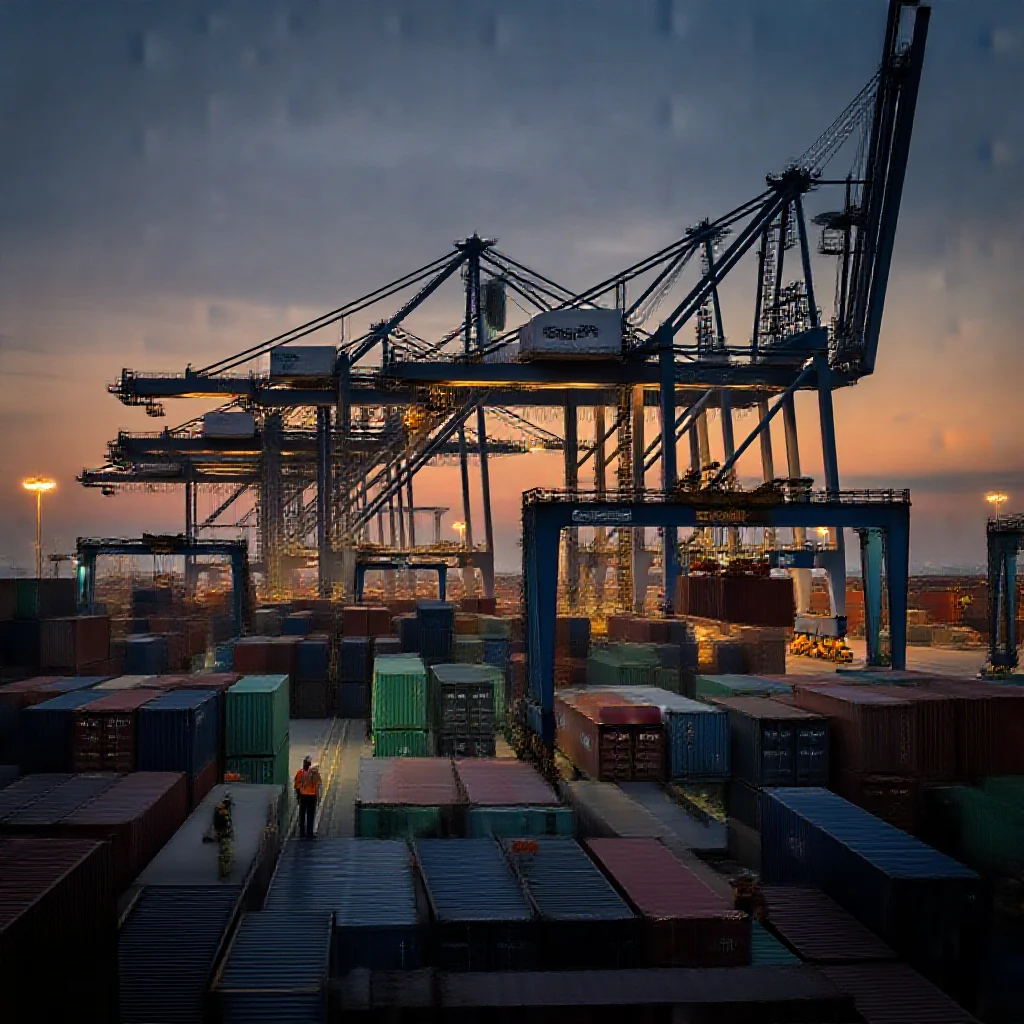
"In March 2024, Washington State enacted a landmark law, Substitute Senate"
Washington's Port Automation Funding Ban: A New Front in the Labor-Tech Battle
Summary: In March 2024, Washington State enacted a landmark law, Substitute Senate Bill 5546, prohibiting the use of public funds for port automation projects. Signed by Governor Jay Inslee, the legislation mandates human oversight of automated equipment and aims explicitly to protect port worker jobs. This analysis explores the law not as an isolated labor victory but as a strategic precedent that could reshape public investment criteria nationwide. It examines the hidden economic logic of tying public money to job preservation, the potential long-term impacts on supply chain resilience and port modernization, and the emerging political playbook for regulating automation's advance in critical infrastructure.
---
The Legislative Blueprint: Decoding Washington's SB 5546
On March 13, 2024, Washington Governor Jay Inslee signed Substitute Senate Bill 5546 into law, establishing a novel regulatory framework for port technology (Source 1: [Timeline]). The legislation, effective June 6, 2024, contains two core operational provisions. First, it prohibits the use of state and local public funds for projects that automate marine terminal operations (Source 1: [Facts]). Second, it mandates that any automated cargo handling equipment must be remotely controlled or monitored by humans (Source 1: [Facts]).
The legislative intent is explicitly stated within the bill's text: "The legislature finds that public funds should not be used to automate the jobs of port workers" (Source 1: [Quotes]). This direct linkage between public capital and job preservation marks a significant policy shift. The law's passage followed advocacy from the International Longshore and Warehouse Union (ILWU) and negotiations with employer groups like the Pacific Maritime Association (PMA), positioning it as a concrete outcome of organized labor's strategy to manage technological disruption.
Beyond Job Protection: The Hidden Economic Logic of Public Investment
The law's primary effect is to reframe the debate surrounding automation. The central question is no longer solely whether automation improves operational efficiency, but what objectives public investment should prioritize. By attaching conditions to funding, the state creates a direct policy lever to influence the pace and nature of technological adoption in a critical infrastructure sector.
This establishes a precedent of conditional funding, where public capital is directed toward outcomes beyond pure productivity, specifically job stability and community economic impact. The long-term industry implication is the potential creation of a two-tier development model. Privately financed port projects may pursue automation for competitive advantage, while publicly supported infrastructure may remain reliant on manual or semi-automated systems. This dynamic could introduce a chilling effect on public-private partnerships for comprehensive port modernization, as private entities may be reluctant to co-invest in projects constrained by these operational mandates.
The Ripple Effect: Supply Chain Resilience and a New Political Playbook
The legislation introduces a variable into supply chain resilience calculations. Proponents argue that mandating human oversight creates a more adaptable system capable of managing exceptions, cyber-physical disruptions, and irregular cargo, unlike fully automated systems which can be brittle when facing unprogrammed scenarios. Critics counter that it may slow throughput and increase long-term operational costs, potentially affecting the competitiveness of Washington's ports.
As a policy model, Washington's law provides a replicable template for labor unions in other major port states, such as California, New Jersey, and South Carolina. The strategy of regulating technology not through an outright ban but through the conditioning of public funds is a politically viable playbook, appealing to lawmakers focused on local employment. This represents a slow-burning shift in infrastructure governance, signaling a move toward more managed, conditional adoption of automation in sectors with strong unions and public visibility.
The Unanswered Questions and Future Battle Lines
Key implementation challenges remain unresolved. The law's requirement for human "remote monitoring or control" lacks precise definition, leaving a gray area for enforcement and potential litigation. The line between advanced assistive technology and job-automating technology will be a persistent point of contention.
A central critique is the potential for innovation stifling. The law risks isolating Washington's ports from global efficiency trends, where major international hubs are increasingly automated. The future battle lines are clear: the statute will be tested by evolving technology that blurs the definition of automation and by economic pressure to maintain port competitiveness. The ultimate impact will be measured in contract negotiations, investment flows, and whether this model of technological governance migrates to other states and sectors.
Trade Metrics
Related Datasets
Q4 Cross-Border Logistics Report
PDF • 4.2 MB
Automotive Parts Supply Chain Index
CSV • 1.1 MB